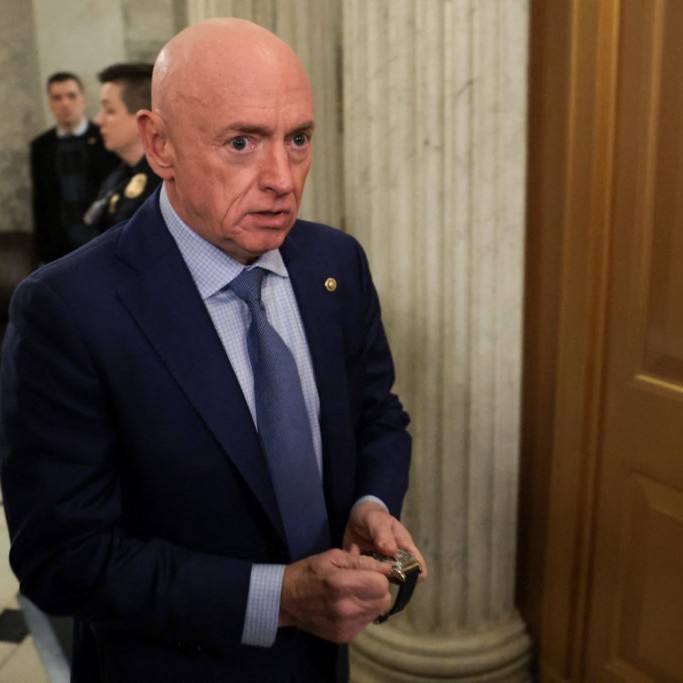
The Pentagon picked a fight with a retired Navy captain who happens to be a sitting U.S. senator, and a federal judge just stepped in to slow the whole machine down. The question now is not only what Sen. Mark Kelly said in that video, but what the government thinks it can take from him for saying it.
What You Should Know
U.S. District Judge Richard Leon temporarily blocked the Pentagon from punishing Sen. Mark Kelly after the Defense Department moved to censure him over a video urging troops to resist unlawful orders. Leon said the action violated Kelly’s First Amendment rights.
Kelly, an Arizona Democrat and former Navy pilot, sued after Defense Secretary Pete Hegseth issued a censure dated January 5th that the Pentagon framed as the first step in a process that could strip Kelly of rank and reduce his retirement pay, according to reporting published by PBS NewsHour and The Associated Press.
The Pentagon episode started with a political video and ended up in federal court, which is exactly where power struggles go when everyone insists they are defending the Constitution.
According to PBS NewsHour’s account of the case, Kelly and five other Democratic lawmakers appeared in a November video urging service members to uphold the Constitution and refuse unlawful military directives. That framing, which sounds like a civics class on its face, ran straight into a Trump-era political reflex. If you tell troops to ignore unlawful orders, who gets to decide what counts as unlawful, and who gets to punish the messenger?
Judge Leon’s answer, at least for now, is that the Pentagon crossed a line by targeting Kelly’s speech. In his ruling, Leon said Pentagon officials violated Kelly’s free speech rights and “threatened the constitutional liberties of millions of military retirees.”
That phrase matters because it widens the blast radius beyond one senator. This is not just about whether Kelly gets dinged on a personnel form. It is about the leverage the Defense Department believes it holds over retirees, and what happens when that leverage is applied to someone with a national microphone and a Senate seat.
A Censure With Real Money Attached
In political Washington, a censure can sound like a scolding. In military bureaucracy, it can be a breadcrumb trail to something concrete.
Hegseth described Kelly’s censure as “a necessary process step” toward proceedings that could demote Kelly from his retired rank of captain and cut his retirement pay, according to PBS NewsHour. That is the kind of punishment that turns a partisan argument into a personal ledger line.
Kelly went to court to stop it. The judge agreed, at least temporarily, to block the Pentagon from moving forward while the case continues.
The tension is obvious. The administration is treating the video like an attempt to undermine command authority. Kelly is treating the censure as political retaliation dressed up as discipline. Leon’s ruling suggests he sees a constitutional problem with the Pentagon’s posture, especially if it sets a precedent for how retirees can be targeted.
Trump Raised the Temperature, and the Paper Trail Followed
Kelly’s case is not unfolding in a quiet corner of the Defense Department. It has been pulled into Trump-centered messaging, where accusations come fast, and the consequences can arrive through official channels later.
After the lawmakers’ video circulated, President Donald Trump accused them of sedition in a social media post, calling it “punishable by DEATH,” according to the PBS NewsHour report. The all-caps threat is not a court filing, but it sets the political tone. It also creates a neat contrast: the president uses the harshest language available, and then the Pentagon starts a process that could hit a critic in the wallet.
That is the kind of sequence that invites questions about motive, even if the Defense Department insists the case is about order and discipline, not politics.
Kelly, speaking to reporters in remarks carried by PBS NewsHour, described the administration as “out of control” after the judge’s move to block the punishment. The senator is doing two things at once: defending his own speech and putting the Pentagon’s strategy on trial in public.
The administration’s counter is straightforward, at least in theory. If someone encourages troops to defy orders, the argument goes, the government has an interest in policing that message, especially if it believes it could corrode obedience in the chain of command.
But this is where the contradiction sits. The video urged service members to refuse unlawful orders, not lawful ones. The whole concept of an unlawful order exists because blind obedience is not the ideal. It is a risk. That is why militaries teach the laws of armed conflict and why service members are told, at least in general, that illegality is not a defense.
So the legal fight turns on a sharper edge: was Kelly offering a civics reminder, or was he pressuring troops to treat a political administration as presumptively unlawful?
Why This Fight Is Bigger Than One Senator
The Pentagon does not typically wage public disciplinary campaigns against senators. The fact that this one escalated tells you something about the stakes on both sides.
For Kelly, the stakes include his retired status, his pay, and the precedent for every former service member who enters politics. If the government can argue that retired rank is a lever to punish political speech, then military retirement becomes less like a benefit and more like a behavioral contract.
For the administration, the stakes are about command credibility and the ability to deter messages it views as corrosive. If a sitting senator can tell troops to resist unlawful directives and face no consequences, the Defense Department could worry that others will push further, or that political actors will try to recruit the military into partisan battles.
Leon’s language about “millions of military retirees” signals why the judge saw a broader constitutional issue. The U.S. has a massive retiree community, and many of them remain active in civic life, media, and politics. If the boundary between protected speech and punishable conduct is fuzzy, the chilling effect is not theoretical.
At the same time, courts have long recognized that the military is not just another workplace, and that discipline and readiness can justify limits that would not apply in civilian life. That legal reality is part of why this case is likely to keep attracting attention well beyond Arizona.
What Happens Next
The ruling is temporary, which means the real contest is still ahead. The Defense Department can fight the injunction, narrow its approach, or try to reframe the punishment as an administrative matter rather than retaliation. Kelly can press for a more durable court order that blocks any demotion or pay reduction tied to the video.
Meanwhile, the political incentives are lined up. Kelly has every reason to portray the Pentagon’s move as a warning shot to critics, especially after Trump’s “punishable by DEATH” post. The administration has every reason to argue it is defending military order against politicians who, in its view, flirted with encouraging insubordination.
There is also a quieter question hovering over the spectacle: if this dispute reaches deeper into what the government can do to retirees, how many people who never ran for office will feel it?
For now, Leon hit pause. The fight over where speech ends and punishment begins is still very much on the docket.