JD Vance just tossed a match into a diplomatic room full of fuel and called it accountability.
The vice president says European allies have made concessions to the United States over Greenland that they do not admit publicly. The claim matters less as a sound bite than as a warning label. If Vance is right, then the public posture of unity behind Denmark and Greenland is, at least in part, theater. If he is wrong, then Washington is floating a pressure narrative anyway, one that reframes alliance security as a bill that comes due.
Either way, it is not just about an Arctic island. It is about who gets to set the terms inside NATO, and what the Trump administration thinks protection should buy.
Vance’s Claim: Private Yes, Public No
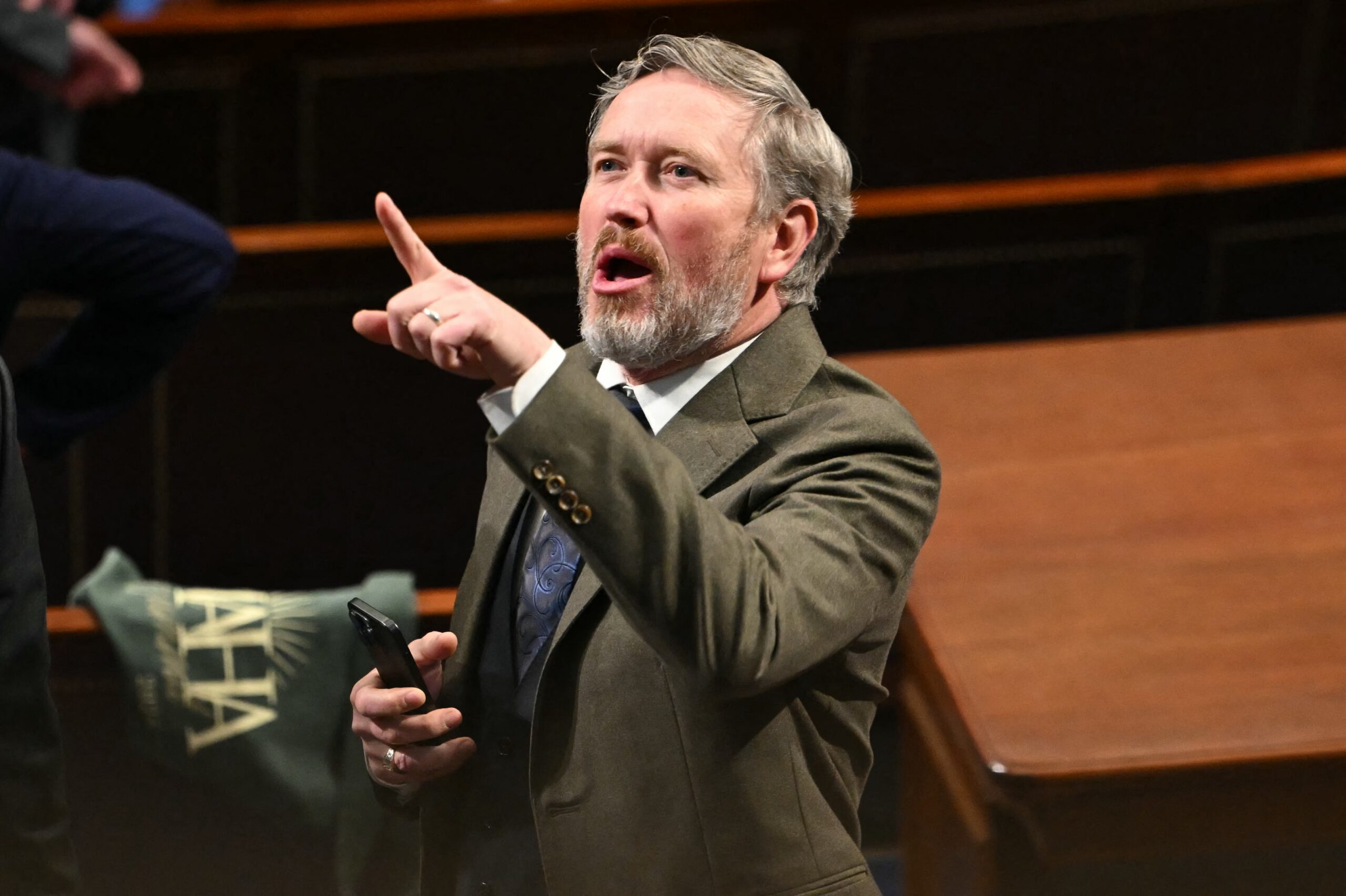
In an interview on the Megyn Kelly Show, Vance said, “We definitely have gotten much more than we initially had,” describing what he portrayed as behind-the-scenes movement from European partners on Greenland.
He did not detail what the concessions were. He did not identify which governments made them. He did not point to a document. But he did frame the issue as a familiar European habit: talk tough in public, accommodate in private.
“It’s so funny because the Europeans, they’re so friendly in private, and they’re willing to make a lot of accommodations, and then publicly they attack us,” Vance said. “I’m sorry, it’s all bogus,” he added, arguing that the idea allies have made no accommodations, “is not true.”
That is a loaded accusation because Denmark and Greenland have been direct, on the record, about sovereignty. Both have said they will not agree to cede it. European allies have largely rallied around that position, at least publicly.
Trump’s Greenland Framework and the Shadow of Force
Vance’s comments landed in the wake of President Donald Trump’s announcement of what he called a “framework of a future deal” on Greenland.
According to the BBC, Trump’s unveiling eased fears that the US was prepared to use force against Denmark, a NATO ally, to seize the semi-autonomous territory. Trump has argued Greenland is necessary for defense against possible attacks from Russia and China. He has also claimed, without providing evidence, that Greenland is “covered with Russian and Chinese ships all over the place” and that the US needs to own Greenland to defend it properly.
The contradiction is baked into the pitch. The United States already defends itself in the Arctic. It already operates a base in Greenland. It already has agreements that give it broad access. So why the need for a new framework, and why float the idea of ownership at all?
That is the leverage question at the heart of Vance’s line. If allies are already giving the US plenty, the bargaining story does not work. If allies are giving the US something new, they have reasons to keep it quiet.
What the US Already Has in Greenland
Greenland is sparsely populated, but it sits in a strategic corridor between North America and the Arctic. That geography is not symbolic. It is practical, particularly for early warning systems tied to missile defense.
The US has had a military footprint there for decades. More than 100 US military personnel are permanently stationed at a US base in Greenland’s northwestern tip, a facility that has been operated by the US since World War Two, according to the BBC. Under existing agreements with Denmark, the US can bring as many troops as it wants to Greenland.
That last point is why Vance’s “we got much more” tease landed with such force. If Washington can already surge troops, and it already runs a key installation, the usual incentives for a new arrangement are not about presence. They are about terms.
Terms can mean anything from basing rights and infrastructure expansion to intelligence, procurement preferences, investment guarantees, or resource access. Vance did not specify. That ambiguity is the point, at least politically. Ambiguity lets the administration hint at a win without revealing what it had to ask for to get it.
The New Price Tag: Security for Benefit
Vance framed Greenland as a place where the US is already assumed to fight, regardless of who gets hit first.
“It’s one of the unwritten rules that everybody knows that if the Chinese or the Russians affected one of our critical missile defence systems, we would necessarily defend that. But we’re not getting anything for it,” he said.
Then he went further, essentially arguing for a rewrite of alliance expectations. “Let’s rewrite the rules a little bit here and say that if the United States is going to protect the entire world’s missile defence system, primarily our own, but other people benefit from it, we should get some benefit from the bargain.”
This is not a small rhetorical shift. It turns collective defense from a mutual commitment into a transaction, and it turns Greenland from a shared security asset into a negotiable one. That is why Denmark and Greenland’s sovereignty line matters. The more the US talks like a buyer, the more Copenhagen and Nuuk have to talk like owners.
Minerals, Ice Melt, and the Real Estate of the Future
When politicians talk about Greenland, they tend to speak in military nouns, like radar and defense. The other noun set is economic. Vance acknowledged the broader incentives without saying the quiet part directly.
It was not clear, the BBC reported, whether he was referring to Greenland’s natural resources, including rare earth minerals, uranium, and iron, which are becoming easier to access as its ice melts because of climate change. Scientists think it could also have significant oil and gas reserves. Trump has said the framework would involve access to Greenland’s mineral resources.
The timing is not accidental. A place that was once logistically brutal becomes, over time, easier to map, drill, mine, and ship from. That does not mean it becomes simple or cheap. It means it becomes worth fighting over in boardrooms and worth posturing over in capitals.
That is also where Vance’s “concessions” line starts to look less like a NATO story and more like a commodities story. Concessions do not have to be sovereignty. They can be contracts, permits, partnerships, or favorable investment lanes. Even small changes can be politically explosive in Greenland, where resource development has long been tied to debates about autonomy, economic dependency, and identity.
Denmark’s Bind: Ally, Landlord, Target
Denmark sits in an uncomfortable role. It is expected to act as a loyal NATO member while also functioning as the sovereign power responsible for an island that Washington keeps describing as indispensable.
When an ally says, publicly, that it wants to “own” part of your realm for everyone’s safety, it forces a choice. You can treat it as rhetoric and hope it fades, or you can treat it as leverage and prepare for escalation. Trump and Vance’s language makes fading harder.
Vance also accused European allies of duplicity, essentially daring them to deny private talks. That is a classic power move. A denial can look like a lie if any quiet understanding surfaces later. Silence can look like confirmation. Meanwhile, the administration keeps the spotlight on Europe, not on the details of what it asked for.
What to Watch Next
Two questions now hang over the Greenland framework.
First, what did Vance mean by “much more”? If there is a real policy shift, it will show up somewhere. Look for changes in basing arrangements, investment announcements, or formalized resource cooperation. If there is no change, then the comment functions as messaging, designed to portray Europe as double-talking while positioning Washington as the only adult willing to name the trade-offs.
Second, can Denmark and Greenland keep their sovereignty line intact while still offering enough cooperation to keep US pressure from escalating? The existing agreements already grant the US significant freedom of action. That means any new ask is likely about profit, priority, or control, not simply defense.
If the White House keeps framing the Arctic as a place where America pays, and others benefit, then Greenland is not just a map point. It is a test case for a broader theory of alliance. Protection, in this version, comes with a receipt.
References