The treaty that kept the United States and Russia counting each other’s most dangerous nuclear weapons just ran out. What replaces it is not a new agreement. It is a negotiation standoff where Washington wants China at the table, Beijing says no, and Moscow says it regrets the lapse while also announcing it is no longer bound.
New START was not a feel-good symbol. It was a hard cap, an inspection system, and a notification regime between the two biggest nuclear powers. Now, the cap is gone. The inspection clock is not ticking. The messaging is.
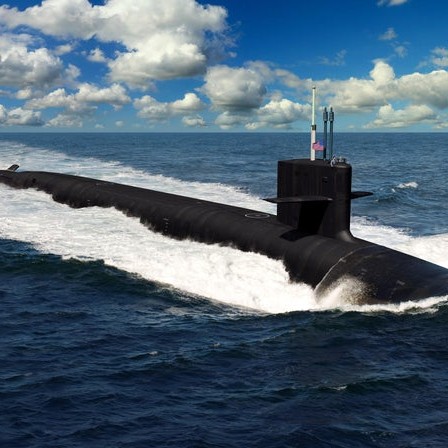
Undated: An artist rendering of the future Columbia-class ballistic missile submarines, a U.S. Navy illustration, as the United States modernizes a force designed to outlast treaties.
The Last Cap on US and Russian Strategic Nukes Is Gone
The New START Treaty, signed in 2010, limited deployed strategic nuclear weapons to 1,550 on each side. It also required on-site inspections and notifications, the unglamorous machinery that made both countries prove, not just promise, that they were staying under the ceiling.
That system was already fraying. Russia stopped providing notifications and suspended inspections during the war in Ukraine, but the U.S. State Department assessed that Moscow was not believed to have significantly exceeded the treaty’s caps, according to the latest compliance report cited by CBS News.
Former President Joe Biden extended New START in 2021 for five years. That extension was the last one available under the treaty’s terms. This week, the clock hit zero.
Trump’s Signal: Let It Expire, Then Decide
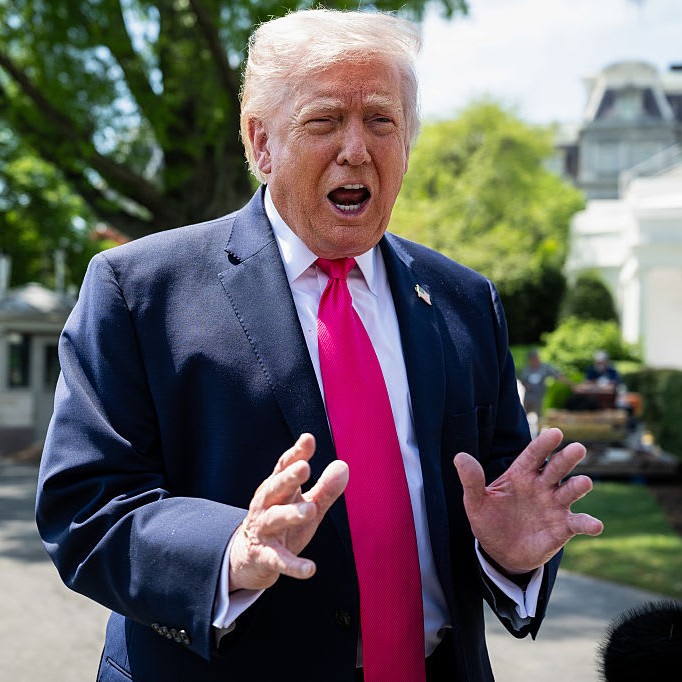
President Trump previewed the posture earlier in the year in comments to The New York Times: “If it expires, it expires.” That line, casual in delivery and maximal in consequences, is now the governing reality.
A White House official told CBS News that Trump will decide a path forward on nuclear arms control, “which he will clarify on his own timeline.” The same official indicated Trump would like limits to continue and would like to involve China in future talks.
That sets up the central tension: the United States is talking about limits, but also raising the entry price. Meanwhile, the only functioning limits that existed were built for two countries, not three.
Rubio Says China Is the Key, China Says It Is Not Playing
Secretary of State Marco Rubio put the administration’s argument plainly, telling reporters that it was “impossible” to come to an agreement without China, citing “their vast and rapidly growing stockpile.”
The Pentagon has estimated that China will have more than 1,000 nuclear weapons by 2035, up from around 200 in 2019, CBS News reported.
Beijing’s answer has been equally blunt. “China’s nuclear forces are not at all on the same scale as those of the U.S. and Russia,” Foreign Ministry spokesman Lin Jian said in Beijing. He added that China will not participate in nuclear disarmament negotiations “at the current stage.”
China also urged the Trump administration to resume negotiations with Russia and accept Moscow’s suggestion that the U.S. and Russia continue adhering to the expired treaty’s core limits for now, according to CBS News.
So the lines are drawn: Washington says a deal needs China, Beijing says it does not belong in a superpower treaty, and the treaty that used to force discipline has already vanished.
Russia: Regret, Then a Reminder It Is Free to Move
On paper, Moscow is serving a two-part message. First, a regretful tone to suggest responsibility. Second, a legal posture that makes clear the restraints are off.
Kremlin spokesman Dmitry Peskov, speaking to reporters in Moscow, said Russia viewed the expiration “negatively” and regretted its lapse. He added that Moscow would “retain its responsible, thorough approach to stability when it comes to nuclear weapons. And, of course, it will be guided primarily by its national interests,” according to The Associated Press, as quoted by CBS News.
Then came the sharper line. “We assume that the parties to the New START Treaty are no longer bound by any obligations or symmetrical declarations within the context of the Treaty, including its core provisions, and are fundamentally free to choose their next steps,” Russia’s Foreign Ministry said in a separate statement, CBS News reported.
This is the arms-control version of smiling while putting the lock back on your own door. The other side can do the same.
Inside Washington: Keep the Limits, or Admit They Were Never Enough?
Even in the United States, the split is not just partisan. It is strategic and bureaucratic, and it is playing out in public testimony.
Russian President Vladimir Putin suggested in September that both sides should abide by the treaty’s parameters for a year without signing another deal, an idea former Under Secretary of State for Arms Control Rose Gottemoeller called viable in testimony to senators, CBS News reported.
Gottemoeller framed the politics as a question of who gets credit for restraint. “It should be Donald Trump who gets to be the president of nuclear peace in this case, not Vladimir Putin,” she testified Tuesday before the Senate Armed Services Committee, according to CBS News.
She also argued that continuing New START limits, even informally, could buy time to reestablish stability and get back to negotiating leverage. “My bottom line is that it does not serve U.S. national security interests to have to address the Chinese nuclear buildup while simultaneously facing a rapid Russian upload campaign,” she said.
Others pushed back on the whole premise. Retired Adm. Charles Richard, the former head of U.S. Strategic Command, and Tim Morrison, a former deputy assistant to the president for national security affairs during the first Trump administration, disagreed with keeping the old framework in place, CBS News reported. Their argument, in effect, is that New START did not cover some of the scariest gaps: non-strategic nuclear weapons, and the rise of China as a nuclear peer competitor.
All sides, however, are conceding the same point from different directions: the treaty was incomplete. The fight is over whether incomplete is still better than absent.
The Real Stakes: Proliferation Pressure and a Modernization Clock
Once the two biggest nuclear powers stop visibly limiting themselves, the rest of the world watches what follows. That is not moral philosophy. It is incentives.
Several former officials told senators they worried that more countries could explore nuclear programs in the future, even if they are not actively pursuing them now, CBS News reported.
“I don’t think you can understate the risk of proliferation,” Morrison told senators.
He also pointed to a separate, quieter pressure: the U.S. arsenal is aging, and deterrence depends on sustained investment. “By 2035, 100% of U.S. nuclear weapons, the warheads and bombs themselves, will have exceeded their design lives by an average of 30 years,” Morrison said. “The only means to reliably enforce compliance with arms treaties is to be able to threaten that failure to comply will be met with a compelling response.”
That is the modern nuclear contradiction in one breath. Arms control is supposed to reduce risk, but it leans on the credibility of forces built to deliver catastrophic force. The treaty that managed that contradiction just expired. The weapons and the politics did not.
What to Watch Next
Three fronts matter now.
First, whether the United States and Russia keep to New START’s numerical limits voluntarily, even while acknowledging they are no longer obligated. Second, whether Washington treats China’s refusal as a hard stop or as a bargaining chip to extract a narrower, bilateral stopgap with Moscow. Third, whether the absence of inspections and notifications becomes a new normal, forcing both sides to plan against worst-case assumptions.
New START was never a peace treaty. It was a counting mechanism between rivals who did not trust each other. The system did not end because trust arrived. It ended because leverage, politics, and war made the old deal easier to let die than to replace.