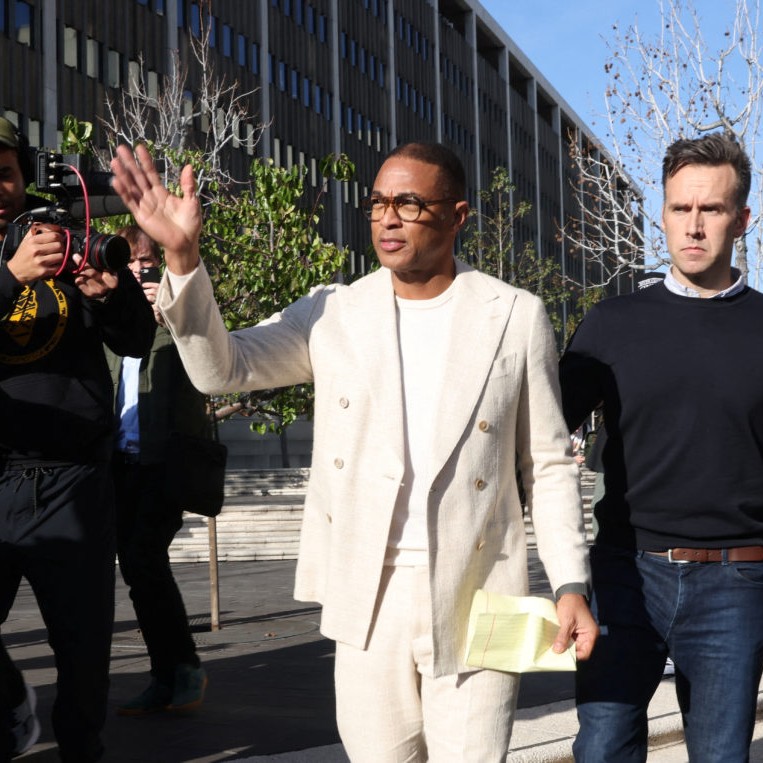
Don Lemon walked out of federal court talking like a man with a microphone still in his hand. The paperwork waiting in Minnesota tells a colder story: not a media moment, but a conspiracy case built around who got intimidated, and whose rights got trampled.
The collision is the whole point. Lemon says he was covering a protest. Prosecutors say the protest crossed a legal line inside a church, and that the worshippers were the ones whose speech got squeezed.
Now the former CNN anchor is staring at federal civil rights charges tied to a Jan. 18, 2026, disruption at a St. Paul church, while a larger national argument hangs in the background: when does documenting unrest become part of it?
The Arrest Happened in Los Angeles, the Charges Live in Minnesota
According to PBS NewsHour, Lemon was arrested overnight in Los Angeles and later released from custody on January 30, 2026, after a court appearance in California.
But the legal center of gravity is Minnesota. A grand jury there indicted Lemon and others over what prosecutors describe as a coordinated effort during a Jan. 18 protest at the Cities Church in St. Paul.
PBS NewsHour reported that another independent journalist, Georgia Fort, and two protest participants were arrested in Minnesota.
This split geography matters. It turns a political street fight into a logistics-heavy federal case, with decisions about venue, travel, and court dates that can grind down even well-funded defendants.
2 First Amendments, 1 Flashpoint
The indictment frames the church service as the protected activity. The allegation is not simply that people protested, but that the defendants interfered with the First Amendment rights of worshippers.
That is a sharp pivot from the way Lemon is pitching the moment.
Outside court, Lemon delivered his message in plain, camera-ready language:
“I will not be silenced.”
He went further, putting his case inside the oldest American storyline about power and scrutiny.
“I have spent my entire career covering the news. I will not stop now. In fact there is no more important time than right now, this very moment, for a free and independent media that shines a light on the truth and holds those in power accountable.”
That rhetoric is built to travel. The indictment is built to stick.
The government is effectively asking a jury to focus less on what Lemon says he stood for, and more on what he did, who he did it with, and what the intended effect was inside a religious service.
Why This Church, and Why This Pastor?
The location is not incidental. PBS NewsHour reported that the protest targeted the Cities Church in St. Paul, where a U.S. Immigration and Customs Enforcement official is a pastor.
That detail loads the scene with political voltage. It suggests the protest was aimed at immigration enforcement, but it also hands prosecutors a cleaner narrative: a disruption of worship, in a specific place, with identifiable congregants.
This is where the power dynamic flips depending on your perspective. Protesters often describe themselves as confronting the state. Inside a sanctuary, the state can argue the crowd confronted private citizens trying to pray.
That tension is likely to be the case. Not a debate about immigration policy, but a tight argument about conduct, coordination, and rights within four walls.
Lemon’s Defense: ‘Solo Journalist,’ Not a Co-Conspirator
Lemon is not denying he was there. He is drawing a line between presence and participation.
PBS NewsHour reported that Lemon has said he had no affiliation with the organization that went into the church and that he was there as a solo journalist chronicling protesters.
That is a familiar defense in protest-related cases involving cameras: proximity is not partnership. Documenting is not directing.
But prosecutors, by choosing a conspiracy charge, are signaling they plan to tell a story about agreement and shared purpose. Conspiracy cases often do not require a person to commit every act personally. The fight becomes whether the person joined the plan.
The public contradiction is immediate: Lemon frames himself as an independent witness. The indictment, by its nature, frames him as part of a group.
The Legal Stakes Go Beyond 1 Defendant
Even if you ignore the celebrity factor, this case pulls on a nerve that makes judges careful: the boundary between newsgathering and activism, especially during chaotic protests.
If prosecutors can convince a jury that a journalist crossed into coordinated action, it sends a warning flare to independent reporters who work close to protest movements. If Lemon can convince a jury he was treated like a participant because of who he is, it raises the specter of selective enforcement.
Either outcome has downstream consequences.
- For defendants: Conspiracy and civil rights charges are not symbolic. They can carry serious penalties, and they can force defendants into lengthy legal travel and discovery battles.
- For law enforcement and federal prosecutors: A loss, or a public perception of overreach, can chill future cases that target disruptions in sensitive spaces like schools, hospitals, or houses of worship.
- For media: A precedent, or even just a widely watched prosecution, can alter how news outlets and freelancers cover protests and how cautious they become around organizers.
It is also a reputational contest. Lemon’s quote is designed to make the case about press freedom. The indictment is designed to make it about victims and interference.
Bednarski Signals a Fight, Not a Deal
Defense attorney Marilyn Bednarski said Lemon plans to plead not guilty and fight the charges in Minnesota, according to PBS NewsHour.
That posture matters early. It tells prosecutors they should expect litigation, not a quiet resolution. It also tells Lemon’s audience that this is not an apology tour.
However, a not-guilty plea is just the opening move. The heavy action in cases like this often happens before trial: motions over what evidence the jury gets to see, what the government can call a conspiracy, and what Lemon can argue about his role as a journalist.
Don Lemon’s Public Narrative Is Built for 2026
Lemon is not arriving in this story as an unknown. PBS NewsHour noted that he was fired from CNN in 2023 following a bumpy run as a morning host.
That history supplies a ready-made frame: the high-profile anchor turned independent operator, now battling the state. It is a storyline that can attract supporters, money, and attention.
But it can also cut the other way. Prosecutors can argue that fame does not confer immunity, and that public statements do not answer what happened inside the church.
The case is not going to be decided by who gives the better courthouse sound bite. It will be decided by what the government can prove regarding coordination, intent, and actions during the Jan. 18 disruption.
What to Watch Next
The next stage is procedural, but consequential. Watch for:
- Transfer and scheduling: How quickly Lemon is required to appear in Minnesota, and whether the case calendar moves fast or drags.
- Discovery fights: Whether video, communications, or on-scene coordination becomes central evidence for the conspiracy allegation.
- Messaging escalation: Whether Lemon continues to frame the case as a press freedom battle, and whether prosecutors respond by emphasizing the worshippers’ rights and the setting.
For now, the most telling fact is simple: Lemon is talking about silence. The indictment is talking about interference. Those are not the same claim, and the gap between them is where this case will live.