Two of Minnesota’s biggest political names are suddenly in the same sentence as the Department of Justice. But the public still does not have the one thing that would settle the matter fast: a paper trail.
According to CBS News live updates, Minnesota Gov. Tim Walz and Minneapolis Mayor Jacob Frey are “under federal investigation,” after a fatal shooting involving an ICE agent set off protests and a national political argument about federal power.
A Reported DOJ Investigation, and a Very Specific Allegation
CBS News reported that “two U.S. officials told WCCO” that Walz and Frey are under federal investigation. The same update says the Department of Justice is investigating them for “allegedly obstructing law enforcement activities.”
That phrasing matters. “Obstruction” can describe a wide range of conduct, from interfering with an operation on the street to actions involving instructions, coordination, or information sharing. CBS’s update does not include details about what conduct investigators are looking at, whether subpoenas have been issued, or whether either official has been interviewed.
As of the CBS update, there was also no publicly posted charging document, and no public DOJ announcement in the text provided. That leaves the story in a high-stakes limbo: a serious allegation, reported by officials speaking to a major news outlet, but with few specifics available to the public in that same update.
#LATEST on DOJ investigation into Minnesota governor, Minneapolis mayor:
– The U.S. Justice Department is investigating Minnesota Governor Tim Walz and Minneapolis Mayor Jacob Frey over possible obstruction of federal law enforcement, CNN reported, citing sources familiar with… pic.twitter.com/72QJ4YaFb4
— CGTN (@CGTNOfficial) January 17, 2026
The Flashpoint: Protests After an ICE Shooting in Minneapolis
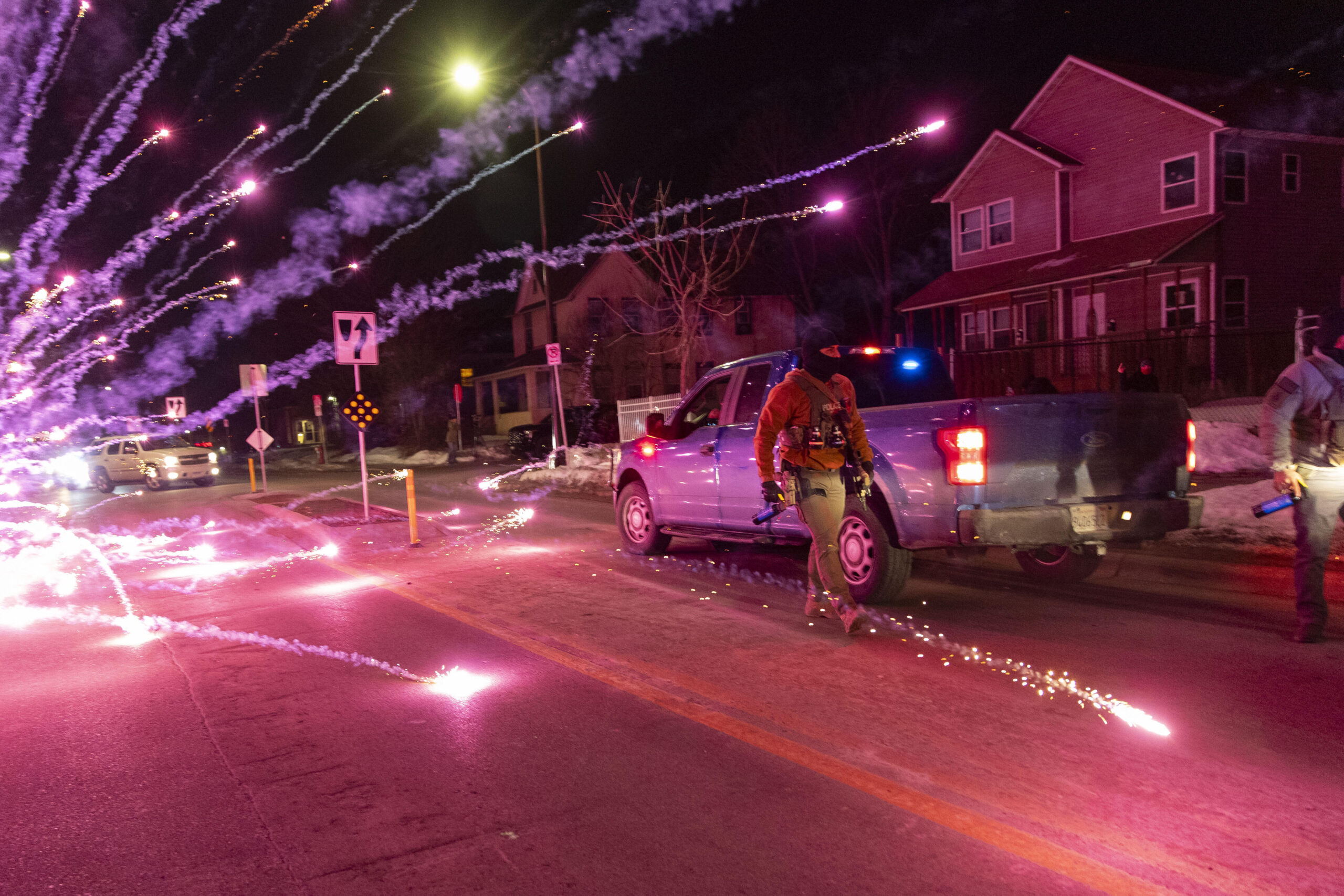
The reported investigation is unfolding amid demonstrations following the fatal shooting of Renee Nicole Good by an ICE agent, according to the CBS report and photo captioning from a protest scene in north Minneapolis.
The image accompanying the CBS live update describes federal agents using tear gas and pepper balls during protests as tensions intensified after the shooting. That is the backdrop for the political escalation. When federal law enforcement and local leadership collide during civil unrest, the argument is rarely just about one incident. It becomes a fight over who gets to control the response, and who gets blamed for what happens next.
Where Trump and the Insurrection Act Enter the Storyline
CBS framed its rolling coverage around “Minnesota ICE shooting protests” alongside “Trump Insurrection Act updates.” The Insurrection Act is a centuries-old federal law that allows a president, under specific circumstances, to deploy military forces domestically or federalize the National Guard to suppress rebellion or enforce federal authority.
Even when the law is not invoked, public discussion of it is its own kind of pressure campaign. It signals that a situation is being portrayed, at least by some political players, as beyond the capacity or willingness of state and local authorities to handle.
What is not established in the text provided is whether the Insurrection Act was invoked, formally considered, or merely debated by political figures. The CBS headline positioning, however, shows why this story is drawing heat well beyond Minneapolis: it links street-level unrest to the most extreme federal tools available for restoring order.
The Core Conflict: Federal Enforcement vs Local Control
For readers trying to decode the power struggle, the key tension is straightforward. ICE is a federal agency. Minneapolis is governed locally. Minnesota has a governor and state agencies. When protests erupt after a federal shooting, every decision becomes a jurisdictional test.
If the DOJ is looking at possible obstruction, the central question becomes what “obstructing law enforcement activities” means in practice in this specific case. Was it a conflict over crowd control strategy? Was it a dispute over access to resources? Was it about communications with federal agents? Or was it about policy decisions that federal officials argue impeded operations?
The CBS update does not answer those questions. But the allegation itself places Walz and Frey in the uncomfortable position of having to defend their handling of unrest while also defending their legal posture against a federal probe.
What Walz and Frey Said, and What Still Is Not Public
CBS’s update points readers to separate statements from Walz and Frey responding to the reported investigation. In the excerpt provided here, those statements are not included, so their precise wording and any denials or clarifications cannot be evaluated in this write-up.
Still, the structure of the story is already clear. Federal officials, speaking to a CBS affiliate, describe an investigation. The governor and mayor respond. The public waits for documentation that shows whether this is an early-stage inquiry, an advanced investigation with compulsory process, or something closer to a political warning shot.
Why People Care: The Consequences Are Not Theoretical
There are immediate stakes for Minneapolis and Minnesota, even before any legal outcome.
First, credibility during crisis. If state and city leaders are portrayed as resisting law enforcement rather than managing safety and civil rights, their authority can be weakened in real time.
Second, future federal posture. If the White House, federal agencies, or DOJ leaders decide Minnesota’s response is inadequate, that can shape everything from staffing and operational decisions to whether federal powers are asserted more aggressively.
Third, reputational risk for both sides. Federal agencies risk appearing heavy-handed if protest response escalates, especially in the context of a fatal shooting. Local officials risk being labeled uncooperative or obstructive if they are seen as putting politics ahead of public safety. The public rarely gets a clean narrative, only competing ones with selective receipts.
What To Watch Next
Two developments will determine whether this turns into a sustained national fight or fades into a narrower legal story.
One is documentation. Subpoenas, court filings, or a formal DOJ statement would clarify the scope, timeline, and nature of the reported investigation. Without those, the story remains heavily dependent on anonymous official sourcing.
The other is the posture on the ground in Minneapolis. If protests continue and crowd-control tactics intensify, the political argument around federal force and local governance will sharpen quickly, especially with the Insurrection Act floating in the broader conversation.
For now, the most concrete line remains the one CBS attributed to officials: Walz and Frey are “under federal investigation,” tied to claims they “allegedly obstruct[ed] law enforcement activities.” Everything else hinges on what, exactly, investigators say happened, and what they can prove.