The explosion video is the part everyone shares. The harder question is the one officials are not answering on camera. Who, exactly, was on that boat, and what does a new round of lethal interdictions mean now that Nicolas Maduro is in U.S. custody?
U.S. Southern Command says it carried out a deadly strike on a vessel accused of drug trafficking in the eastern Pacific Ocean. The military describes it as the first known attack on an alleged drug boat since the operation that captured Venezuelan President Nicolas Maduro earlier this month, according to an Associated Press report published by PBS NewsHour.
A strike, two dead, and one survivor who changes the stakes
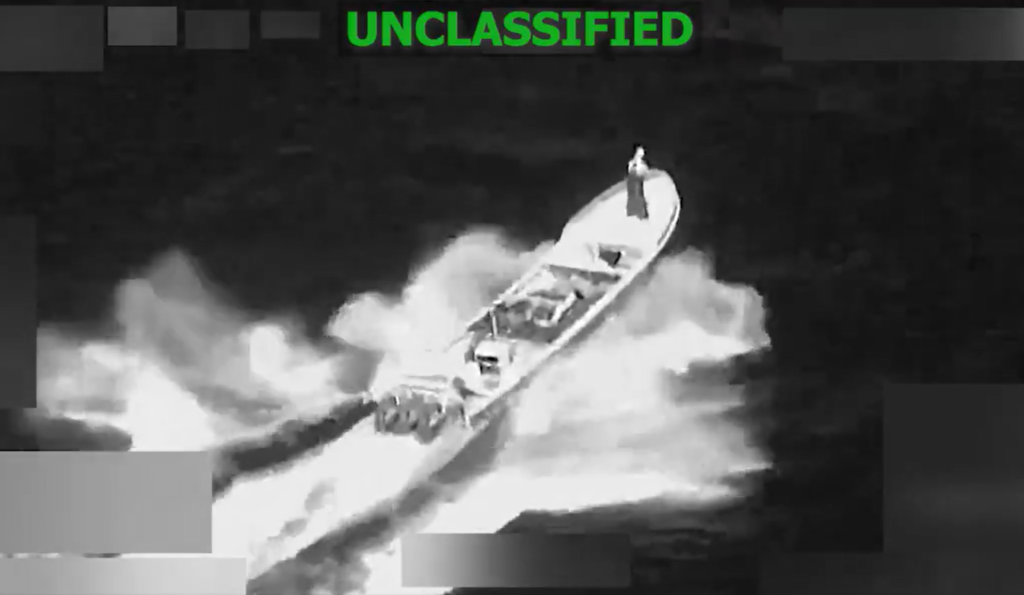
On social media, U.S. Southern Command said the targeted boat was “engaged in narco-trafficking operations.” The command said the strike killed two people and left one survivor, and that it notified the U.S. Coast Guard to begin search and rescue for that person.
That one detail, a survivor, is where the story stops being just a clip and turns into a live-wire accountability problem. A survivor can talk. A survivor can challenge the label “narco-trafficking.” A survivor can confirm it. Either way, the outcome is now bigger than a wreck in the water.
The U.S. conducted a “lethal kinetic strike” on an alleged drug boat on Friday as part of the Operation Southern Spear campaign.
READ MORE:https://t.co/3tWDtAUp4W pic.twitter.com/tf33sJY4GH
— ABC News 4 (@ABCNews4) January 24, 2026
PBS NewsHour, citing the U.S. military’s public statements and administration remarks, framed the strike as the first publicly known one since the raid that captured Maduro.
The video that sells the narrative, and the words that do the legal work
Southern Command posted a video showing a vessel moving across the water before it erupts into flames. The clip does not identify crew members, flags, cargo, or the evidence used to classify the boat as a trafficking vessel. The caption and accompanying text do the heavy lifting instead, describing “narco-trafficking operations” without publicly detailing the intelligence behind that judgment.
US Carries Out 1st Known Strike On ‘Drug Boat’ Since Nicolas Maduro’s Capturehttps://t.co/wbq0uEB5Mm pic.twitter.com/8FEhjAa9CC
— NDTV WORLD (@NDTVWORLD) January 24, 2026
That gap is not unusual in military operations. But it becomes more politically combustible when the government is simultaneously telling a larger story about winning a regional drug fight and breaking networks tied to a foreign leader.
Why the Maduro capture keeps showing up in the background
According to the AP report carried by PBS, the U.S. conducted a large-scale operation in Caracas on Jan. 3 that led to the capture of Maduro and his wife. The report says they were flown to New York to face federal drug trafficking charges.
That is an extraordinary claim with extraordinary downstream consequences, for Venezuela, for regional security, and for how every U.S. action in the Caribbean and eastern Pacific will be read. Even actions framed as routine interdictions now carry an added message. Washington is not just chasing shipments. It is signaling it can reach the top of the pyramid.
Before his capture, Maduro had argued the U.S. military campaign was a thinly veiled attempt to remove him from power, the report said. That framing, whether accepted or rejected, is exactly the kind of storyline that can spread faster than any official briefing, especially once a strike produces bodies and a survivor.
Numbers that sound definitive, and the “alleged” that never goes away
The AP report says there have been 36 known strikes against alleged drug smuggling boats in South American waters since early September, killing at least 117 people. The majority of the strikes, according to the same report, occurred in the Caribbean Sea.
DRUG BOAT STRIKE | 2 killed, 1 survivor in first known drug boat strike since Maduro capture: US Military https://t.co/r4ysINuAUK pic.twitter.com/CCrsQCCKCN
— FOX SA (@KABBFOX29) January 24, 2026
It is a clean, easy-to-repeat tally. It is also built on official announcements, which means the public is largely seeing what the government chooses to confirm, not a full accounting of how targets were selected, what evidence was recovered, or whether any boat was misidentified.
This is why the word “alleged” matters. It is not a throwaway qualifier. It is the difference between a wartime-style hit on an enemy asset and the killing of people who may never have been charged with anything.
The late December strikes, and the moment the search stopped
PBS NewsHour reported that the last publicly described boat strikes happened in late December. The military said it struck five alleged drug-smuggling boats over two days, killing eight people while others jumped overboard. The report adds that days later, the Coast Guard suspended its search.
#BREAKING: The U.S. conducted a “lethal kinetic strike” on an alleged drug boat on Friday as part of the Operation Souther Spear campaign. https://t.co/Nz03HfFmsZ pic.twitter.com/HQ5fYrnmni
— The National Desk (@TND) January 23, 2026
That sequence is a preview of what could follow the latest strike. In fast-moving maritime actions, the after-action piece can get messy. People go into the water. Evidence can sink. Survivors can vanish. And a suspended search becomes its own kind of headline.
Trump’s “almost 100%” claim meets the body count reality
The AP report says President Donald Trump has repeatedly argued the strikes are having an enormous impact on slowing trafficking routes in the Caribbean and eastern Pacific.
But the administration is now selling two things at once. One message is operational success, interdiction, deterrence. The other is the human cost embedded in the tally of strikes and deaths. Even supporters of aggressive enforcement often want to know the same basics. How certain was the identification, and what safeguards exist when lethal force is used against a small vessel at sea?
What to watch next: one survivor, and a bigger confrontation over receipts
The public facts currently rest on official statements, a posted video, and a growing strike count. The most immediate unanswered question is the status of the survivor Southern Command says was left after the strike, and what, if anything, will be disclosed about the person’s identity, medical condition, and account of what happened.
Next comes the credibility contest. Officials will likely keep emphasizing interdiction results and claimed disruption of routes. Critics, inside and outside the region, will keep asking for evidence that each “alleged” boat really was what it was labeled, especially in an environment where Maduro’s capture turns every operation into geopolitics.
For now, Southern Command’s own words hang over the footage: “engaged in narco-trafficking operations.” If the government can back that up with verifiable details, the clip plays as enforcement. If not, the clip becomes something else entirely.