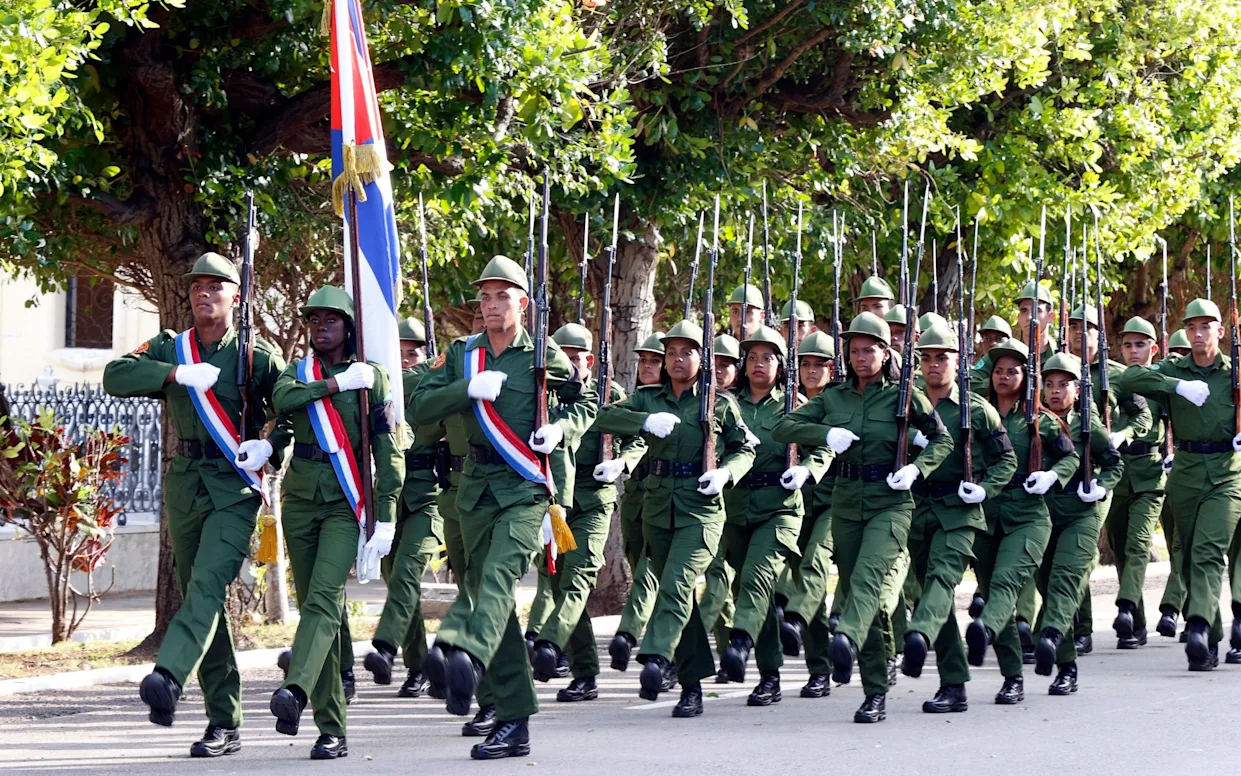
Cuba’s generals are back on the megaphone, warning about aggression and readiness. The question is whether the message is really for the Pentagon, or for the people watching their own government squeeze tighter at home.
What You Should Know
Cuba’s military leadership has been amplifying warnings about potential aggression and stressing defensive preparedness. The messaging comes as Havana faces economic strain, political unrest, and a long-running standoff with the United States.
The immediate trigger, according to The Hill’s reporting, is official Cuban talk that frames the island as a target and the military as the firewall. Havana has used that posture for decades, but it lands differently when shortages and emigration are part of daily math.
Havana’s Warning, and Who It Targets
Cuban officials routinely cast the United States as the prime antagonist, pointing to the U.S. trade embargo and U.S. pressure campaigns as evidence of hostile intent. U.S. officials, for their part, have repeatedly said they are not pursuing a military confrontation with Cuba.
During the July 2021 unrest, President Miguel Diaz-Canel issued a blunt call that was widely reported by BBC News and The Associated Press: “The order to combat has been given.” The line was a street-level signal that the state would not treat protests as ordinary politics.
The Real Audience Might Be at Home
This is the power dynamic Havana rarely says out loud. When a government frames criticism as an invasion script, it becomes easier to justify surveillance, arrests, and rapid-response security deployments as national defense, not domestic control.
The Cuban Revolutionary Armed Forces are not just soldiers in uniform. They are also a governing pillar with deep influence across key parts of the economy, a reality often noted by international coverage and long-running Cuba analysis. That overlap makes military messaging inseparable from regime stability.
What Washington Can Do Without Firing a Shot
For Washington, the practical leverage points are familiar and politically loaded: sanctions, remittances rules, travel policy, and diplomatic staffing. Each move carries second-order effects, including migration pressure that has become a regional issue rather than a purely bilateral dispute.
Meanwhile, Cuba’s leadership keeps pitching a simple storyline: hardship is imported, and discipline is patriotic. Whether that holds depends less on speeches than on food, electricity, and the next moment when crowds decide to test the state’s tolerance again.
What to watch is not a sudden invasion scenario. It is the next time Havana uses the language of war to manage a problem that looks, from the sidewalk, like governance.