

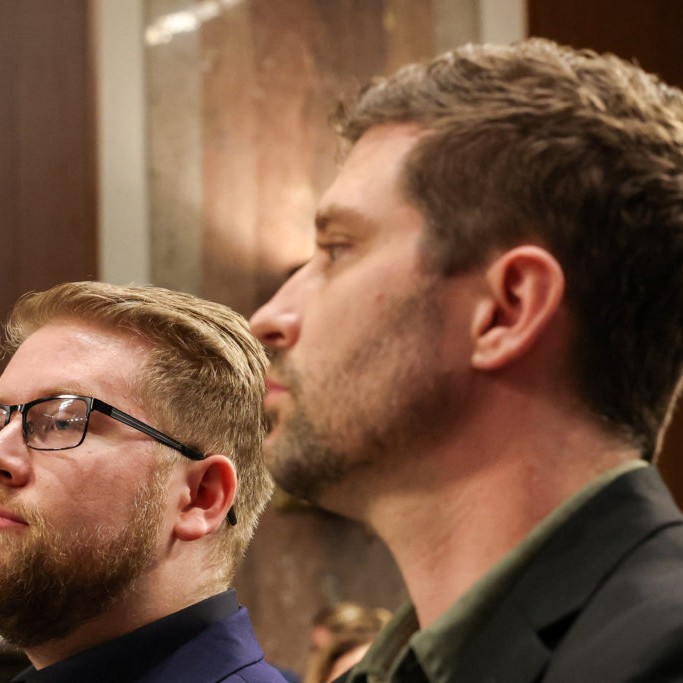
The hearing room had the usual trappings of power: microphones, nameplates, and cameras. Then Renee Good’s brothers showed up, and the script changed. Not because Washington suddenly got sentimental, but because their story landed in the middle of a government funding fight that is now doubling as a referendum on how federal immigration agents police the public.
Luke Ganger and Brent Ganger went to Capitol Hill to remember their sister, a 37-year-old mother and U.S. citizen who, according to PBS NewsHour, was fatally shot by an Immigration and Customs Enforcement agent on January 7. Their testimony did not arrive in a vacuum. It arrived during a partial government shutdown, with the Department of Homeland Security at the center of the standoff, and with lawmakers arguing over whether ICE and U.S. Customs and Border Protection should be forced into stricter rules on body cameras, face coverings, and warrants.
In other words, grief walked into a leverage point.
The Family Thought Her Death Would Change Something
Luke Ganger described what happens when a family tries to make sense of a killing that is both personal and political. According to PBS NewsHour’s report on the forum, he told lawmakers the family had been cycling through disbelief and desperation, and that they briefly let themselves imagine the country might actually learn something.
“In the last few weeks, our family took some consolation thinking that perhaps Nee’s death would bring about change in our country,” Luke said, according to PBS NewsHour. “And it has not.”
That line is doing a lot of work. It is a lament, but it is also a direct accusation aimed at the system that absorbs tragedy and keeps moving.
Brent Ganger, speaking in the same PBS NewsHour coverage, framed his sister as the kind of person who could make things feel survivable without pretending the world was easy.
He said she made you believe things were going to be OK, “not because she ignored the hardship, but because she chose optimism anyway.”
That is eulogy language. It is also a political contrast. The family is offering human detail, while Washington is debating policy abstractions and counting votes.
ICE, Use of Force, and the New Spotlight
PBS NewsHour reported that federal immigration agents have been involved in more than a dozen shootings, some fatal, since President Donald Trump began his second term, prompting public outcry over the use of force tied to the administration’s immigration crackdown.
That statistic is now part of the argument for new constraints. The core demand from Democrats, as described by PBS NewsHour, is straightforward: if DHS wants money, DHS should accept more rules. Specifically, Democrats sought reforms that would require agents to wear body cameras, refrain from obscuring their faces, and obtain judicial warrants for arrests.
The power dynamic is the point. Congress is one of the few places with a direct handle on DHS, and the handle is funding. A family is asking for accountability, but the mechanism on offer is political, not judicial. That creates a second layer of tension: reforms can become bargaining chips, and bargaining chips can get traded away.
The administration, meanwhile, still controls the day-to-day machinery of immigration enforcement. The question is whether Congress will meaningfully constrain it, or just stage the debate.
Minneapolis, Local Investigators, and Who Gets Shut Out
PBS NewsHour also described another front in the fight: transparency. Families of victims and residents of Minneapolis, where two fatal shootings occurred in the prior month, demanded more accountability from the government. PBS NewsHour reported that the government had tried to shut local and state law enforcement out of investigations into the deaths.
If you are a federal agency under scrutiny, controlling the investigation can be the difference between a quick closing narrative and an open-ended set of questions. Keeping local authorities at arm’s length is not just a procedural choice. It is a power move.
It also feeds the exact suspicion that body cameras and warrant requirements are designed to address: that the public is being asked to trust a system that can keep its own records, decide what to share, and set the terms of review.
The Shutdown Makes It Real
Capitol Hill has endless sympathy rituals. What it has less often is a forcing mechanism. This week, according to PBS NewsHour, the issue became a driving factor behind the partial government shutdown.
Democrats, PBS NewsHour reported, refused to agree to a government funding deal for a handful of agencies, including DHS, without the ICE and CBP reforms. Lawmakers then passed a short-term measure on Tuesday that funds DHS only through February 13, while debate continues.
That February 13 date matters because it converts outrage into a calendar. If reformers cannot lock down policy language before the next funding cliff, the moment can dissolve into yet another cycle of hearings, statements, and internal reviews that the public never sees.
It also puts pressure on Republican leadership, which has to decide whether to treat the proposed rules as operational guardrails or as political concessions that would validate critics of the immigration crackdown.
The Speaker’s Dodge, and the Question Underneath
PBS NewsHour tied the broader debate to a separate moment of public messaging: a clip in which House Speaker Mike Johnson dodged a question about ICE and civil liberties.
A dodge is not a policy. It is a strategy. It buys time, avoids specifics, and keeps factions from fighting in public. But it also creates a clean contradiction for critics to spotlight: civil liberties are the question, and silence is the answer.
At the same time, federal immigration enforcement has always sat in a politically volatile space, where arguments about safety, sovereignty, due process, and executive power collide. That is precisely why the current reform push is targeted at visible, enforceable rules. Body cameras produce footage. Masks complicate identification. Warrants put a judge in the loop.
Those are not symbolic demands. They are attempts to move discretion away from the agent in the moment, and toward systems that can be audited later.
What Happens Next, and What to Watch
The brothers’ testimony is not a verdict on what happened in Renee Good’s case. It is a public pressure campaign aimed at forcing answers and, potentially, forcing new constraints on federal immigration enforcement.
The next deadline is political, not emotional: February 13. Watch whether lawmakers attach concrete, enforceable requirements to DHS funding, and whether any final language has teeth or reads like a compromise written to be ignored.
Also, watch the investigation posture. When a federal agency keeps local and state investigators on the sidelines, as PBS NewsHour reported happened in these cases, the fight over transparency becomes the fight itself.
Luke Ganger’s line hangs over all of it: they thought change would come. Washington’s question is whether it will treat that as testimony or as background noise.