

The attempted assassination plot never got a shot off. The sentence did.
Ryan Routh, the man convicted of trying to assassinate Donald Trump at a Florida golf course in 2024, has now been sentenced to life in federal prison, with an additional seven years stacked on top for a gun conviction. The punishment landed in Fort Pierce, Florida, in front of U.S. District Judge Aileen Cannon, a jurist Trump nominated in 2020 and one of the most closely watched names in the federal judiciary.
Life in Prison, Plus a Mandatory Add-On
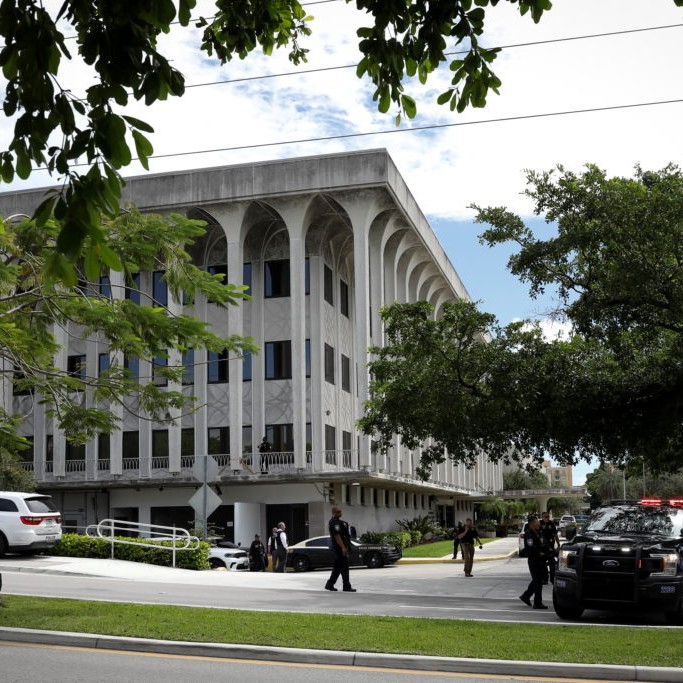
On February 4, 2026, Cannon sentenced Routh to life in prison for his convictions tied to the September 15, 2024, incident at Trump’s West Palm Beach country club, according to an Associated Press report published by PBS NewsHour.
He also received a consecutive seven-year sentence for one of his gun convictions. That detail matters because it signals how the case was built. Prosecutors did not rely on a single, cinematic count. They stacked charges around the mechanics of the alleged attempt, including firearm counts and an assault charge involving a federal officer.
Prosecutors pushed for life without parole, arguing in court filings that Routh remained unrepentant. Routh’s sentencing counsel, Martin L. Roth, urged the judge to impose a term that would not guarantee he dies in prison, noting his age.
There is a blunt power dynamic at work in that split. The government argued for maximum incapacitation. The defense argued for a future, even if it arrived decades later. The court chose the version that closes the door.
The Plot, the Shrubbery, and the Agent Who Spotted Him
At trial, the key operational detail was not a fired round. It was what happened before Trump came into view.
Prosecutors said Routh spent weeks plotting to kill Trump, then aimed a rifle through shrubbery as Trump played golf. A U.S. Secret Service agent testified that he spotted Routh first. The agent fired, prosecutors said, and Routh dropped the weapon and ran without firing a shot.
That sequence helps explain why the case did not hinge on an exchange of gunfire. In the government’s telling, the danger was real even without a trigger pull. From a sentencing perspective, the argument becomes simple: the attempt was stopped by seconds and sightlines, not a change of heart.
The Courtroom Chaos That Followed the Verdict
The life sentence also arrived in a case that had already turned physically volatile inside the courthouse.
Cannon pronounced Routh’s fate in the same Fort Pierce courtroom that erupted into chaos months earlier, after jurors convicted him and he attempted to stab himself, according to the same PBS NewsHour report.
That moment, by itself, created two competing narratives that defendants sometimes try to exploit. One is mental collapse. The other is defiance. Courts, however, still have to run the same checklist: competency, counsel, procedure, and a clean record that survives appeal.
Routh’s Own Words, Filed Into the Record
Routh did not leave the public guessing about his posture. In a motion requesting an attorney for sentencing, he wrote about trading his life in a prisoner swap and even framed himself as a target for Trump’s anger: “Just a quarter of an inch further back and we all would not have to deal with all of this mess forwards, but I always fail at everything (par for the course).”
That quote, filed into federal court records and reported by the Associated Press via PBS, reads like a confession mixed with performance. It also undercuts any suggestion that the case is a misunderstanding about intent. Even when defendants posture, judges and prosecutors tend to treat it as evidence of mindset and risk.
He also wrote that an offer still stood for Trump to take out his frustrations on my face, language that prosecutors cited as part of their argument that remorse never arrived.
Aileen Cannon, the Trump Tie, and the Tightrope of Procedure
Cannon’s name adds heat to everything she touches, and she did not escape the gravitational pull here. Trump nominated her in 2020. Now, as a sitting federal judge, she has to apply the law to a man convicted of trying to kill Trump.
In granting Routh’s request to have an attorney for sentencing, Cannon scolded his filing: “disrespectful charade.”
That phrase, quoted in the PBS NewsHour report, captures the contradiction judges face in high-stakes political cases. The court can see through theatrics, but it still has to protect the record. Cannon said she wanted to err on the side of legal representation, even while chastising the tone of the motion.
That is not leniency. It is legal self-defense by the court. A clean sentencing process reduces the odds of a successful appeal based on counsel issues.
Self-Representation Was Not a Sideshow. It Was the Strategy.
Routh represented himself for much of the trial, with federal public defenders serving as standby counsel, according to the Associated Press account. Later, he opted to use an attorney for sentencing, and Cannon moved the sentencing date to accommodate the change.
Federal courts allow self-representation under Supreme Court precedent, but judges must be satisfied that a defendant is competent to waive counsel. That safeguard exists for a reason. Self-representation can be a genuine choice. It can also be an attempt to destabilize the proceedings, create appellate issues, or seize the spotlight.
In this case, prosecutors portrayed Routh as unrepentant and dangerous. The defense, meanwhile, tried to anchor the argument in time. If the court chose a term of years, the defense implied, punishment could still be severe without being final.
The life sentence signals that the judge accepted the government’s risk assessment, and it sets a high barrier for any future attempt to recast the defendant as merely impulsive or misguided.
The Background Prosecutors Wanted the Judge to Remember
Prosecutors described a longer arc than a single day on a golf course. Routh had prior felony convictions, prosecutors said, including possession of stolen goods. They also pointed to a large online footprint reflecting hostility toward Trump, and to a self-published book in which Routh encouraged Iran to assassinate Trump, according to the Associated Press report published by PBS.
That detail matters because sentencing is about more than the moment. Courts weigh future danger, deterrence, and the seriousness of the conduct. The government argued that those factors point in one direction: permanent removal from the public.
Routh also wrote at one point that as a Trump voter, he must take part of the blame for electing him. It is a line that suggests political obsession, not distance.
What to Watch Next
A life sentence does not end the public story. It changes the battlefield.
The remaining fight is likely to move into post-conviction motions and appeals, where arguments shift from what happened to whether the process was sound. Cannon’s decision to allow counsel at sentencing, even while criticizing Routh’s filing, reads like a hedge against procedural attack.
Meanwhile, the political stakes remain obvious. Trump has built a modern brand on grievance, security, and spectacle. A case like this becomes a talking point for campaigns, a stress test for the Secret Service, and a reminder that threats do not need a fired round to create national consequences.
In Fort Pierce, the court’s message was simpler. The system is willing to be patient with procedure, even with a defendant who tests its limits. It is not willing to be flexible on punishment when the target is a major political figure, and the evidence persuades a jury.