Portland’s latest street-level power struggle is no longer just about fences, chants, and federal uniforms. It is about paperwork, deadlines, and a judge who says the country is “now at a crossroads.”
On February 1, 2026, U.S. District Judge Michael Simon temporarily restricted federal officers’ use of tear gas and projectile munitions at protests outside the U.S. Immigration and Customs Enforcement building in Portland, Oregon. The order lasts 14 days. That clock matters because it forces the federal government’s on-the-ground tactics to match its courtroom justifications in near real time.
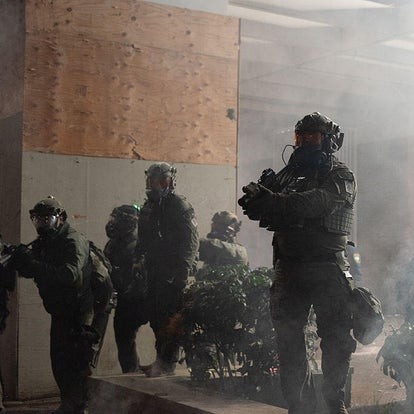
The dispute is not subtle. Protesters and journalists, backed by the ACLU of Oregon, say federal officers turned chemical irritants and “less-lethal” rounds into punishment that chills speech. The Department of Homeland Security says officers used the minimum force needed and draws a bright line between peaceful assembly and disorder.
In other words, both sides claim they are protecting the Constitution. Only one side is writing the rules for the next two weeks.
A 14-Day Clock on Federal Crowd Control
Simon ordered federal officers not to use chemical or projectile munitions unless the person targeted poses an imminent threat of physical harm, according to CBS News. He also limited officers from firing munitions at the head, neck, or torso “unless the officer is legally justified in using deadly force against that person.”
The order covers a long list of tools that often get talked about as “crowd control” in press briefings, but look very different at street level. Simon’s order applies to “kinetic impact projectiles, pepper ball or paintball guns, pepper or oleoresin capsicum spray, tear gas or other chemical irritants, soft nose rounds, 40mm or 37mm launchers, less lethal shotguns, and flashbang, Stinger, or rubber ball grenades,” CBS News reported.
The point is not only what is restricted. It is what has to be proven. The standard is no longer vibes or slogans. It is “imminent threat of physical harm” to justify chemical agents and impact rounds, and an even higher threshold for shots aimed at the body areas most likely to cause catastrophic injuries.
Simon framed the fight in constitutional terms. In his written order, he said, “In a well-functioning constitutional democratic republic, free speech, courageous newsgathering, and nonviolent protest are all permitted, respected, and even celebrated.” He added, “In helping our nation find its constitutional compass, an impartial and independent judiciary operating under the rule of law has a responsibility that it may not shirk.”
“In a well-functioning constitutional democratic republic, free speech, courageous newsgathering, and nonviolent protest are all permitted, respected, and even celebrated.”
Those lines are not just philosophy. They are a litigation strategy. They also put DHS in a bind. If the agency argues the streets are too dangerous for these restrictions, it risks confirming the plaintiffs’ premise that the government is treating public protest like a battlefield. If DHS downplays risk, it weakens the case for using chemical agents in the first place.
The Lawsuit’s Cast, From Chicken Suit to 80-Year-Olds
The ruling came in response to a lawsuit filed by the ACLU of Oregon on behalf of protesters and freelance journalists covering demonstrations at the Portland ICE building, according to CBS News. The suit names the Department of Homeland Security and its secretary, Kristi Noem, as defendants, along with President Trump.
The ACLU’s theory is straightforward and loaded: the complaint argues that federal officers’ use of chemical munitions and excessive force is retaliation against protesters that chills First Amendment rights, CBS News reported.
The human details are what make that theory sticky in a courtroom. The Oregon complaint describes plaintiffs who do not fit the standard caricature of an anonymous, masked agitator. CBS News summarized several examples from the filing, including:
- An 83-year-old Vietnam War veteran, Richard Eckman, and his 84-year-old wife, Laurie Eckman, who joined what the complaint describes as a peaceful march.
- Jack Dickinson, a protest regular known for wearing a chicken costume, who alleges munitions were aimed at him despite posing no threat.
- Freelance journalists Hugo Rios and Mason Lake, who allege they were hit with pepper balls and tear-gassed while marked as press.
In one October incident cited in the complaint, CBS News reported that federal officers launched chemical munitions at the crowd, hitting Laurie Eckman in the head with a pepper ball and causing her to bleed. The complaint says she sought hospital treatment and received concussion care instructions. It also says a munition hit her husband’s walker.
Dickinson’s allegations, as described by CBS News, are vivid for a reason. The complaint says officers shot munitions at his face respirator and his back, and that a tear-gas canister sparked next to his leg and burned a hole in his costume.
Then there is the press angle, a recurring pressure point in protest policing cases. The complaint, CBS News reported, says journalists were hit with pepper balls and tear-gassed despite being marked as press.
The lawsuit does not mince words about what it wants the court to stop. CBS News quoted the complaint as stating: “Defendants must be enjoined from gassing, shooting, hitting, and arresting peaceful Portlanders and journalists willing to document federal abuses as if they are enemy combatants.”
DHS Says ‘Minimum Force,’ City Calls It ‘Unconscionable’
DHS says the plaintiffs are telling only half the story. In an emailed statement responding to the ruling, DHS spokesperson Tricia McLaughlin said federal officers have “followed their training and used the minimum amount of force necessary to protect themselves, the public, and federal property,” according to CBS News.
McLaughlin also tried to narrow the constitutional dispute to a simpler frame. “The First Amendment protects speech and peaceful assembly, not rioting,” she said, according to CBS News. “DHS is taking appropriate and constitutional measures to uphold the rule of law and protect our officers and the public from dangerous rioters.”
Portland’s mayor offered a competing frame, and he went straight at the scale of federal force. Mayor Keith Wilson said the ruling “confirms what we’ve said from the beginning. Federal agents have used unconscionable levels of force against a community exercising their constitutional right to free expression,” CBS News reported.
This is the contradiction the judge’s order sharpens instead of smoothing over.
If federal agents are using only “the minimum amount of force necessary,” the government should be able to operate inside the order’s restrictions without missing a beat. If the order prevents officers from doing what they say they must do to keep people safe, DHS will have to explain why chemical irritants and impact munitions are the tool of first resort around a protest site that local officials described as peaceful, including when children were present, CBS News reported.
And the politics are built into the caption. The lawsuit names the agency, its secretary, and the president. That is not only about liability. It is about accountability. Plaintiffs are trying to turn a contested street scene into a documented chain of command.
Why Federal Use-Of-Force Standards Keep Showing Up in Protest Cases
Federal courts do not decide protest cases by choosing which side has better slogans. They decide them by applying standards that are supposed to be boring.
When claims involve force by law enforcement, a common legal touchstone is the Supreme Court’s “objective reasonableness” framework for use of force under the Fourth Amendment. In Graham v. Connor, the Court emphasized that reasonableness is judged from the perspective of a reasonable officer on the scene, not with hindsight, and that cases often involve split-second judgments.
That standard is also why plaintiffs fight so hard over facts like who was targeted, where munitions hit, whether the person posed an imminent threat, and whether journalists were clearly marked. When the dispute is about chemical agents and projectiles, those facts become the whole case.
On the First Amendment side, the stakes are less about a single injury and more about whether government action discourages people from speaking, assembling, or reporting. That is what the ACLU is pointing at with its claim of retaliation and chilling effects, as described by CBS News.
Portland Is Not the Only Courtroom Watching the Streets
Portland’s order also lands in the middle of a broader national argument over how far judges should go in limiting protest policing tools.
CBS News reported that judges elsewhere have confronted similar issues as cities across the country saw demonstrations against an immigration crackdown. The outlet noted that last month, a federal appeals court suspended a decision that had prohibited federal officers from using tear gas or pepper spray against peaceful protesters in Minnesota who were not obstructing law enforcement. CBS News also reported that, in November, an appeals court halted a ruling in Chicago that restricted federal agents from using certain riot control weapons unless necessary to prevent an immediate threat.
That larger backdrop raises a practical question for Portland. Even if Simon is unmoved by DHS arguments, the government can seek emergency relief at the appellate level. The 14-day window is short, but it is also long enough for attorneys to file fast and for the political temperature to rise.
For now, the order does something rare in a protest fight. It forces the most controversial tactics into a tighter legal lane, on a schedule that is impossible to ignore.
What to watch next is simple and consequential: whether the temporary restraining order becomes a longer injunction, whether the government appeals, and whether officers on the ground adjust tactics in ways that either cool the standoff or invite another round of litigation.