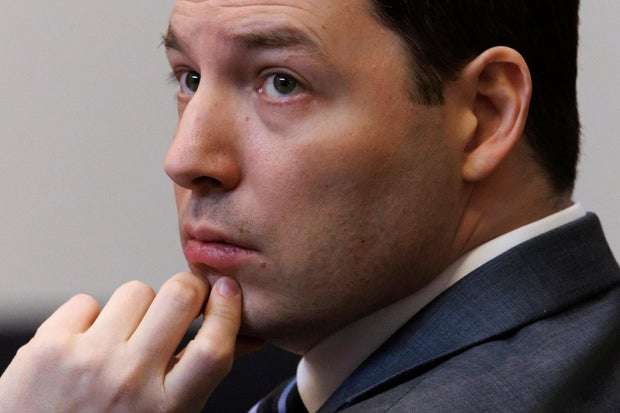
Brendan Banfield did not show up in court to deny the affair. He showed up to deny the motive that people think comes with it.
Under oath in Fairfax County, Virginia, Banfield testified that he loved his wife, wanted to stay married, and never plotted to kill her, even as prosecutors frame his relationship with the family’s au pair as the fuse that lit a double homicide.
Now the jury is staring at a high-stakes question that does not come with an easy villain: Is this a messy secret that turned deadly, or a months-long plan hiding behind the language of a “casual” affair?
The Defense Bet: Admit the Affair, Deny the Plot
Banfield, charged with aggravated murder in the killings of his wife, Christine Banfield, and Joe Ryan, testified that he did not want to end his marriage, according to CBS News. He described the affair with Juliana Peres Magalhaes as something that escalated quickly while his wife was out of town, including a night that ended with Magalhaes following him into his room.
That testimony matters because it puts Banfield in the middle of the story on purpose. Defendants do not often take the stand in murder trials unless they think the risk is worth the reward.
The reward here is simple: If jurors can believe Banfield is telling the truth about his marriage, they might believe him about everything else.
On the stand, he tried to make the prosecutors’ theory sound not just wrong, but disconnected from reality. “I think that it’s an absurd line of questioning for something that is not serious, that a plan was made to get rid of my wife,” he testified. “That is absolutely crazy.”
The Prosecution Bet: The Au Pair Is the Receipt
Prosecutors, meanwhile, are leaning on a witness who is both central and complicated: Magalhaes herself.
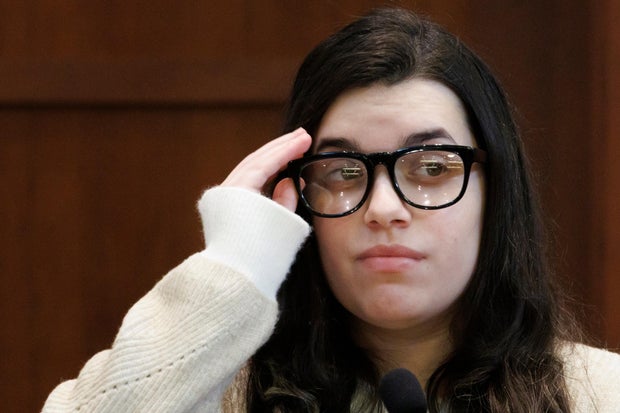
According to CBS News, Magalhaes testified earlier in the month that she and Banfield created an account in Christine Banfield’s name on a social media platform aimed at sexual fetishes. The account allegedly connected with Joe Ryan, and plans were made for an encounter involving a knife.
Prosecutors argue that it was not lifestyle experimentation. It was bait.
The state says Banfield and Magalhaes lured Ryan to their home, shot him, and then Banfield stabbed his wife in a way that was meant to make Ryan look like a predator who attacked Christine Banfield, according to CBS News.
If you are wondering why the prosecution would put a witness like Magalhaes front and center, the answer is power and proximity. She was in the house. She knows the routines. She can narrate the private spaces where the state says the plan came together.
But using her as the cornerstone comes with an obvious downside. If jurors decide she is shading the truth to save herself, the whole structure shakes.
The Credibility Problem Nobody Gets to Dodge
Magalhaes has offered the kind of testimony prosecutors love, a detailed story that explains how the alleged plot worked. But the defense has plenty to work with in the fine print.
According to CBS News, prosecutors highlighted gaps in Magalhaes’ memory about who created the email address connected to the fetish-platform account, where she and Banfield were when it was obtained, and who wrote which messages to Ryan. CBS also reported that she admitted under oath to negotiating with a true-crime author and producers to share her story for money.
None of that automatically makes her testimony false. It does something else. It turns her into a witness with incentives, and it hands jurors a motive to doubt.
This is the contradiction at the center of the trial: The state is asking jurors to trust a witness whose story is detailed in the moments that hurt Banfield, and hazy in the moments that could pin authorship and intent on her.
Love, Marriage, and the Line That Sounds Like a Defense Exhibit
Banfield did not just deny a murder plot. He described a marriage he said never ended, even after the cheating began.
“We were together the entire time. We didn’t break up at any point,” Banfield testified, according to CBS News.
His lawyer pushed the point into yes-or-no territory:
“Did you love your wife?”
“Very much,” he said.
“Did you want to continue your marriage with your wife?”
“Yes.”
It is clean, simple language, and it lands like a challenge. If he loved his wife and wanted to stay married, why gamble everything on a plan to erase her?
Of course, prosecutors are not required to prove he hated her. They are required to prove what he did and why it makes sense in the context of the evidence.
Guns, Planning, and What Jurors Will Do With Time Lines
The state is also trying to show preparation, not panic.
CBS News reported that WUSA-TV said prosecutors presented records at an April 2024 hearing indicating Magalhaes and Banfield visited the Silver Eagle Group Shooting Range about two months before the shooting. CBS News also reported that prosecutors said Banfield later purchased a gun that was eventually used to shoot Ryan.
In cases like this, timelines do not just fill in calendars. They suggest intent. A jury can see a range visit and a gun purchase as normal behavior, or as steps in a plan, depending on what else they believe.
That is why both sides are fighting so hard over the messaging and the accounts. If jurors accept the fetish-platform setup as real and coordinated, the range visit looks different. If jurors see the fetish-platform account as sloppy and unproven, the range visit looks like noise.
The Stakes: Life in Prison, and a Charge Built for the Worst
Banfield has pleaded not guilty, and CBS News reported he could face life in prison if convicted.
Virginia law lays out how severe the state considers aggravated murder. Under Virginia Code, aggravated murder is listed under the state’s first-degree murder statute, and it is treated as a Class 1 felony. Under Virginia’s sentencing statute for felonies, a Class 1 felony can carry a penalty of life imprisonment and a fine of up to $100,000.
That legal backdrop is why the testimony battle is so intense. This is not a case where the losing side shrugs and moves on. The consequences are permanent.
Joe Ryan’s Mother, and the Part of the Story That Does Not Fit a Script
There is also a human tension in the case that does not play neatly into either side’s narrative: Joe Ryan was not just a name on a charge sheet.
CBS News reported that Ryan’s mother, Deirdre Fisher, told WUSA-TV her son had discussed consensual role play and that he was not a violent person. She also described the moment she learned of his death.
“I remember when I got the call from the detective … I could hear my own voice screaming,” she said, according to CBS News. “It was almost like it was outside of my body hearing that he had been killed.”
That quote is not evidence of who did what. It is evidence of what this case costs, and why the jury will be asked to sort through adult choices, private messages, and ugly outcomes without turning any of it into a shortcut.
What To Watch Next
The trial is now a contest between two stories that both admit the same uncomfortable starting point: an affair in a family home.
The unanswered question is what the jury does with the parts that do not align. Banfield says the marriage was intact. Prosecutors say the relationship with Magalhaes grew into a plot. Magalhaes offers the state’s inside narrative, but her memory gaps and money negotiations offer the defense a lever.
Jurors will not just be weighing facts. They will be weighing incentives, credibility, and whether the evidence shows improvisation or planning.