

The phrase “Epstein files” keeps showing up like a flare over America’s most radioactive scandal. This time, it popped up as a simple bullet point in a CBS News video rundown. That tiny line raised a big question: when someone says “a trove,” what are we actually talking about, and what can the public verify right now?
The prompt came in a brief description on a CBS News page for ‘The Takeout with Major Garrett’ (12/19), which lists two headline items, including: “The DOJ releases a trove of Epstein files.” The same CBS summary also mentions U.S. retaliatory airstrikes against ISIS targets in Syria, an entirely separate story with its own secrecy and receipts problem.
But the Epstein line is the one that reliably detonates online. So let’s slow it down and sort it into two piles. First, what the U.S. government and courts have already put into the public domain. Second, what a “new trove” would have to include to be more than recycled paperwork with a hotter label.
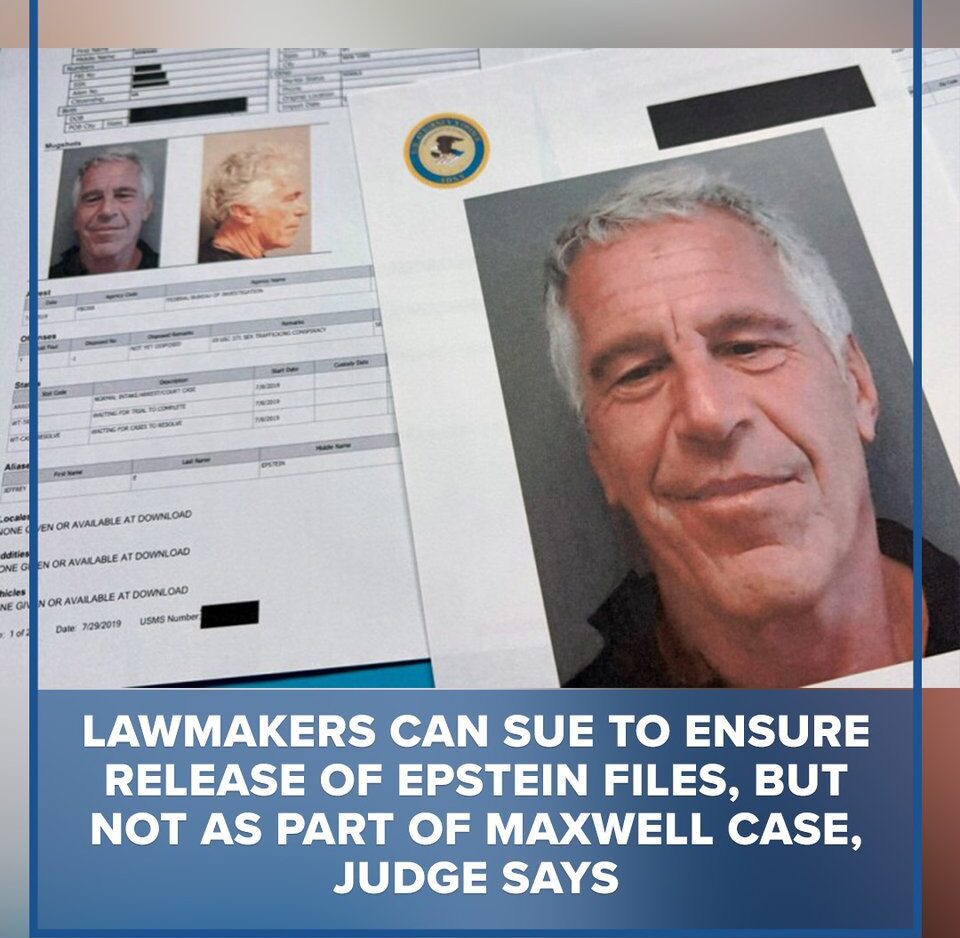
A judge ruled that two members of Congress lacked the right to press for a court-appointed observer to make sure the government complies with ordering the DOJ release all files related to billionaire sex offender Jeffrey Epstein. https://t.co/LDiqzMrBT6 pic.twitter.com/hOuCGkYjd9
— NBC4 Columbus (@nbc4i) January 22, 2026
What CBS actually said, and what it did not say
On the CBS News page for the episode, the Epstein reference appears in the description, not as a detailed claim with named documents attached. The summary does not specify which DOJ component, which court docket, what date range, what volume, or what categories of records were involved.
That matters because “Epstein files” is not one single binder locked in one single cabinet. Epstein-related records are scattered across agencies, courts, civil litigation, and prior releases. Some are sealed. Some are heavily redacted. Some are already online and searchable if you know where to look.
A federal judge denied a request from Reps. Ro Khanna (D-Calif.) and Thomas Massie (R-Ky.) to appoint an independent monitor to ensure the Department of Justice (DOJ) complies with the law mandating the release of all files related to Jeffrey Epstein. pic.twitter.com/dC9plxfp43
— The Federalist Press 🇻🇦🇺🇸 (@FederalistPress) January 22, 2026
The public record that already exists, in plain sight
If someone is trying to verify what is real, start with the basics that are already public and attributable.
1) The FBI’s own “Vault” material on Epstein.
The FBI hosts a reading-room style repository known as The Vault, which includes a page dedicated to Jeffrey Epstein. It is not “everything,” but it is a concrete place where anyone can see what has been posted, in what format, and with what redactions. See the FBI’s Jeffrey Epstein Vault page.
2) The 2019 federal case announcement that put Epstein back in the center.
When Epstein was arrested in 2019, the Southern District of New York announced the case and described the allegations. That announcement is still a key reference point because it shows what prosecutors were formally alleging at the time and how they framed the case publicly. In the SDNY press release titled “Jeffrey Epstein Arrested for Sex Trafficking Charges”, the U.S. Attorney’s Office stated: “As alleged, Epstein sexually exploited and abused dozens of underage girls at multiple locations, including in his homes in Manhattan and Palm Beach.”
3) The prosecution of Ghislaine Maxwell, which generated its own record.
Epstein’s death ended his prosecution, but it did not end the federal government’s focus on his network. The DOJ’s public materials around Ghislaine Maxwell’s conviction and sentencing are a major spine of “Epstein universe” documentation, because they outline the government’s case theory and the conduct proven at trial. See the DOJ press release “Ghislaine Maxwell Sentenced to 20 Years in Prison”.
Those three buckets alone show why “Epstein files” is a slippery phrase. Some people mean FBI interview memos. Others mean court exhibits. Others mean investigative reports, travel logs, or internal reviews. Without specifics, it is easy for a single line in a show description to inflate into a social media myth that “everything” is finally being released.
BREAKING🚨: A federal judge in New York has declined to appoint a special master to oversee the DOJ’s release of remaining Jeffrey Epstein files, despite legitimate concerns over compliance with the Epstein Files Transparency Act and the missed December 19 deadline.
The DOJ… pic.twitter.com/Awe1UwQCrm
— Bruce Forman (@Brucenewsreview) January 21, 2026
Why “a trove” is a loaded word in the Epstein ecosystem
In the Epstein world, transparency and privacy collide at high speed.
On one side are people arguing that more disclosure is necessary to understand who enabled Epstein, who financed him, who protected him, and who might have been missed by prosecutors. They point to the long timeline, the many jurisdictions, and the way his social circle overlapped with wealth and power.
On the other side are legal and ethical constraints that are not optional. Victim privacy is not a talking point, it is a requirement. Uncharged third parties can be unfairly smeared by partial documents. Ongoing investigative techniques and cooperating witness information can be compromised. Even when records exist, the government often has lawful reasons to redact or withhold them.
Federal Judge DEMANDS DOJ Explain Why Epstein Files Are Still Mostly Hidden
A New York federal judge just put the Department of Justice on the hot seat — ordering them to explain by THIS FRIDAY why they’ve released less than 1% of the Jeffrey Epstein files, despite a new law… pic.twitter.com/B2gY89UCsR— James Tate (@JamesTate121) January 21, 2026
That is why the public tends to get “bursts” of Epstein paperwork rather than a single, clean dump. And it is why a claim of a DOJ “trove” needs the kind of detail that can be checked: which database, which case number, which FOIA release, which document titles, and what changed compared with what was already public.
How to tell if any Epstein document drop is actually new
If an outlet or a public figure says “new Epstein files” are out, there are a few concrete questions that separate signal from noise.
Is it a court release or an agency release? Court records usually come with docket numbers, filing dates, and judges’ orders. Agency releases often come through FOIA logs or reading-room postings.
Are the documents primary sources or summaries? A “trove” can mean original PDFs or it can mean a curated narrative that selects fragments. The former is checkable. The latter is often more heat than light.
Do the records include provenance? A legitimate release should identify who created the document, when, and in what context. Anonymous “binders” and screenshot threads are not provenance.
Do the names come with context? Epstein’s social orbit was sprawling. Being mentioned in an address book is not the same as being accused of a crime. A real release should make that difference visible, not blur it.
And what about the other bullet point, ISIS strikes in Syria?
The CBS episode description also flagged “retaliatory airstrikes against ISIS targets in Syria.” Even without diving into that specific claim, the pairing is revealing. Both stories live in the same American pressure cooker where the public wants proof, officials cite constraints, and information arrives in chunks.
In national security stories, details can be withheld for operational reasons. In sex-trafficking investigations and related litigation, details can be withheld for legal and victim-protection reasons. The motives differ. The result looks similar: partial disclosure that invites speculation.
What to watch next, if the “Epstein files” talk keeps spreading
If there is truly a new DOJ release, the proof should be easy to show. Not via rumors, but via documents: a DOJ page posting files, a FOIA release entry, or a court order unsealing specific materials.
Until then, the safest way to read headlines like the CBS bullet point is as a signpost, not a verdict. It is a reminder that Epstein-related records exist across multiple institutions, and that the public record already contains plenty that most people have never actually read.
The irony is that the biggest “information gap” in the Epstein saga is often not that the documents are unavailable. It is that the documents are available, but the public is still waiting for one authoritative, clearly sourced map of what exists, what is sealed, and what would have to happen for anything truly new to be released.
References
CBS News, ‘The Takeout with Major Garrett’ (12/19) page and episode description
FBI Vault, Jeffrey Epstein file page
U.S. Attorney’s Office, Southern District of New York, “Jeffrey Epstein Arrested for Sex Trafficking Charges”
U.S. Department of Justice, Office of Public Affairs, “Ghislaine Maxwell Sentenced to 20 Years in Prison”