

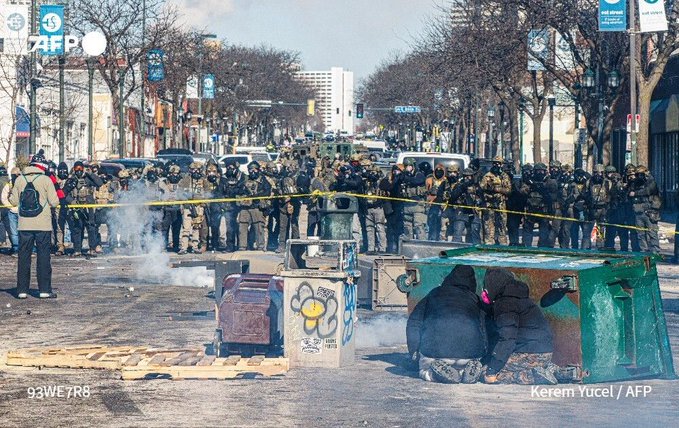
A short burst of bystander video is now doing what press conferences cannot. It is forcing two powerful versions of the same deadly encounter to sit side by side, and it is raising the question neither side can wave away.
If federal agents fired in self-defense, the footage could support that. If they did not, the video becomes a problem that will not stay local.
The man at the center is 37-year-old Minneapolis resident Alex Pretti, who was killed in an encounter involving federal immigration officers. The video, described in a BBC News report, captures moments around the shooting and has become the new focal point in a fast-escalating federal versus state dispute.
Two Stories, One Death, and a Camera in the Middle
According to BBC News video coverage, bystander footage captured the moments before Pretti was killed by federal immigration officers in Minneapolis.
The same report says federal and state officials have offered conflicting accounts of what led to his death. That split is not a footnote. It is the whole fight, because the difference between a justified shooting and an unjustified one can turn on seconds, body positioning, and what can be proven about a perceived threat.
🚨Images from yesterday show federal Border Patrol and ICE agents involved in the shooting of 37-year-old Alex Pretti in Minneapolis, Minnesota, and the protests and unrest that followed the shooting of the ICU nurse by immigration enforcement agents. pic.twitter.com/8gM0eefRys
— PLT Report (@pltreport) January 25, 2026
What Kristi Noem Says Happened
Homeland Security Secretary Kristi Noem, as quoted by the BBC, said agents fired “defensive shots” after Pretti “reacted violently.” Those two phrases do a lot of work. “Defensive shots” frames the officers as responding, not initiating. “Reacted violently” suggests the threat was sudden and physical.
But even with that framing, the key details the public will look for are concrete and testable. What exactly was the alleged violent reaction? What was the distance between Pretti and the agents? Was there a weapon? Were commands given? Was there an attempt to disengage or de-escalate? Those are the kinds of questions that video can sometimes answer, and sometimes complicate.
What Tim Walz Says Happened
Minnesota Governor Tim Walz, also quoted by the BBC, dismissed the federal account as “nonsense” and “lies.” That is not a careful, lawyerly pushback. It is a direct accusation that someone in federal authority is misrepresenting what happened.
Walz’s choice of words signals something else, too. This is not being treated as a routine use-of-force review. It is being framed as a credibility contest between Minnesota’s top elected official and the federal department that oversees immigration enforcement.
Why This Fight Gets Bigger Than One Street Corner
When the people arguing are a cabinet secretary and a governor, the argument tends to grow legs. Minneapolis is already a national touchpoint for policing, accountability, and oversight debates. A fatal encounter involving immigration officers adds another layer, because it mixes federal authority with local political realities, and it can trigger jurisdictional friction about who investigates and who gets to speak first.
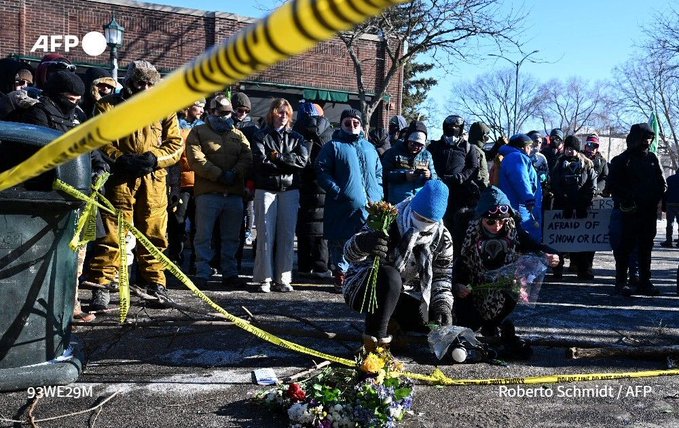
In cases like this, the public conversation often hinges on the order of evidence. Statements come out immediately. Video comes out later, sometimes in fragments. Additional footage, including body-worn camera video if it exists, may be withheld while investigations proceed. Each stage tends to harden opinions and lock officials into positions that become difficult to soften without looking evasive.
The BBC report points to exactly that dynamic. There is a video, but there are also sharply different official narratives around the same moment of violence.
A Second Shooting in Weeks Raises the Temperature
The BBC report also places Pretti’s killing in a troubling local context. It says the killing came less than three weeks after American citizen Renee Good was shot dead by an immigration agent in the city.
The fatal shooting of 37-year-old Alex Pretti by a US Border Patrol officer in Minneapolis triggered nationwide protests across the United States on Saturday, with demonstrations erupting in cities including Minneapolis, Washington, Los Angeles, Phoenix, San Francisco and Tucson.… pic.twitter.com/L6qfpYl18s
— India Today Global (@ITGGlobal) January 25, 2026
That detail matters for a simple reason. Separate incidents can quickly become a pattern in the public mind, even before investigators determine whether they are connected by policy, personnel, or circumstance. A second shooting in a short span invites scrutiny of training, rules of engagement, and decision-making, not only of the individual shooter but of leadership and operational planning.
It also raises the stakes for transparency. The more frequent and serious the incidents appear, the less patience the public tends to have for vague summaries and closed-door reviews.
What the Video Can and Cannot Settle
Video has a reputation as an instant truth machine. In reality, it is evidence with limits. A clip may show the lead-up but not the moment a weapon appears. It may capture sound, but not every command. It may show actions, but not what an officer perceived in a split second. And in a chaotic encounter, angles and distance can distort what looks obvious.
Still, bystander footage can be decisive in one respect. It can anchor the timeline. It can reveal whether the encounter was already escalating before the final seconds. It can show whether the physical spacing makes certain claims more plausible than others. It can also expose gaps between what officials say and what the public can plainly see.
That is the tension now. Noem’s phrasing suggests a defensive posture and a sudden threat. Walz’s phrasing suggests fabrication. A video clip, even a partial one, invites viewers to test both claims against observable reality.
What to Watch Next
The next chapter is unlikely to be decided by one clip alone. The practical questions that tend to drive these cases include whether additional footage exists, what investigators conclude about the sequence of events, and whether any agency releases more complete material.
BREAKING UPDATE: An unnamed witness has provided more details in a federal court filing about the shooting in Minneapolis of 37-year-old Alex Pretti, the second shooting of a U.S. citizen this month by federal agents in the city.
Follow live updates: | https://t.co/r7ZrK1K9Ps pic.twitter.com/t69VCdnUAy
— Judy Graves (@JudyGra35816777) January 25, 2026
In a politically charged environment, another factor matters too. Who controls the information pipeline? Federal agencies often have their own investigative processes, while state leaders may demand separate reviews or public disclosures. If the two sides continue to accuse each other of misrepresenting facts, the pressure to release more evidence typically increases.
For now, the BBC’s reporting captures the core reality. A man is dead, a bystander video exists, and top officials are telling incompatible stories about why shots were fired.
And in Minneapolis, the camera is not just recording. It is calling everyone’s bluff.