

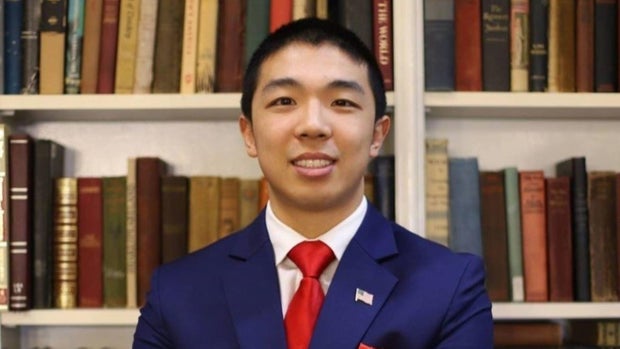
It was the kind of normal evening that disappears into memory, until it becomes the last timestamp anyone can agree on. Kevin Jiang spent a Saturday with his fiancée. They hiked, ice fished, ate dinner, and then said goodnight. Minutes later, he was dead. The mystery that followed has pulled in elite campuses, a cross-country manhunt, and one name prosecutors say matters most: Qinxuan Pan.
The case returned to national view through CBS News’ ’48 Hours’ report on Kevin Jiang’s murder, which lays out a timeline that still reads like a trap set in motion. And it poses the question that keeps nagging: How does a Yale graduate student and Army veteran get ambushed after a quiet date night, and why did investigators lock onto an MIT-affiliated suspect?
Did a secret obsession lead an MIT “genius” to mastermind the murder of a Yale grad student?
From CBS News:
• Kevin Jiang, a Yale graduate student, was murdered in New Haven, Connecticut in February 2021.
• Qinxuan Pan, an MIT graduate student, was identified as a suspect… pic.twitter.com/pqvkWE37uB— nuprizm (@nuprizm) January 25, 2026
The last ordinary night in East Rock
Jiang was 26, a Yale graduate student and former Army National Guardsman, according to CBS. He spent Feb. 6, 2021, with his fiancée, Zion Perry, also a Yale graduate student. They went hiking and ice fishing, ate dinner at her apartment in New Haven’s East Rock neighborhood, and then he left to drive to his home, where he lived with his mother, CBS reported.
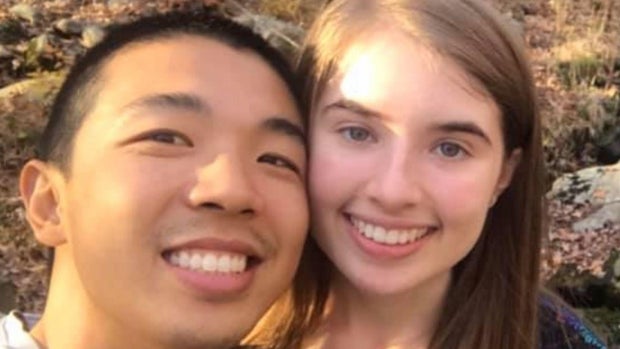
CBS describes the pivot point with a precision that feels chilling because it is so mundane: “Police say that at around 8:30 p.m. Jiang left her apartment and headed off in his Prius to his house,” the outlet reported in its ’48 Hours’ coverage.
After that, the story becomes a sequence of investigative claims, alleged motives, and a suspect whose presence in the narrative is both central and disputed in the public imagination. What is not disputed is the loss. Yale publicly mourned Jiang’s death and described him as a member of its community in a campus statement.
Why investigators zeroed in on Qinxuan Pan
Investigators have said they believe Jiang was targeted. The suspect named in CBS’s reporting is Qinxuan Pan, described by the program as linked to MIT. That detail matters, not as gossip, but as a marker of how the case ricocheted through high-achievement ecosystems where reputations are often curated as carefully as resumes.
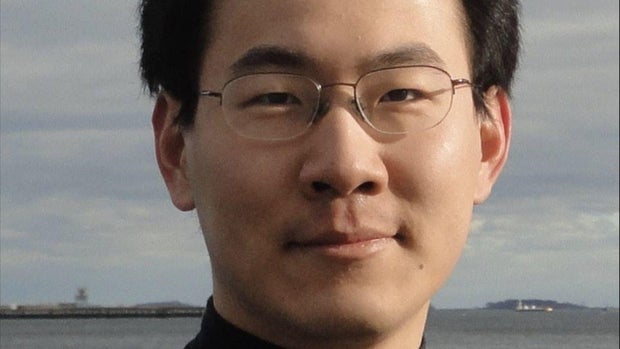
Police and prosecutors have laid out an evidence story that, as presented publicly, aims to answer two core questions. First: Who tracked Jiang’s movements that night? Second: How did that person slip away afterward?
Pan was later arrested outside Connecticut, part of a manhunt that widened the case from a New Haven homicide to an interstate pursuit. CNN reported on the arrest in Alabama in May 2021 in. The geographic sprawl is one reason the story never stayed local. A campus community grieved, while law enforcement traced a suspect across state lines.
As always in a high-profile case, the public sees the outline before it sees the full proof. Some details emerge in bursts, others are held back for court. That gap is where theories breed, and where ’48 Hours’ has made a franchise: taking viewers back through what is known, what is alleged, and what remains tightly guarded.
The evidence trail that keeps people arguing
Here is the tension the case keeps serving: the prosecution’s narrative depends on logistics, timing, and traceable steps. The defense posture, when it comes, often challenges interpretation, identification, or the weight of circumstantial evidence. Even when a suspect is in custody, the argument becomes less about whether something happened and more about whether investigators can prove exactly how and why.
In the CBS account, the night is framed as a series of moves that look less like a random street crime and more like intent. The program’s reporting focuses on the period after Jiang left Perry’s apartment, and the chain of investigative leads police say pointed to Pan. That includes the idea that Jiang’s relationship, routines, or location may have been known to someone watching closely.
Without turning an investigation into entertainment, the public interest is easy to understand. Jiang’s biography is one of service and ambition. The setting is a well-known university city. The alleged suspect profile points to another elite institution. The collision of those worlds generates the kind of uncomfortable question that audiences keep clicking because it feels unanswerable: if someone can allegedly plan violence in that environment, what does “safe” even mean?
At the same time, case coverage brings a responsibility. Police allegations are not the same as courtroom proof. Media recaps can compress complex timelines into dramatic beats. That is why readers should pay attention to what is sourced, what is attributed to law enforcement, and what remains contested.
Why this story sticks to Yale, MIT, and everyone watching
High-profile university cases create a particular kind of reputational pressure. Institutions are forced to respond publicly while often having limited control over investigative facts. Students and families ask whether warning signs were missed. Administrators weigh privacy, safety, and liability. And every new development, arrest detail, or court milestone lands on a community already carrying grief.
Yale’s statement memorializing Jiang made clear the human center of the story, while national coverage has highlighted the investigatory chase. The result is a split-screen narrative: a young man’s life and relationships on one side, and a procedural hunt for accountability on the other.
’48 Hours’ effectively leans into that split. It is not just about who pulled a trigger, investigators say. It is about what kind of trail gets left when the alleged suspect is smart, mobile, and motivated enough to run. That is also why the case continues to draw attention years later. The questions do not expire just because the news cycle does.
What to watch next
If you are following this case for more than the headline, keep an eye on two things: court filings that clarify what evidence will be admissible, and any public statements that narrow the alleged motive. Those are the moments when a story stops being a montage of clues and becomes an argument tested under rules.
CBS’ reporting puts the last ordinary minutes back on the clock, then forces the viewer to sit with what came next. The most haunting detail remains the simplest. A short drive home after dinner became the dividing line between before and after. “Around 8:30 p.m.” is not just a time. It is the case’s hinge, and it still has people asking who was waiting on the other side of it.