

One seat on the Federal Reserve’s board is suddenly the hottest piece of real estate in Washington. President Donald Trump wants it opened up now, before the courts finish fact-finding, before the paperwork fight cools off, and before the Fed’s rate decisions stop dominating headlines.
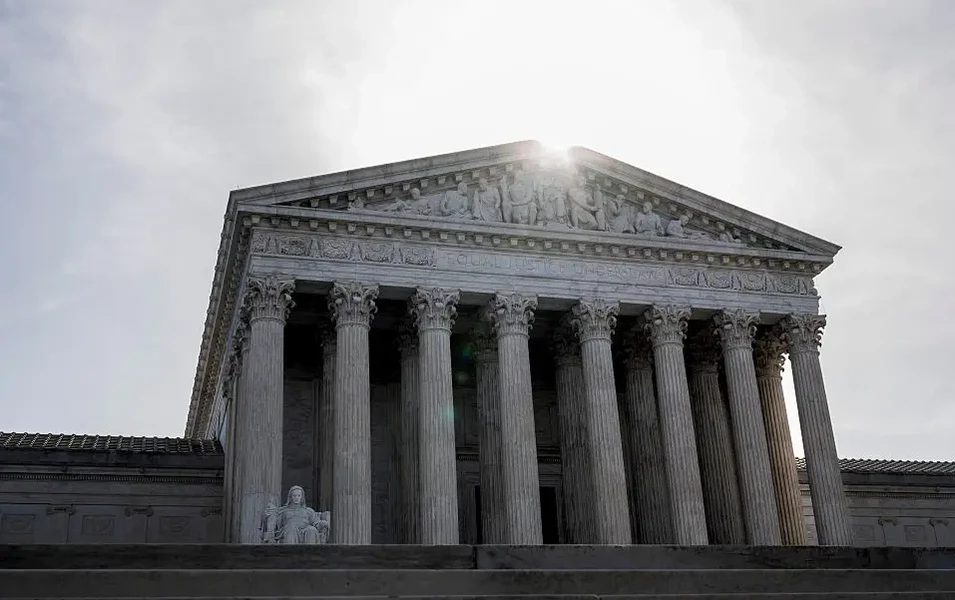
The Supreme Court is now being asked to decide whether Trump can remove Federal Reserve governor Lisa Cook while her legal challenge plays out, in what supporters call accountability and critics call a power grab, with interest rates in the crosshairs.
A Rare Thing in Fed History, a President Trying to Fire a Sitting Governor
No president has fired a sitting Fed governor in the central bank’s 112-year history, according to reporting published by PBS NewsHour based on an Associated Press account. That is why this emergency appeal has landed as more than a routine personnel dispute.
Cook is one of seven Fed governors. She was appointed in 2022 by President Joe Biden. If Trump could replace her, he would have four appointees on the seven-member board, per the AP report.
The case arrives as Trump has publicly pressed for sharply lower interest rates. The Fed cut a key interest rate three straight times in the last four months of 2025, but policymakers also signaled they might hold steady in the coming months amid inflation concerns, the report notes.
The Official Reason: Mortgage Fraud Allegations That Cook Denies
The legal trigger for Cook’s firing is an allegation that she committed mortgage fraud. Cook denies wrongdoing and has not been charged with a crime, according to the AP report.
The allegations center on claims that in June and July 2021, before she joined the Fed board, Cook claimed two properties, in Michigan and Georgia, as primary residences. The AP report explains that designating a primary residence can come with better mortgage terms, such as a lower rate or smaller down payment, than a second home or rental.
Cook’s attorney Abbe Lowell pushed back aggressively in a letter to Attorney General Pam Bondi, as described in the AP report. Lowell wrote: “There is no fraud, no intent to deceive, nothing whatsoever criminal or remotely a basis to allege mortgage fraud.”
Lowell’s account also points to documents he says clarify Cook’s intent at the time. According to the report, Cook specified her Atlanta condo would be a vacation home in a loan estimate from May 2021, and in a security clearance form, she described it as a “2nd home.” Lowell argued the accusations rely heavily on what he called “one stray reference” in a 2021 mortgage document, which he said was “plain innocuous” given other disclosures.
The Critics’ Argument: The Real Fight Is Over Rate Power
Trump’s critics argue the mortgage issue is not the true motivation. They say the real goal is to gain more leverage over U.S. interest rate policy and to put pressure on the central bank to move faster and further on rate cuts.
Lev Menand, a Columbia University law professor who joined a brief supporting Cook, framed it as a larger institutional fight. “This case is about much more than Cook,” Menand said, according to the AP report. “It’s about whether President Trump will be able to take over the Federal Reserve board in the coming months.”
That framing matters because the Fed’s credibility depends on the market believing monetary policy is not being set by White House demand. Economists cited in the AP report warn that if investors think the Fed will “cave in to the president’s demands,” credibility as an inflation fighter can erode, and investors could demand higher rates to buy U.S. Treasuries.
The Unusual Pile-On: Ex-Fed Chairs and Ex-Treasury Chiefs Weigh In
One of the biggest tells of the case’s stakes is who lined up on Cook’s side.
The AP report says Jerome Powell’s three living predecessors as Fed chair, Alan Greenspan, Ben Bernanke, and Janet Yellen, filed in support of Cook. They were joined by five former Treasury secretaries appointed by presidents of both parties, plus other former high-ranking economic officials.
In their filing, the former officials warned that speed matters. They wrote that “immediately ousting Cook would expose the Federal Reserve to political influences, thereby eroding public confidence in the Fed’s independence and jeopardizing the credibility and efficacy of U.S. monetary policy,” according to the AP report.
That is not a normal coalition for a workplace dispute. It is a flashing sign that the legal question could shape how markets interpret the Fed’s autonomy long after the details of one mortgage application fade.
What Lower Courts Have Said So Far, ‘For Cause’ Means Something
Cook has been allowed to keep her seat during the litigation because lower courts blocked the removal.
U.S. District Judge Jia Cobb ruled that the Trump administration did not satisfy the legal requirement that Fed governors can only be fired “for cause,” which she said was limited to misconduct while in office, according to the AP report. Cobb also held that firing Cook as attempted would have deprived her of due process, meaning a legal right to contest the firing.
A panel of the federal appeals court in Washington rejected the administration’s request to let the firing proceed, by a 2-1 vote, per the AP report.
Now the administration is asking the Supreme Court to let it remove Cook immediately while the underlying case continues.
Trump’s Legal Position at the Supreme Court: Courts Should Not Review This
At the Supreme Court, the Trump administration argues Cook has no right to a hearing and that courts should have no role in reviewing Trump’s action, according to the AP report.
Solicitor General D. John Sauer wrote that Trump “lawfully fired Cook” after concluding the public should not have interest rates set by someone who made “misrepresentations material to her mortgage rates” that appeared “grossly negligent at best and fraudulent at worst,” the report states.
Cook’s lawyers counter that her fate should not turn on “untested allegations” and that she should remain in her job while the case proceeds, according to the AP report.
The Cast of Courtroom Heavyweights, and a Reminder This Is an Emergency Fight
The Supreme Court showdown features two well-known conservative legal figures. Sauer is set to face Paul Clement, who previously served as solicitor general under President George W. Bush, and has argued major cases on hot-button issues, per the AP report.
This is also an emergency appeal, meaning the justices are being asked for a fast, high-impact decision on interim power. The question is not only who wins in the end, but who controls the seat, and the leverage that comes with it, during the months it can take to litigate a federal case.
A Parallel Escalation: DOJ Investigations and Subpoenas Collide With Fed Independence
Cook’s case is not happening in a vacuum. The AP report says that with Cook’s dispute under Supreme Court review, Trump escalated his confrontation with the Fed more broadly. The Justice Department opened a criminal investigation of Fed Chair Jerome Powell and served subpoenas on the central bank, according to the report.
The Justice Department has said the dispute is ostensibly about Powell’s testimony to Congress in June over the cost of a major renovation of Fed buildings, the AP report notes. Powell responded, calling threatened criminal charges “pretexts” that mask the real reason, Trump’s frustration over interest rates, according to the report.
Together, the Cook fight and the Powell pressure campaign create a simple political reality: even if Trump does not win every legal argument, the attention and threat environment can still shape how the Fed explains decisions and how markets read those explanations.
What to Watch Next: One Seat, Seven Votes, and a Credibility Test
The Supreme Court has signaled caution about the Fed before, describing it as a “uniquely structured, quasi-private entity,” according to the AP report. That language could matter if the justices look for a way to treat the central bank differently from other agencies, where recent rulings have expanded presidential removal power.
For Cook, the immediate question is whether she keeps her chair while the courts work through the factual disputes and legal standards for “for cause” removal. For Trump, the question is whether he can change the Fed’s internal math sooner, not later.
And for everyone watching rates, inflation, and government borrowing costs, the most revealing line may be the one that never appears in a court order. It is the market’s answer to a quieter question: how independent does the Federal Reserve look after this?
For now, Cook’s side is betting the justices will not rush to rewrite a century of Fed norms on an emergency clock. Trump’s side is betting they will.