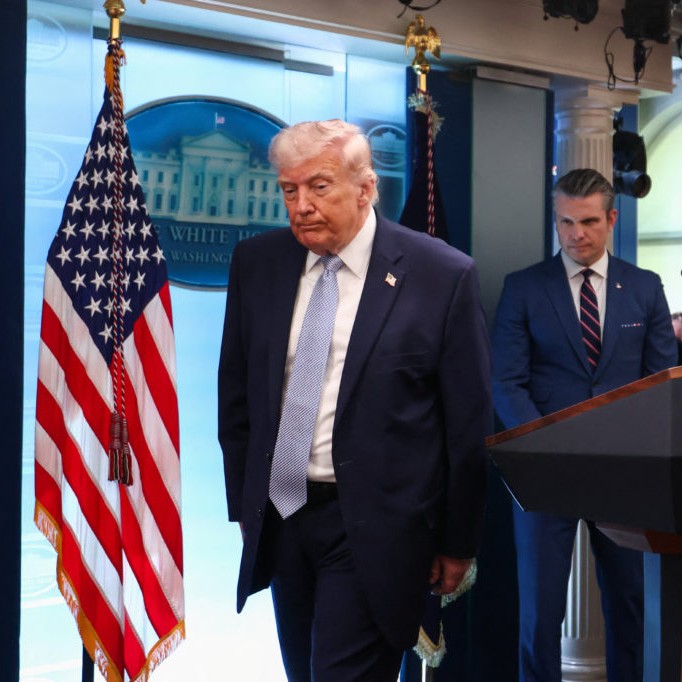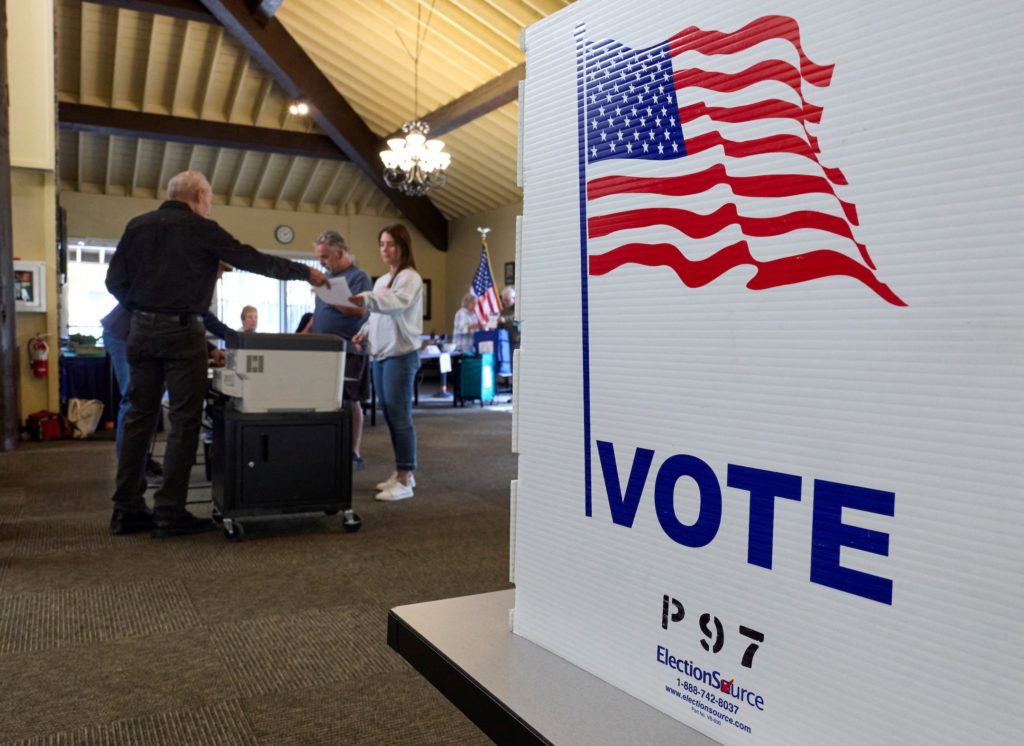
Democrats are staring at the 2026 midterms like it is not just a campaign, but a test of guardrails. Their warning is blunt: President Donald Trump, they say, is using the powers of government and the machinery of politics to shape the playing field before voters ever show up.
The White House response is also blunt. It calls the claims “fearmongering” and “baseless conspiracy theories,” casting Democrats as preloading excuses for a tough cycle.
In the middle sits a familiar American problem: elections are mostly run by states, but presidents still have plenty of levers that can spook officials, energize donors, and rattle voters. The question is which fears are grounded in observable moves, and which are predictions that could fizzle again.
Why Democrats think 2026 could become a Trump loyalty test
The alarm is not happening in a vacuum. Republicans hold only a slim House majority, and midterm history typically punishes the party in the White House. Democrats see that pattern, and they see Trump, whose first-term loss of the House helped trigger two impeachments, as unusually motivated to stop it from happening again.
According to an Associated Press report published by PBS NewsHour, Trump has pushed for GOP-backed redistricting efforts “across the country to create more conservative-leaning House seats,” while also directing his administration to target Democratic politicians, activists, and donors. Democrats frame that mix as a strategy to squeeze them politically and financially before the first ballot is cast.
They also cite a more volatile concern: federal force and federal optics.
Troops, DHS, and the memory that refuses to fade
Critics point to episodes that, in their view, signal a willingness to bring the federal government into blue territory in a show of strength. The AP report notes Democrats citing deployments of the military into Democratic cities over the objections of Democratic mayors and governors, and aggressive Department of Homeland Security actions that included agents handcuffing a Democratic U.S. senator.
Then there is the scenario Democrats keep raising, because it has a built-in audience: a fight over whether winning candidates are seated if Democrats take back the House. That warning is tied to Trump’s efforts to remain in power after the 2020 election and the violent attack by his supporters on the U.S. Capitol.
It is a line of argument designed to do two things at once. First, attach any 2026 hardball to an already-litigated national trauma. Second, suggest that procedures people assume are automatic, like certification and seating winners, could become contested terrain again.
Ken Martin’s claim, and the White House’s counterpunch
Democratic National Committee chairman Ken Martin offered one of the most direct versions of the fear. He told The Associated Press that he expects Trump to deploy troops and keep them in place through the next election, arguing that if people are afraid to leave their homes, they will not vote.
The White House did not entertain that prediction. Spokeswoman Abigail Jackson said Democrats were “fearmongering to score political points,” and she described their concerns as “baseless conspiracy theories,” according to the AP report.
Trump’s chief of staff, Susie Wiles, also denied Trump was planning to use the military to suppress votes.
That split matters because it clarifies the fight: Democrats are building a pre-midterm storyline about deterrence and intimidation. The White House is trying to slam the door on the premise itself, treating it as a political script rather than a plausible plan.
The November test case that did not explode
Democrats have sounded alarms before. The AP report notes that similar warnings circulated before November’s elections, and yet “there were no significant incidents.”
California Gov. Gavin Newsom, a frequent Trump antagonist, predicted masked immigration agents would show up at the polls in his state. That did not happen, per the report. Voters also approved a ballot measure related to redistricting by a wide margin, a result Democrats cited as evidence that voters can reject perceived power plays when asked directly.
This is the pushback Democrats have to live with. If the worst-case scenarios do not materialize, critics can argue the warnings were about fundraising and attention, not security.
Where the real receipts live: voter data and federal pressure
If there is one item in the AP report that reads less like political fortune-telling and more like a paper-trail fight, it is the Department of Justice demand for detailed voter data from states.
David Becker, a former Justice Department voting rights attorney and executive director of the Center for Election Innovation & Research, described the stakes in identity-theft terms. “What the DOJ is trying to do is something that should frighten everybody across the political spectrum,” Becker told the AP. He warned the data could include “date of birth, Social Security numbers, driver’s license,” calling it “the Holy Trinity of identity theft.”
That quote does more than sting. It reframes the debate away from partisan emotions and toward concrete risk: what data is requested, what legal authority supports it, how it is stored, who can access it, and what remedies states have if they resist.
Courts, limits, and the question of nuisance power
Under the Constitution, elections are run by the states, and a president has limited direct tools to intervene. The AP report notes that when Trump tried to revise election rules with a sweeping executive order after returning to office, courts stepped in and stopped him.
Still, legal experts argue that “limited” does not mean “harmless.” Rick Hasen, a UCLA law professor, told the AP that there are “plenty of ways a president can cause problems,” including pressuring officials the way Trump did in 2020 when he pushed Georgia’s top election official to find votes. Hasen called concerns about interference “real,” while also saying they are “not likely,” and urged vigilance.
That nuance is where the story gets tricky. The legal system can block some moves. It cannot stop every pressure campaign, every chilling headline, or every bureaucratic demand that forces states to lawyer up and scramble.
Quiet elections, then late-stage monitoring
Another wrinkle: the 2025 off-year elections were relatively calm, but the AP report says Trump showed more interest later, when the Justice Department announced federal monitors would observe voting in some counties in California and New Jersey.
Alexandra Chandler, legal director of Protect Democracy, said she was encouraged by the lack of drama in 2025 and pointed to other signs of limits on Trump’s power. “We will have elections in 2026,” Chandler told the AP. “People don’t have to worry about that.”
Her line functions like a rebuttal to the most apocalyptic warnings. It also dares critics to show concrete evidence that the system will fail, rather than simply arguing it might.
Democrats are lawyering up for a reason
Behind the rhetoric, both sides are building infrastructure. Voting rights lawyers and election officials are preparing to counter misinformation and explain procedures clearly, the AP report says. The DNC has also beefed up legal staffing, including hiring a litigation director with Justice Department voting-section experience.
On the security side, Tina Barton, co-chair of the Committee on Safe and Secure Elections, said interest in trainings on de-escalation and emergency response has “exploded,” according to the AP. Her explanation was simple: “There’s a lot at stake, and that’s going to cause a lot of emotions.”
That line lands because it is apolitical and practical. Whatever party a voter supports, midterm administration now assumes conflict planning as a baseline.
What to watch next: maps, data, and the margins
The 2026 fight is likely to hinge on three pressure points that are easier to document than predictions about troops at polling places.
First, redistricting. Any attempt to “remake congressional maps,” as the AP report describes, will produce lawsuits, competing analyses, and a trail of legislative votes and court filings.
Second, voter data demands. States will have to decide how much to share, under what protections, and whether to challenge federal requests. That dispute could turn into the kind of slow-burning legal battle that does not feel dramatic until the deadline arrives.
Third, the margins. Hasen’s point about lopsided contests matters. Pressure tactics are harder to deploy when outcomes are not close. But the House is built on close races, and close races are where every administrative choice, rumor, and procedural fight becomes fuel.
Democrats are betting that naming these risks early forces restraint later. The White House is betting voters will hear the warnings as a prewritten excuse. For now, the most concrete piece of evidence sits in a bureaucratic demand for sensitive voter data, and one official’s warning that it should “frighten everybody across the political spectrum.”