

Two attacks, two states, and one awkward question for authorities: when violence hits fast, who gets labeled a terrorist first, and why?
What You Should Know
On March 12th, 2026, a classroom shooting at Old Dominion University in Virginia and a vehicle attack at Temple Israel in West Bloomfield, Michigan, unfolded less than two hours apart. One person was killed in Virginia, and no children inside the synagogue were hurt.
Officials say both incidents could have turned far deadlier without immediate intervention, but the investigations are already diverging on language, motive, and what gets publicly called terrorism.
Two Attacks, Two Labels
At Old Dominion University, authorities identified the shooter as Mohamed Bailor Jalloh, a former Virginia Army National Guard member. Police say he opened fire in a classroom, killing Lt. Col. Brandon Shah, an ROTC leader, and wounding two others before ROTC students subdued him.
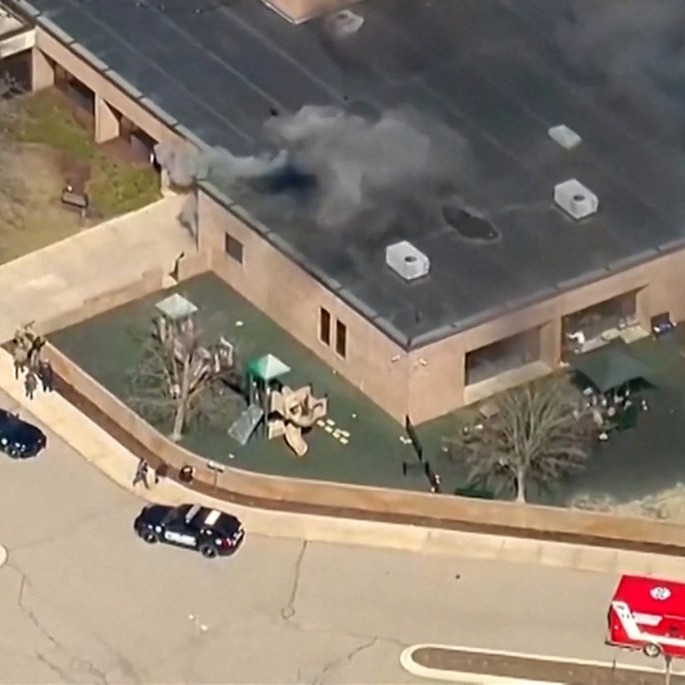
In West Bloomfield, investigators said Ayman Mohammad Ghazali, 41, waited outside Temple Israel for roughly two hours with a rifle, fireworks, and containers of liquid believed to be gasoline. Authorities say he then rammed into the building and exchanged gunfire with an armed security guard before dying by suicide after his vehicle caught fire.
The FBI described the synagogue incident as an “act of violence targeting the Jewish community,” but said there was not enough evidence yet to classify it as terrorism. In Virginia, the campus shooting was described as being investigated as an act of terrorism, a strikingly fast label given how early facts tend to be contested.
The Early Release Question
Jalloh’s background is where the story turns from campus security to federal systems. According to court records cited by The Associated Press, he pleaded guilty in 2017 to providing material support to the Islamic State and was sentenced to 11 years in prison, then released early after completing a drug treatment program.
That detail has become its own political tripwire, because it forces agencies to answer in plain English how someone convicted in a terrorism-related case moved from prison, to a reentry center, to probation, and then to online classes at a public university.
Security That Worked, Until it Didn’t
Both scenes featured people on the ground making split-second calls. In Virginia, officials credited ROTC students with stopping further harm. In Michigan, local officials credited preparation and training, while the security guard’s presence likely changed the timeline inside the building, which investigators say held about 140 children and staff.
What happens next is less about the attackers, who are dead, and more about the paperwork: charging language, terrorism determinations, and the policy explanations that follow. Watch for whether investigators can document ideology, targeting, and planning in ways that survive scrutiny across two very different cases.
References
- PBS NewsHour: What to Know About the Attacks at Old Dominion University and a Synagogue in Michigan
- PBS NewsHour: Old Dominion Shooter Was Previously Convicted of Islamic State Ties, Released From Prison Early After Completing Drug Program
- PBS NewsHour: Lebanese Official Says Man in Michigan Synagogue Attack Lost Family Members in Israeli Airstrike