The 5th Circuit just reopened the door for Louisiana to require the Ten Commandments in public school classrooms, and then basically told everyone not to ask what happens when the posters go up. The judges said they do not have enough facts yet to rule on whether the law is constitutional. That leaves parents, principals, and politicians staring at the same question: Who benefits from a case the court says is not ready?
What You Should Know
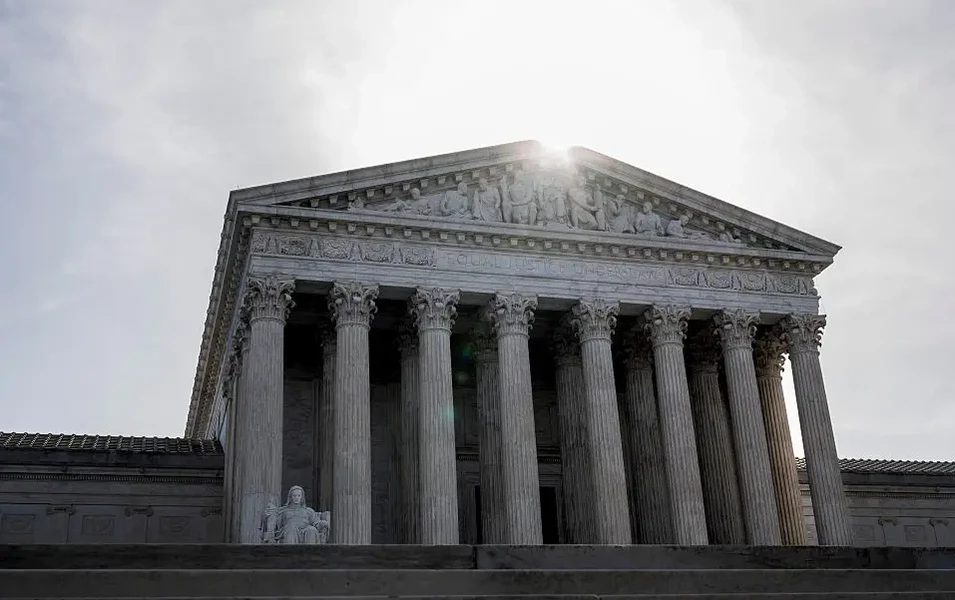
On February 20th, 2026, the 5th U.S. Circuit Court of Appeals voted 12-6 to lift a lower-court block on Louisiana’s classroom Ten Commandments display law. The court said it was too early to decide constitutionality because key details about how schools will implement the displays remain unclear.
The fight is over a Louisiana law that requires poster-sized displays of the Ten Commandments in public classrooms, a culture-war magnet with real legal teeth. A lower court blocked it. Then the full 5th Circuit, one of the most closely watched federal appeals courts in the country, stepped in and hit pause on the pause.
The 5th Circuit’s Big Punt
According to CBS News, the 5th Circuit lifted the injunction that had prevented the law from taking effect, but the majority framed its move as procedural, not ideological. The court said there is not enough information yet about how the law will operate in real classrooms.
In the majority’s telling, the missing details matter. How prominent will the Ten Commandments be? Will teachers reference the text during instruction? Will the posters be surrounded by other documents, such as the Mayflower Compact or the Declaration of Independence? The judges said those specifics could shape the First Amendment analysis.
The key line, quoted by CBS News from the opinion, was the court’s insistence that there are not enough facts yet to permit “juridical judgment rather than speculation.” That is a legal way of saying, “Come back when somebody is actually doing the thing you are suing over.”
That posture creates a strange kind of permission slip. The court lifted the block, while also warning that it was not blessing the law’s constitutionality. Louisiana can move forward, but the ultimate question, whether it violates the Establishment Clause, remains hanging.
Louisiana’s Pitch: History Class, Not Sunday School
State officials are not shy about the message. Louisiana Attorney General Liz Murrill framed the law as common sense and culturally unthreatening, not a religious takeover.
“Don’t kill or steal shouldn’t be controversial,” Murrill said in a statement cited by CBS News. “My office has issued clear guidance to our public schools on how to comply with the law, and we have created multiple examples of posters demonstrating how it can be applied constitutionally. Louisiana public schools should follow the law.”

The power move here is not subtle. A state attorney general is effectively telling local school systems, already juggling budgets, staffing, and academics, that compliance is expected now, even though the constitutional brawl is still unresolved.
The political framing also matters. Supporters have argued that the Ten Commandments function as part of the historical foundation of U.S. law. Opponents argue that the point of the posters is not history; it is endorsement.
The 5th Circuit majority did not resolve that dispute. It said the dispute is not fully formed until the displays are real, not hypothetical.
The Dissenters See a Classroom Trap
Six judges dissented, and the dissents were not written like technical footnotes. They read like alarms about what happens when the government posts religious commands in a room where children are required to be.
Some dissenters argued the case was already ripe for review. Others went further, suggesting the constitutional burden is obvious even before the first poster goes up because the law, on its face, pushes a religious text into a compulsory setting.
One dissent, described by CBS News, came from Circuit Judge James L. Dennis, who wrote that the law is precisely the kind of establishment the Framers anticipated and sought to prevent.
That line draws a clean contrast with the majority. The majority wants implementation details. The dissents argue the core injury is baked into the mandate itself.
If you are a parent challenging the law, the dissents are a roadmap: the harm is not just a teacher sermonizing. The harm is the state using public schools as the delivery system for a religious message, with no opt-out for the kids sitting in the chairs.
Why the Supreme Court Looms Over the Posters
This fight is not occurring in a legal vacuum. The Supreme Court has wrestled for decades with where, and how, the Ten Commandments can appear on government property.
In 1980, the Court struck down a Kentucky law requiring the Ten Commandments to be posted in public school classrooms. In Stone v. Graham, the Court held the statute violated the Establishment Clause, finding the requirement lacked a genuine secular purpose.
Then came the 2005 split-screen moment. The Court ruled against Ten Commandments displays in Kentucky courthouses in McCreary County v. ACLU of Kentucky. That same day, the Court upheld a Ten Commandments monument on the Texas state Capitol grounds in Van Orden v. Perry. Context and purpose were decisive.
Louisiana’s defenders are clearly betting that their law can be framed as the “context” kind of display, not the “promotion” kind. The challengers are betting that classrooms, unlike Capitol lawns, are uniquely coercive environments because attendance is mandatory, and the audience is children.
The 5th Circuit’s decision to lift the block without resolving constitutionality effectively pushes the state toward the very fact pattern that could decide the case later. Once posters are up, the lawsuits get new fuel: photos, district policies, teacher instructions, parent complaints, and student experiences.
The National Stakes and the Local Consequences
CBS News noted that similar measures have surfaced elsewhere, including a similar Arkansas law challenged in federal court, and broader Republican pushes, including from President Trump, to incorporate religion into public school classrooms. That matters because state-level mandates do not stay local for long. They become test cases, fundraising hooks, and campaign proof-of-fight.
But the day-to-day consequences fall on school districts first.
- Compliance costs: Even if posters are donated, someone still decides what goes where, who installs them, and what happens when a classroom changes teachers or a school is renovated.
- Policy risk: Districts have to write rules on placement, size, and surrounding material, while knowing that those same rules could become exhibits in court.
- Student impact: Classrooms are not parks or courthouses. They are compulsory spaces with authority figures, grades, and social pressure. That changes the legal and cultural temperature.
The lawsuits also highlight an under-discussed contradiction in the political sales pitch. If the posters are merely “historical,” why mandate the Ten Commandments, specifically, rather than a broader set of legal or philosophical texts? Louisiana’s law forces that question, and the 5th Circuit’s opinion suggests the next round of litigation will force it even harder.
What Happens Next, and Who Gets Stuck With the Bill
The 5th Circuit did not end the dispute. It restarted it under a new set of pressures.
For Louisiana, the immediate win is leverage. The injunction is lifted, and state officials can press districts to comply. For opponents, the immediate task is to gather the very evidence the majority said it needed. How are the displays presented? Are they accompanied by other documents? Do teachers refer to them? Do students complain?
Either way, the clock is now running in school hallways, not just in court calendars. And the closer the case gets to a concrete set of facts, the more likely it is to become a Supreme Court-sized decision about religion, education, and the limits of what a state can require kids to see on the wall.