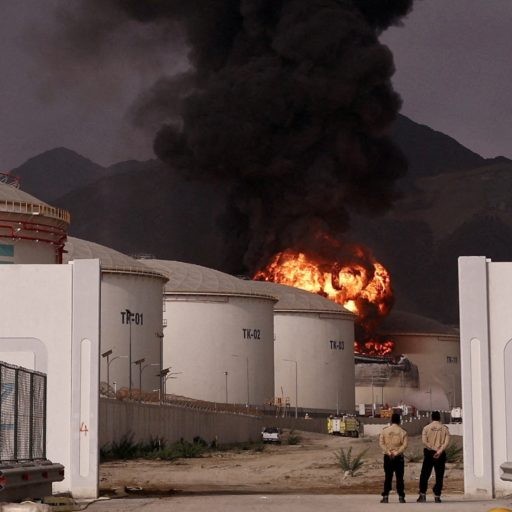
For years, Ukraine begged allies for better air defense. Now, as Iranian Shahed drones show up over the Gulf, Ukraine is being asked to export the one thing it has in painful surplus: hard-earned counter-drone muscle.
What You Should Know
PBS NewsHour reported on March 11th, 2026, that the U.S. and Arab allies formally requested Ukrainian help against Iranian Shahed drones, and Ukrainian troops arrived to begin training. A senior adviser to President Volodymyr Zelenskyy described electronic warfare, sensors, and interceptors as the core tools.
The key player on camera was Oleksandr Kamyshin, an adviser on strategic affairs to Zelenskyy, outlining a pitch that flips the usual wartime script: Ukraine is not just a recipient of Western support, it is a supplier of battlefield-tested solutions.
Ukraine’s New Export: Counter-Drone Know-How
In the PBS NewsHour interview, Kamyshin said Ukraine can bring a full menu of counter-drone options, including electronic warfare (EW), sonic-acoustic sensors, and drone interceptors, which he credited with helping knock down more than 90% of Shaheds in Ukraine.
The numbers are the sales pitch. Kamyshin said, “The drone interceptor cost is less than $5,000,” adding that some cost roughly $2,000, while Shahed drones can run from $50,000 to $150,000.
The ‘Cards’ Line Comes Back, With Receipts
The political backdrop is not subtle. Kamyshin pointed to a “drone deal” under discussion with the U.S. administration, and said Ukraine wants something bigger than a quick training mission: investment, joint procurement, and eventually joint production of Ukrainian weapons in the United States.
He also highlighted a timeline that raises an awkward question about urgency. PBS NewsHour reported that Zelenskyy offered anti-drone technology in August, but, according to Kamyshin, the offer received no formal reply until Iranian drones began landing in the Gulf in late February 2026.
Then there is the messaging whiplash. Referencing a line about Zelenskyy lacking leverage, Kamyshin recalled, “You don’t have the cards,” before arguing Ukraine’s counter-drone tech is a card the U.S. now wants to play.
What the Gulf Training Mission Signals Next
Kamyshin also warned that the Shahed problem is not static. He told PBS NewsHour that Russia has improved the Iranian-designed drones and that Ukraine believes technology and components have flowed back to Iran, pointing to downed drones in the Gulf that contained Russian-made parts.
The stake for Kyiv is whether helping protect Gulf bases and infrastructure turns into more support for Ukraine, or a quiet diversion of attention and air-defense hardware. For now, Ukraine is selling a simple proposition: what it learned under fire can be scaled elsewhere, if the money and politics finally match the urgency.