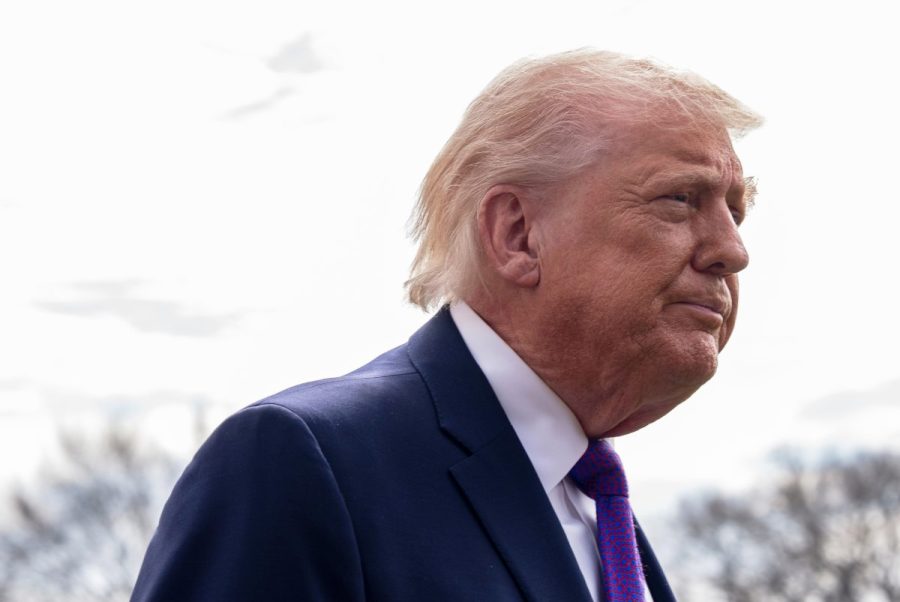
Donald Trump keeps finding the same lever in Washington, and it is not a bill, a ballot, or a court filing. It is the threat of turning the lights off, then daring everyone else to blink first.
What You Should Know
The Hill reported that Donald Trump urged Republicans to treat a potential federal shutdown as leverage for a legislative push he described as the Save America Act. A shutdown begins when funding lapses, forcing agencies to halt many operations under federal law.
President Donald Trump is urging Republicans to hold the line in ongoing shutdown negotiations, saying no agreement should be reached with Democrats unless they back the SAVE America Act… Read More at https://t.co/dS9FPT2Qry pic.twitter.com/MV2RXm1uSN
— CPAC (@CPAC) March 23, 2026
The setup is simple: Congress funds the government, the White House signs the deal, and party leaders sell the outcome. Trump, who holds no formal office, can still scramble that script by turning a routine deadline into a public loyalty test.
The Shutdown Threat Is a Weapon, Not a Calendar
According to The Hill, Trump tied shutdown brinkmanship to a branded demand, the Save America Act, effectively daring Republicans to choose between a clean funding path and his preferred fight. That is less about legislative mechanics and more about leverage.
The contradiction is baked in. A shutdown threat sounds like action, but it is also an admission that the votes for a normal win may not be there. When the pitch is maximal and the clock is short, the real target is often the caucus, not the other party.
The Fine Print of a Shutdown Is Brutal
Once appropriations lapse, the government does not negotiate in a vacuum. Agencies start sorting workers and services into buckets that are allowed to continue and those that must stop, with pay and daily life caught in the middle.
The Congressional Research Service, summarizing the basic constraint, puts it this way:
A government shutdown occurs when there is a lapse in appropriations.
That lapse triggers restrictions tied to the Antideficiency Act, the law that limits federal officials from spending money that Congress has not appropriated.
Cornell Law School’s Legal Information Institute, quoting the statute, describes the core prohibition: federal employees cannot make or authorize obligations beyond what is available in an appropriation. In practice, that means pressure shifts fast from cable-news theatrics to back pay, halted contracts, missed processing, and the political blowback that follows.
Schumer from Senate floor on Trump linking DHS funding to end partial shutdown with SAVE America Act passage: “Donald Trump is the one standing in the way of paychecks for TSA workers with the ridiculous attempt to pass the SAVE Act.” pic.twitter.com/6p3YQ3xQO5
— Craig Caplan (@CraigCaplan) March 23, 2026
What to Watch When the Cameras Leave
Trump’s branding choice matters because it creates a scoreboard. If Republicans back away from shutdown talk, it can be framed as a retreat from his demand. If they embrace it, leaders still have to manage the consequences of a funding lapse, which are governed by law, not messaging.
JUST IN: President Donald Trump is urging Republicans to hold the line in ongoing shutdown negotiations, saying no agreement should be reached with Democrats unless they back the SAVE America Act. pic.twitter.com/9FGMsgeVyk
— Elon Musk (@pam_westonpam) March 24, 2026
The next reveal is not a slogan. It is whether party leadership treats the shutdown threat as a bargaining chip that gets cashed in, or as a test they cannot afford to pass.