

Donald Trump can turn almost anything into a loyalty test, including pop culture. The question is whether picking a fight with Bad Bunny is just another headline generator, or an unforced error in a campaign that keeps insisting it is expanding its Latino coalition.
What You Should Know
CBS News aired a segment focused on whether Trump’s attacks on Bad Bunny could alienate Latino voters. The piece, featuring analysis from CBS News political director Fin Gomez, framed the dispute as a political-risk question about persuasion, turnout, and messaging.
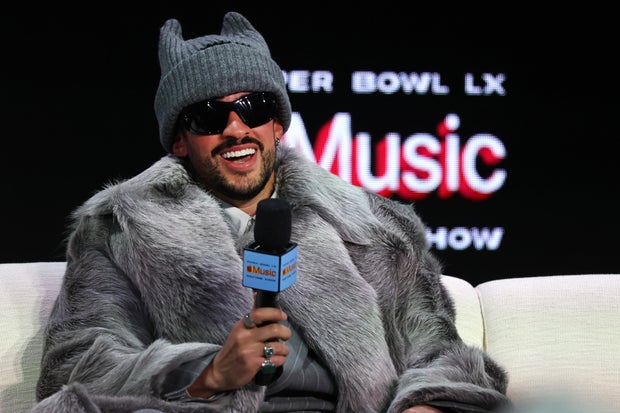
The clash matters because Bad Bunny is not a niche celebrity. He is a global Puerto Rican superstar with a fan base that skews young, plugged-in, and culturally influential, which is exactly the slice campaigns fight to motivate or suppress.
A Campaign That Sells Control Now Has a Messaging Leak
Trump’s political brand has always been part policy, part performance, and part domination. He decides the target, sets the terms, and dares everyone else to react. That rhythm can be brutally effective when the opponent is a politician who has to protect donor relationships, committee assignments, or swing voters.
With an artist like Bad Bunny, the power dynamic flips in an annoying way for political operatives. A pop star does not have to run a 30-second ad defending a vote, and he does not have to do Sunday shows to clean up wording. He can ignore the entire dispute, drop a song, post once, and still win the attention economy.
That is the strategic trap CBS News put on the table: if the goal is Latino outreach, why step on a cultural rake that is famous for hitting back?
The deeper issue is not whether a single celebrity dispute changes a national election by itself. It is whether the campaign’s message discipline can survive its appetite for fights that feel good in the moment and get messy in translation across language, age, and identity.
Bad Bunny Is Not Just Famous, He Is Political Adjacent
Bad Bunny, born Benito Antonio Martinez Ocasio, has built a public persona that blends chart success with occasional civic signaling, especially around Puerto Rico. That does not make him a party operative. It makes him the kind of figure campaigns watch closely because he can validate, or puncture, a narrative with minimal effort.
If a campaign’s working theory is that Latino voters are trending right because of inflation, crime, religious conservatism, or a simple anti-incumbent mood, then antagonizing a widely loved Latino artist adds friction where the campaign says it wants traction.
Trump’s team has, at various points, tried to present him as the guy who is unfairly caricatured by elites but welcomed by working-class voters, including Latinos. Celebrity conflicts complicate that pitch because the conflict is not about taxes or border policy. It is about status, respect, and who gets to define the culture.
Even Trump’s own history shows he understands how symbolic politics can travel faster than policy detail. On May 5th, 2016, Trump posted a photo of himself with a taco bowl and wrote, “I love Hispanics!” The point was not legislative. It was a viral signal of alignment.
That is why CBS News’ framing lands. If viral signaling can be a tool, it can also be a weapon pointed the wrong way.
Latino Voters Are Not a Block, and That Cuts Both Ways
Any story that treats Latino voters as a single hive mind collapses under basic reality. Cuban Americans in South Florida do not map perfectly onto Mexican American voters in the Southwest. Puerto Rican communities in the Northeast have different local pressures than Tejano voters in Texas. Age, religion, education, and region can matter as much as ethnicity.
That diversity is exactly why celebrity conflict can be simultaneously overhyped and still politically relevant.
Overhyped, because plenty of voters do not care what any artist thinks. A voter can love Bad Bunny and still vote based on prices at the grocery store, or a voter can dislike Trump personally and still prefer his policies.
Relevant, because elections are often decided at the margins. A dispute that nudges turnout among young voters, or makes persuasion harder among soft supporters, can matter in the small number of states where the electorate is tight and the Latino share is large enough to be outcome-relevant.
Campaigns know this. That is why they chase micro-communities, Spanish-language media, and local validators. It is also why they sweat avoidable conflicts that turn a persuasion problem into a respect problem.
The Contradiction: Outreach Talk vs. Combat Instinct
Trump’s movement is built on the idea that conflict is clarifying. That is a feature, not a bug, for his base. The trouble is that general-election persuasion often rewards the opposite. It rewards steadiness, repetition, and fewer distractions, especially when the campaign is trying to reach voters who do not live on political Twitter or cable news.
When Trump or his allies aim at a major Latino celebrity, the campaign can end up delivering two messages at once:
- To the base: we are still the anti-elite, anti-cancel-culture fighter.
- To persuadable voters: we are still looking for enemies, even in your culture.
That second message is not guaranteed to land, but it is available for opponents to amplify, especially in Spanish-language framing where tone and respect can carry extra weight.
CBS News did not claim a guaranteed backlash. It raised a political question about risk. In a tight race, campaigns spend millions trying to remove risk. Trump often spends free attention creating it.
Why This Fight Can Spread Faster Than the Facts
Celebrity disputes are a perfect delivery system for politics because they are simple. They are not a 40-page policy plan. They are a villain, a victim, and a scoreboard. That is why they can overwhelm more complex outreach work that happens quietly, like local events, surrogates, and Spanish-language ads.
There is also a structural advantage for the artist. A celebrity with a loyal fan base can turn a political jab into a community moment. Politics, on the other hand, has to translate everything into turnout math, message testing, and coalition management.
And once the story becomes cultural, it becomes portable. It jumps from politics into entertainment media, then into sports, then into group chats, where the argument is not about tax rates. It is about disrespect.
That is the consequence CBS News pointed toward without needing to predict the election. The cost is not one headline. The cost is the campaign losing control of what the argument is about.
What to Watch Next
If the Trump campaign wants the Bad Bunny story to fade, it has to do something Trump rarely loves: starve the conflict. No more comments, no more callbacks, no more bait for opponents to clip into ads.
If the campaign keeps swinging, the next pressure points are obvious:
- Whether prominent Latino Republican surrogates defend the attacks, dodge them, or quietly distance themselves.
- Whether Democrats and allied groups turn the dispute into Spanish-language persuasion content, where tone can matter as much as detail.
- Whether Bad Bunny stays silent, responds directly, or signals politics indirectly through turnout messaging.
Trump built a career on the idea that any attention is usable attention. CBS News raised the harder question: attention is not free when the audience you need is the audience you are poking.