

House Republican leaders tried to wrap President Trump’s tariffs in procedural bubble wrap. Three Republicans grabbed a pin, and now the House is staring at a simple question with big consequences: who controls the floor, the members, or the leadership?
What You Should Know
On February 10th, 2026, House Republicans failed to pass a procedural rule that included language blocking tariff-disapproval resolutions through July 31st. Three GOP members joined all Democrats, undercutting leaders who delayed the vote for hours to flip holdouts.
The flashpoint was not a new tariff vote itself. It was a fight over process, leverage, and whether leadership can use the House Rules Committee and a must-pass rule to fence off one of the few tools lawmakers have to publicly challenge the president.
The Rebellion Was About Power, Not Just Tariffs
According to CBS News, GOP leaders embedded language in a rule, a procedural resolution usually used to set terms for debate, that would have prevented House members from bringing up resolutions to challenge Trump’s tariffs through July 31st. The tactic mattered because it would have shut down a fast, attention-grabbing path for members to force votes that put colleagues on the record.
Then came the problem: House Republicans do not have much slack. With a razor-thin majority, leadership typically cannot afford more than one defection on a party-line procedural vote.
This time, there were three.
Reps. Kevin Kiley of California, Thomas Massie of Kentucky, and Don Bacon of Nebraska voted no. Every Democrat voted no. The rule failed.
Kiley, in floor remarks cited by CBS News, framed it as a separation-of-powers fight inside the House itself, not a policy quarrel. “This isn’t what rules are for,” Kiley said. “The rule is to bring bills to the floor and set the parameters for debate. The purpose is not to sneak in unrelated language that expands the power of leadership at the expense of our members.”
That line lands because it hits two pressure points at once. It accuses leadership of laundering a major power play through a routine process, and it warns rank-and-file Republicans that the same trick can be used on any issue once the precedent is set.
7 Hours of Arm-Twisting, Then a Public Loss
CBS News reported that leaders delayed the vote by roughly seven hours as they and the White House worked to sway holdouts. That detail is the tell. Procedural votes are supposed to be the easy part. When leadership starts burning the day begging its own members to support the rule, it is usually because the real vote count looks ugly.
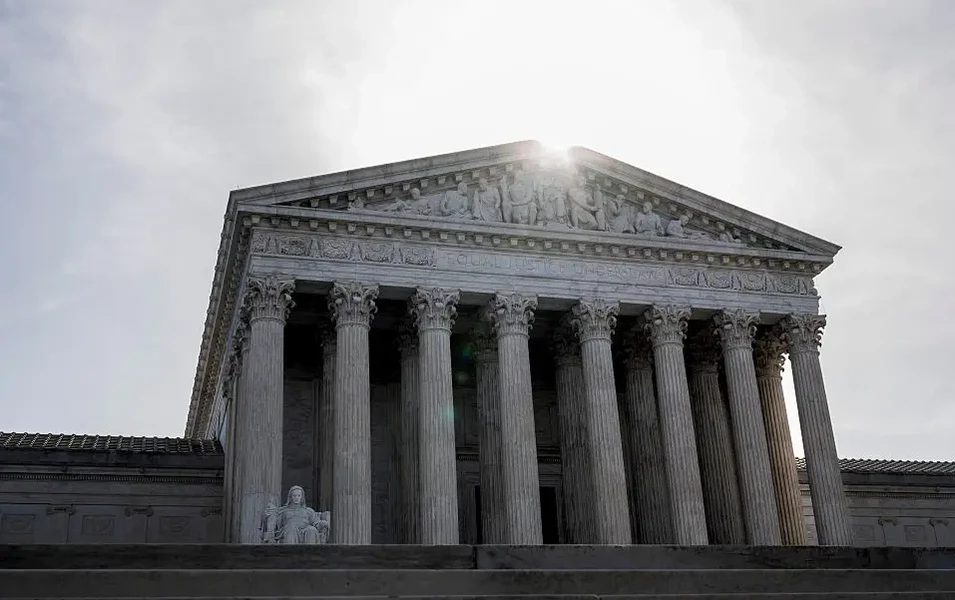
Speaker Mike Johnson, a Louisiana Republican, argued the tariff blockade was temporary and strategic. “The rationale for this, for just extending this for a little bit longer to July, is to allow the Supreme Court to rule on this case that everybody’s watching and waiting for,” Johnson told reporters, according to CBS News.
House Majority Leader Steve Scalise, also a Louisiana Republican, acknowledged the pressure campaign more bluntly, saying leadership and the White House were leaning on members to get to yes, CBS News reported.
That is the contradiction in one snapshot: leadership sold the maneuver as a limited, logical pause, while simultaneously treating it like a high-stakes loyalty test that required full-court persuasion.
Why the Rule Was Built Like a Trapdoor
The move did not appear out of nowhere. CBS News reported that an earlier ban on tariff-disapproval resolutions expired in January. Democrats, meanwhile, were planning to force a vote aimed at terminating Trump’s tariffs on Canada.
If you are House leadership, that is a nightmare scenario. A forced vote does not have to succeed to do damage. It creates footage, headlines, attack ads, and intra-party resentment. It also invites Republicans in swing districts to peel off, especially when tariffs hit consumer prices and local industries in uneven ways.
So leadership’s answer was to use the rules process to stop the vote before it could happen, effectively closing the trapdoor that lets members pull a privileged resolution onto the floor.
But the mechanics of the attempt were part of what made it combustible. CBS News reported the language was attached to a rule on unrelated legislation, a classic Washington move that can be defended as efficient or attacked as an end-run around open debate, depending on which side you are on.
Kiley and the other defectors chose the second framing, and they did it in a way that puts leadership on the defensive. It is harder to argue against “let members vote” than it is to argue against any specific tariff rate.
Trump’s Tariffs Keep Becoming Congress’s Stress Test
The tariffs themselves are the fuel. CBS News reported that Trump used emergency powers to impose steep tariffs on goods from Canada, Mexico, and China, tying the action to complaints about fentanyl flows and undocumented migration. CBS News also reported that goods compliant with the U.S.-Mexico-Canada Agreement are exempt, even as Trump has repeatedly threatened additional levies as relations with Canada sour.
Congress has tried, and mostly failed, to restrain Trump on tariffs before. CBS News reported the Senate voted twice last year to block tariffs on Canada, with four Republicans joining Democrats. The votes, however, were largely symbolic because a president can veto a disapproval measure, and overriding a veto requires a two-thirds majority in both chambers.
That reality is what makes the House fight so revealing. If the endgame is likely a veto anyway, why burn political capital to block a vote?
The answer is power optics. A disapproval vote is one of the few visible ways lawmakers can signal opposition to a president of their own party without launching a full-scale rebellion. It also gives Democrats an opening to force Republicans to choose between party unity and district economics. Leadership tried to remove that stage entirely.
What the 3 No Votes Really Said
Kiley, Massie, and Bacon are not interchangeable. That is part of the story.
Massie has long styled himself as an institutionalist and a procedural hawk, frequently breaking with his party on process and spending fights. Bacon, a more conventional Republican, represents a politically competitive Nebraska district where trade policy can be felt quickly by exporters and manufacturers. Kiley, a conservative aligned with the GOP base, made the argument about member power and leadership overreach, not about giving Democrats a win.
Put them together, and leadership has a problem: the defections were not limited to one ideological lane. They formed a coalition of inconvenience, and that is exactly the kind of coalition that thrives in a closely divided House.
Also, these were not quiet defections. Kiley put his critique on the record, explicitly accusing leadership of trying to “sneak in” unrelated language to expand its power. That is the kind of phrasing that is hard to walk back later, and easy for other members to reuse the next time leadership tries to tuck a restriction into a rule.
What Happens Next
The immediate consequence is simple: without the procedural blockade, Democrats have a clearer runway to try to force votes challenging the tariffs, especially those affecting Canada. Whether those measures pass is a different question, and a veto threat still looms over any successful disapproval effort.
The deeper consequence is about precedent. If leadership cannot count on passing the rule, the entire House schedule becomes shakier. Bills stall. Negotiations shift to the last minute. Individual members gain leverage by threatening to sink procedural votes, and leadership must decide when to compromise and when to punish.
Johnson signaled optimism that Republicans could still get it “across the finish line,” CBS News reported. That may be true in a narrow sense, by rewriting the rule, stripping the tariff language, or finding a different procedural vehicle. But the vote already delivered its message: the House floor is not a private room, and three determined Republicans can turn leadership’s control tactics into a very public defeat.
If Trump’s tariffs are supposed to project strength, the House fight showed something else. The president’s trade powers may be broad, but the politics around them remain a live wire, and not all the sparks are coming from Democrats.