Stonewall is a tiny patch of federal ground with a huge political shadow. So when a rainbow flag quietly disappeared from its flagpole, the administration did not need a press conference to make noise.
What You Should Know
The National Park Service stopped flying a rainbow flag at the Stonewall National Monument after guidance reiterated that most sites should fly only the U.S. flag, the Department of the Interior flag, and the POW/MIA flag. Activists planned a rally in response.
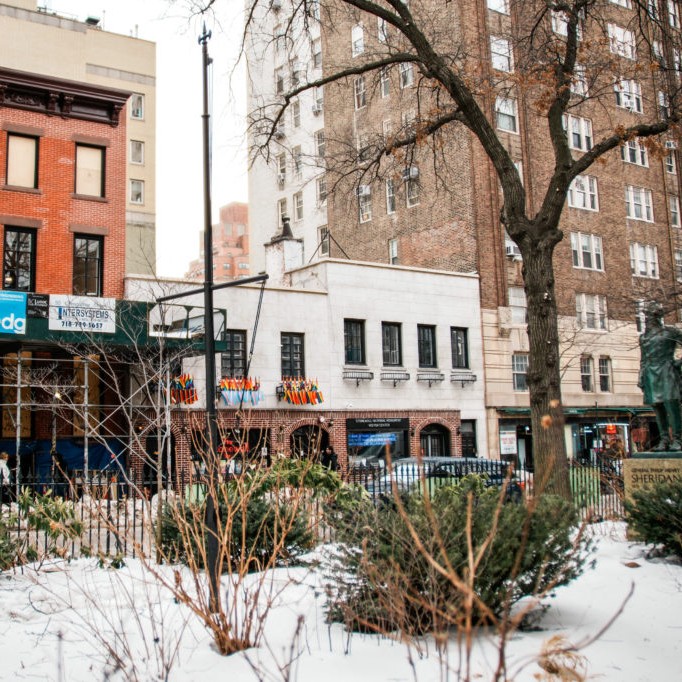
The site sits in Manhattan’s Greenwich Village, directly across from the Stonewall Inn, the bar tied to the 1969 uprising that helped catalyze the modern LGBTQ+ rights movement. The monument, created in 2016, is not just history. It is a federal seal of recognition, and that makes its symbols a live wire.
A Small Flagpole With Big Leverage
According to reporting by The Associated Press, published by PBS NewsHour, the rainbow flag was removed in recent days from a flagpole at the National Park Service-run Stonewall National Monument. The change landed like a policy footnote, but it hit an unusually sensitive pressure point: who gets to claim the federal government’s blessing, and what that blessing looks like in public.
The Park Service said it was following guidance that clarified existing flag policy and applied it consistently. The AP report described a January 21st Park Service memo that largely restricts the agency to flying the flags of the United States, the Department of the Interior, and the POW/MIA flag.
That is the administration’s clean version. A consistent rule, evenly enforced, no special carve-outs, and no special messages.
But Stonewall is not an ordinary site in the national park system’s cultural battlefield. The point of designating it a national monument was to put the federal government on record that this history counts, on the same shelf as battlefields, landmarks, and presidential homes.
The Park Service Says Policy, Activists Hear Signal
Activists did not treat the removal as a neutral compliance move. In the AP report, LGBTQ+ rights advocate Ann Northrop rejected the explanation in blunt terms, saying, “It’s just a disgusting slap in the face,” and adding, “It’s mind-blowing that they think they can excuse this and rationalize this.”
Northrop’s argument is not about whether a memo exists. It is about what gets prioritized when the memo meets a site like Stonewall. A rule that can be enforced at every park does not land the same way at every park. Some places are about scenery. Stonewall is about recognition, and recognition is the currency that fights are made of.
Even the details in the AP report underline the friction. Smaller rainbow flags still waved along a fence, but advocates had fought to see a banner fly high every day on federal property. To them, height matters because visibility matters, and visibility is the point of a monument that exists to make a statement about American history.
Stonewall’s Federal Status Was the Whole Prize
Stonewall became a national monument in 2016, when President Barack Obama used the Antiquities Act to designate the site. The White House announcement at the time framed it as a historic first, a national monument to LGBTQ+ history, anchored around the Stonewall Inn, Christopher Park, and surrounding streets and sidewalks.
That origin story matters because it sets up the current tug of war. The monument was built to do something that plaques and private museums cannot do: attach the federal government to a narrative. The flag fight is, in part, a fight over whether that attachment stays vivid or turns procedural.
Northrop, who co-hosts the cable program “GAY USA,” argued in the AP report that ceremonial flag raisings were always about more than decoration, saying, “That’s why we have those flag-raisings, because we wanted the national sanction to make it a national park.”
National sanction is the phrase to watch. It tells you the stakes. A federal monument is not just a place; it is a credential.
A Pattern of Distance, Then Edits, Then a Flag Coming Down
The rainbow flag is not the first flashpoint between LGBTQ+ advocates and Trump’s administration over Stonewall, according to the AP report. During Trump’s first term, activists said the Park Service kept what the AP described as a bureaucratic distance from the city’s raising of the rainbow flag on the pole.
Then came the second-term tensions, which have been as much digital as physical. The AP report said that after Trump returned to office, the Park Service’s Stonewall monument website was among sites taken down temporarily after he ordered an end to diversity, equity, and inclusion initiatives and declared the administration would recognize only two genders. The government later scrubbed verbal references to transgender people from the Park Service website for Stonewall, the AP reported.
Put those episodes next to the flag removal, and the administration’s “consistent policy” explanation runs into a credibility problem. A memo can be real, and the enforcement can still be selective in spirit, if not in black-letter text. That is the tension activists are leaning into.
What the Government Put on the Record
The Park Service did not answer specific questions from the AP about whether flags were removed at other parks. Instead, it pointed to the monument’s ongoing programming. In a statement cited by the AP, the agency said, “Stonewall National Monument continues to preserve and interpret the site’s historic significance through exhibits and programs.”
That sentence is carefully built. It moves the debate away from symbols and toward education. It is also a reminder of how modern government fights are often managed: deny the political motive, emphasize institutional continuity, and let the paperwork take the heat.
But symbols are part of interpretation. That is why the fight exists.
Why This One Flag Became a Loyalty Test
In a city where rainbow flags are routine, a missing flag at a small park would normally be a non-story. At Stonewall, it reads like a federal decision about what kinds of identity the government will publicly affirm, and when.
The administration, through the Park Service explanation described by the AP, is effectively saying the flag was a discretionary add-on that did not belong on that pole under existing policy. Activists are arguing that Stonewall is the rare place where the “add-on” is the point, because the monument itself is a government statement about LGBTQ+ history.
Either way, the choice is not cost-free. For the administration, strict enforcement invites the accusation that it is scrubbing a story it does not like from federal space. For the Park Service, it creates the impression that a cultural decision is being routed through administrative language. For activists, the challenge is translating symbolism into pressure that actually changes policy, rather than generating a single rally photo and moving on.
The practical next question is also the simplest: will the Park Service treat Stonewall as just another flagpole, or as the kind of site where exception-making is, itself, part of the monument’s meaning?
In a moment when the federal government is openly battling over DEI, gender policy, and public language, the most revealing moves are often the quiet ones. A flag comes down. A webpage gets edited. A memo gets cited. Then everyone argues over whether the signal was intentional or just “consistent.”
Caption: The Stonewall National Monument in New York City after authorities removed the Pride flag from the Greenwich Village site on February 10th, 2026. Photo by Eduardo Munoz/REUTERS