The White House is treating a reported 2006 phone call like a political shield, except it will not say whether the call ever happened.
What You Should Know
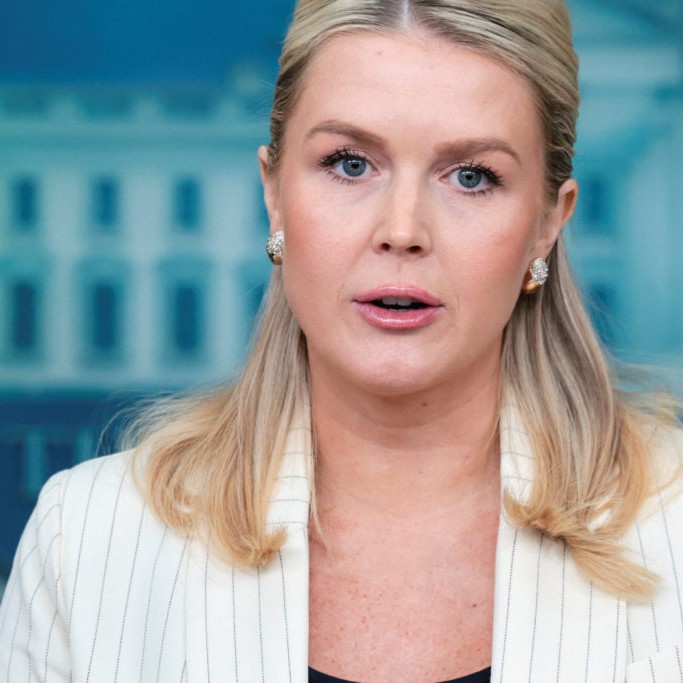
Press Secretary Karoline Leavitt said she did not know whether Trump called a Palm Beach sheriff about Jeffrey Epstein in 2006, calling it something that may or may not have happened. She still said the reported contents support Trump’s claim that he cut ties with Epstein.
The moment matters because it puts the administration in a familiar bind: deny the existence of a detail, then cite that same detail as proof of innocence. And it is landing amid renewed attention on Epstein-era connections, including questions about Ghislaine Maxwell and Commerce Secretary Howard Lutnick.
A Call the White House Will Not Own
At a White House briefing carried by PBS NewsHour, Leavitt was asked about a reported call involving Trump, then a private citizen and real estate developer, and a Palm Beach-area law enforcement official in 2006, when scrutiny around Epstein was building in Florida.
Leavitt did not confirm the call. She framed the underlying question as unknowable from her podium, saying it was something that may or may not have happened in 2006, according to the Associated Press report published by PBS.
However, the administration did not stop at uncertainty. Leavitt pivoted to what the reported call supposedly contained, and she used it to reinforce a broader argument that Trump has repeated for years: that he ended any relationship with Epstein long ago, and that he did nothing wrong.
In her telling, the alleged content is the point, even if the call itself stays in a fog.
As Leavitt put it: “This call, if it did happen, corroborates exactly what President Trump has said from the beginning.”
The Receipt Everyone Is Arguing Over
The flashpoint is a newly released document described in the report as an FBI account of what a Palm Beach police chief said he received in 2006: a call from Trump referencing Epstein. The chief, according to the document, told the FBI that Trump said, “Thank goodness you’re stopping him.”
That is a potent line, politically, because it sketches Trump as someone applauding law enforcement action against Epstein. If it is accurate, it collides with the uglier version of elite proximity that has surrounded Epstein for years, and it gives the White House a sentence it can hold up like a notarized alibi.
But there is an obvious tension the White House is not resolving: if Leavitt cannot verify whether the call happened, why is she comfortable treating its reported contents as confirmation of anything?
The administration is effectively trying to capture the upside of the document while leaving itself an exit ramp. If the record proves helpful, it is corroboration. If it becomes messy, it is unconfirmed history from 2006.
Maxwell, Clemency, and a Quiet Incentive Structure
Reporters also pressed Leavitt about another issue with real leverage attached: whether Trump would consider granting Ghislaine Maxwell clemency in exchange for testimony.
Leavitt did not rule it out, according to the AP report published by PBS. Instead, she downshifted, describing the subject as not central to the president’s agenda at the moment.
“This is not something I’ve discussed with the president recently, because, frankly, it’s not a priority,” she said, adding that the president was focused on other issues.
The political dynamics here are not subtle. Clemency is one of the few tools that can instantly reshape who talks, what they say, and when they say it. Even a non-answer can function as a signal, especially when Maxwell’s lawyer has said she would be willing to cooperate with a House probe if the president grants her clemency.
That sets up a standoff that is less about television drama and more about bargaining power. Congress wants information. Maxwell wants relief. The White House wants the Epstein conversation to stop controlling the news cycle, particularly when it collides with current officeholders and current decisions.
Lutnick’s Timeline Problem Joins the Pile
Then came the other pressure point Leavitt had to address: Commerce Secretary Howard Lutnick.
Leavitt said Lutnick “remains a very important member of President Trump’s team and the president fully supports the secretary,” according to the AP report published by PBS.
That show of support arrived after Lutnick testified that he met with Epstein twice after Epstein’s 2008 conviction for soliciting prostitution from a child. The detail matters because it directly undercuts Lutnick’s earlier claim that he had cut ties with Epstein after 2005.
In Washington, timeline contradictions are rarely just about dates. They are about credibility, and credibility is the only real currency a senior official has when the subject is an infamous, radioactive figure like Epstein.
PBS reported that Lutnick has faced calls to resign from lawmakers in both parties amid the revelations around his ties to Epstein. Even if he survives, the administration now has to manage two public messages at once: a press secretary arguing that a reported Trump call shows distance from Epstein, and a Cabinet official explaining why his distance from Epstein apparently began later than he first suggested.
The overlap is awkward for the White House because it creates a single storyline with multiple doors. One door leads to vindication talking points. The other leads to scrutiny about who said what, when, and why it changed.
Why This Keeps Coming Back
The Epstein saga persists in American politics because it sits at the intersection of money, access, and protection. It also has a built-in cast of people who were wealthy enough to be adjacent to Epstein without ever being forced into clarity about what they knew.
That is why the Leavitt briefing landed the way it did. The White House is trying to narrow the frame to a single claim: Trump cut ties with Epstein, and this newly surfaced account, if accurate, supports that narrative.
But the briefing expanded the frame in real time. Maxwell’s clemency question pulls executive power into the story. Lutnick’s testimony drags the story back into the present tense. And the core contradiction remains on display: the administration wants the benefit of a document it will not confirm.
For Trump, who has long treated the media environment as a battle over storyline control, the risk is not only legal. It is political. Every new document, testimony snippet, or lawyer statement creates another round of questions about relationships, timelines, and who is protecting whom.
What to Watch Next
There are three pressure points to track from here.
- First, whether additional records tied to the reported FBI document emerge, including any corroborating notes that would clarify who was on the receiving end of the reported Trump call, and how the FBI recorded it.
- Second, whether House investigators formalize any clemency-related talks into public demands, which would force the White House to choose between a clean denial and strategic ambiguity.
- Third, whether Lutnick provides more detail that reconciles his earlier statement with his testimony. In a controversy built on timelines, gaps do not stay empty for long.
Leavitt’s briefing did not close the Epstein file. It showed how the modern White House tries to manage it: keep the facts conditional, keep the politics definitive, and hope the contradictions do not become the headline.