

Air Force One is getting a makeover, and President Trump is treating the paint like a signature. But the real flex is not the color. It is control of a $3.9 billion program, a stubborn timeline, and the bragging rights that come with a plane most presidents only inherit.
What You Should Know
President Trump told CBS News that the new Air Force One aircraft will get a red, white, and blue paint scheme instead of the traditional light blue. The White House has said Boeing has a $3.9 billion fixed-price contract for the new presidential planes.
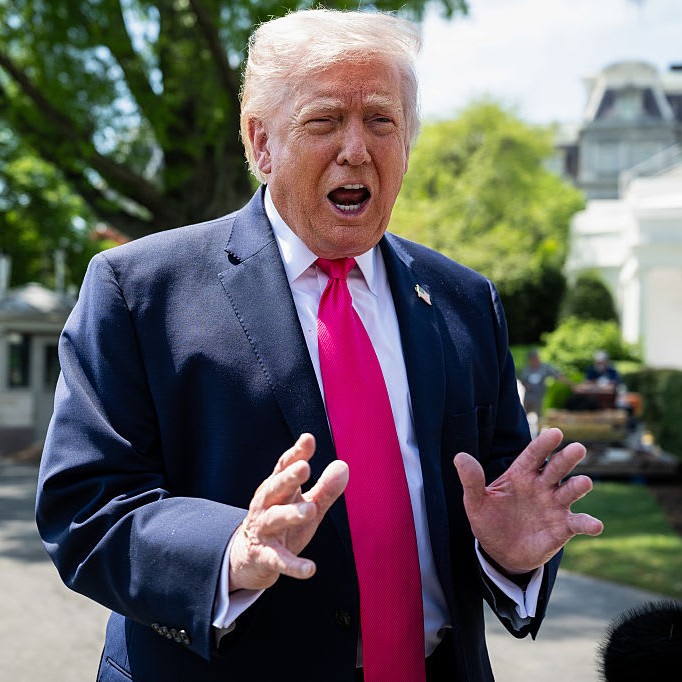
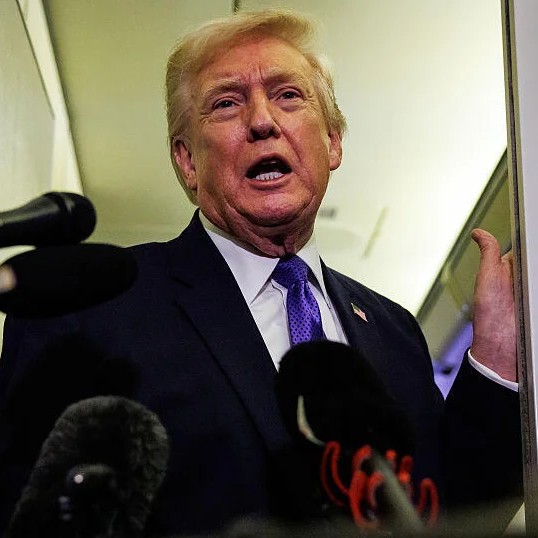
The details came straight from Trump in an interview with “CBS Evening News” anchor Jeff Glor while Trump was in Scotland, a setting that made the moment feel like a travelogue. However, the stakes are Washington-grade: the presidential aircraft program is one of the most complex aviation projects in the U.S. government, and it is also a rolling symbol of presidential branding.

The Paint Job Is the Hook, the Contract Is the Story
Trump framed the redesign as a clean break from the familiar look that has been associated with the presidency for decades. “Boeing gave us a good deal. And we were able to take that,” he told Glor, before adding that the old color scheme was out.
Then he made the new palette explicit. “Red, white, and blue,” Trump said. “Air Force One is going to be incredible. It’s gonna be the top of the line, the top in the world. And it’s gonna be red, white, and blue, which I think is appropriate.”
That is the part built for cable clips. The less clip-friendly part is what the White House has highlighted about the procurement: a $3.9 billion fixed-price contract with Boeing for the new aircraft, as CBS News reported, after years of negotiations involving the U.S. Air Force and Trump himself.
Fixed-price is not just a phrase. It is a power move in contracting, at least in theory, because it shifts the risk of cost overruns toward the contractor. Trump also presented himself as the human wrench in the machinery. “I was able to save $1.5 billion and order a new one for the country,” he said.
That claim has a political logic. If the program is expensive, Trump wants credit for pushing it down. If it is delayed, the contractor and the bureaucracy are the obvious targets. Either way, he is positioning himself as the one who grabbed the controls.
There Is a Hidden Clock Inside the Sound Bite
Trump also acknowledged the part that rarely gets the spotlight: the replacement aircraft are not arriving like a showroom delivery. He described the project as slow and intricate, and he signaled that later presidents may be the ones actually riding in the finished jets.
“I hate to say this, it’s gonna be a long time,” Trump told CBS News. “It’s a very complex project. But by the time it gets built, you’re gonna have many presidents, hopefully, use it and enjoy it.”
That is the contradiction sitting in plain view. The design and the deal are being sold as Trump-era victories. The delivery and the practical payoff may land in someone else’s term. That turns Air Force One into a familiar Washington object: a trophy that can be claimed early, and a bill that can be argued over later.
Even the phrase “Air Force One” has its own built-in flexibility. As CBS News noted, the White House describes it as a call sign used for any Air Force aircraft carrying the president, even though the public usually uses it to mean the two customized Boeing 747s that serve as the primary presidential aircraft.
Trump said the current model is 30 years old. That age point is not trivial in aviation, but it also does political work. If the existing aircraft are old, the upgrade is not luxury; it is modernization. If the program drags, the age becomes a pressure point.
Branding vs. Engineering, and Who Gets Blamed
A red, white, and blue livery is a communications decision. A presidential aircraft is also a flying command post with hardened communications, defensive systems, and security requirements that are not optional and not simple.
That is why the makeover talk has a second edge. It can make the project sound like a straightforward redesign, when the hard part is building and certifying aircraft under unique requirements and intense oversight. In other words, paint is quick. Presidential aircraft work is not.
This is where the power dynamics sharpen. Trump is publicly tying the aircraft to his taste and his deal-making, while the execution runs through the U.S. Air Force, Boeing, and layers of contractors and regulators. If the schedule slips, a president can point at Boeing. If Boeing says requirements changed, it can point back at the government. A fixed-price contract can limit the government’s direct exposure to overruns, but it does not eliminate the political blowback from delays.
Trump’s own timeline framing makes that tension harder to ignore. He is simultaneously selling certainty, with a negotiated price and a patriotic scheme, and uncertainty, with a build process that outlasts him.
Trump’s Paper Trail on Price, and the $4 Billion Flashpoint

Trump’s negotiation story also has a prequel. CBS News noted that, in December 2016, Trump tweeted that costs for the program were “out of control, more than $4 billion.” That public line is part complaint, part leverage, and part warning shot.
Fast-forward to the White House’s later $3.9 billion figure, and Trump is casting the outcome as a victory lap. The contrast matters because it sets up a simple narrative: before Trump, the number was too high. After Trump, it is locked down.
However, the number is only one axis. The other axis is time. A program can be “saved” on price and still become a headache if delivery dates drift and the current aircraft must be maintained longer than planned. Trump, to his credit, is not pretending the calendar is easy. He is just also claiming the credit early.
Why This Plane Becomes a Political Weapon
Air Force One is a symbol that both parties tend to treat as beyond politics, right up until it is not. The aircraft is seen around the world. It is photographed on foreign tarmacs. It is used as a backdrop for presidential departures, arrivals, and crisis moments.
That makes the color scheme more than decor. It is a decision that will be interpreted as tradition, a break from tradition, or a personal stamp, depending on who is looking. A new livery also becomes hard to separate from the person who ordered it, especially if that person talks about it the way Trump did.
There is also a practical messaging payoff. If Trump can tell supporters he got a better deal from Boeing and put a more patriotic look on the nation’s most famous jet, it fits his broader brand. If critics argue that the change is cosmetic or self-focused, the counter is ready-made: the aircraft are old, the program was expensive, and he forced a better price.
That is why the timeline is the real fight. Delivery dates decide who gets the ribbon-cutting and who gets stuck answering questions about why a signature project is still not ready.
What to Watch Next
There are three pressure points to watch as this moves forward.
First, whether the administration and Boeing keep describing the program primarily through price and appearance, or whether schedule details become unavoidable as milestones approach.
Second, how aggressively Trump continues to claim ownership. The more personal the branding, the more personal the blame can become if the project turns into a rolling delay story.
Third, whether the next phase of public messaging leans into national symbolism, with red, white, and blue as the headline, or shifts toward the less glamorous arguments about aircraft age, security requirements, and readiness.
Trump has already set the frame: he got a deal, he picked the colors, and he says the plane will be “top of the line.” The open question is whether the airplane’s schedule lets him own the moment, or forces him to share it with the presidents he says will “use it and enjoy it.”