

Geneva is getting another crack at a deal, but the real question is what is being negotiated behind the scenes while both sides talk tough in public.
What You Should Know
The United States and Iran are expected to hold another round of nuclear talks in Geneva on February 26th, 2026, with Oman facilitating. The talks come amid U.S. military pressure, Iranian insistence on uranium enrichment, and new protests inside Iran.
On paper, this is the familiar standoff: Washington says Tehran cannot have a nuclear weapon or the capacity to build one, and Iran says its program is peaceful and it has a right to enrich uranium. In practice, the latest round is turning into a test of who can keep their red lines intact while still claiming momentum.
The Facilitator Is Oman, but the Pressure Is American
Oman’s foreign minister, Badr al-Busaidi, confirmed the next round for Thursday in Geneva, according to reporting from The Associated Press published by PBS NewsHour. Oman has played this role before, and not by accident. It is one of the few regional players that can keep channels open with Tehran while staying credible enough with Washington to pass messages without turning every exchange into a headline.
However, the backdrop is not calm diplomacy. The report describes the Trump administration as having built up the largest U.S. military presence in the Middle East in decades, a posture meant to sharpen the choice offered to Iran: deal-making, or escalation.
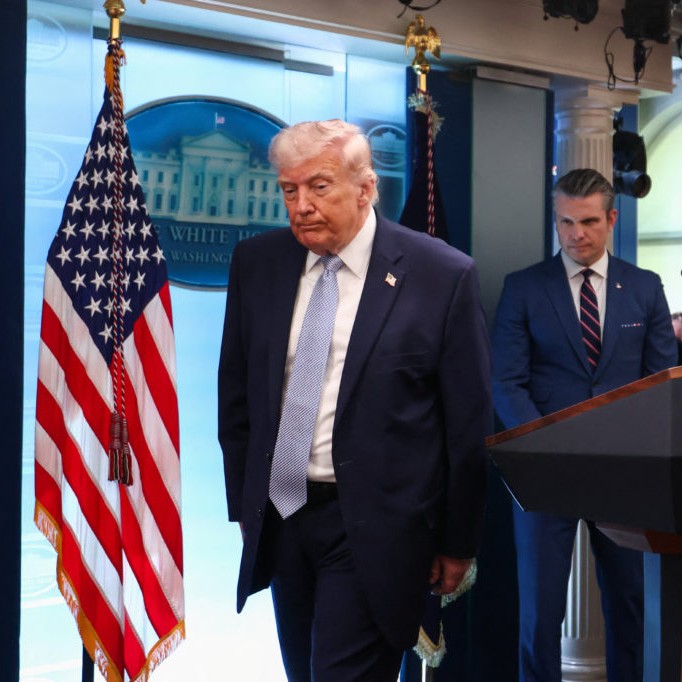
That pressure is not subtle. Trump said limited strikes are possible, and both governments have signaled they are prepared for war if the talks fail, according to the same AP reporting.
Iran Is Pushing a Draft Deal While Defending Enrichment
Iran’s top diplomat, Abbas Araghchi, has been telegraphing two messages at once, and they do not sit comfortably together. First, he is trying to keep the diplomatic door looking wide open. In a CBS interview described in the AP report, Araghchi said there was a “good chance” for a diplomatic solution on the nuclear issue, and he expected to meet U.S. envoy Steve Witkoff in Geneva on Thursday.
Second, he is defending the core point that Washington keeps trying to compress to zero: enrichment. The U.S. position, as described in the AP report, is that Iran cannot enrich uranium. Araghchi’s counter is blunt: Iran has the right to enrich uranium.
The most revealing detail is not the disagreement. It is the claim about what is happening privately. Araghchi said his U.S. counterparts had not asked for zero enrichment in the latest round, a line that clashes with what U.S. officials have said publicly, according to the AP report.
This is the negotiation in miniature. One side sells firmness to its domestic audience. The other side claims the firmness is performative, and that the real bargaining is more flexible when cameras are off.
Araghchi also framed the talks as limited in scope, saying the nuclear issue is the only matter under discussion, even as the United States and Israel want to widen the agenda to include Iran’s missile program and its support for armed proxies, according to the AP report.
Trump Says ‘Obliterated,’ Inspectors Are Out, and Nobody Can Prove It
There is another contradiction hanging over the Geneva round: what, exactly, is left of Iran’s nuclear infrastructure after strikes in June?
Iran says it has not been enriching uranium since U.S. and Israeli strikes on Iranian nuclear sites in June, according to the AP report. Trump said at the time the strikes had “obliterated” Iran’s nuclear sites, but the AP report notes the exact damage is unknown because Tehran has barred international inspectors.
That creates a politically useful fog for both sides. If the damage is severe, Washington can argue that force works. If the damage is limited, Tehran can argue it endured and still cannot be bullied out of enrichment. Either way, the absence of inspectors makes certainty scarce, and scarcity is leverage.
Meanwhile, Araghchi offered a separate flex on military capability. In the CBS interview described by the AP report, he said, “We have a very good capability of missiles, and now we are even in a better situation” than before the June strikes.
If Washington is trying to present escalation as an option, Tehran is reminding Washington that escalation has a price tag.
Sanctions Relief Is the Currency, but the Receipt Is Verification
Araghchi has also been explicit about the trade: Iran would implement confidence-building measures in exchange for relief on economic sanctions, according to the AP report. That is the predictable structure, but it still raises the part that always breaks these deals: what counts as confidence-building, who verifies it, and what happens when one side claims compliance and the other side claims deception.
The U.S. demand, as described in the AP report, is not simply “no weapon.” It has no capacity to build one and no enrichment. Iran’s demand is not simply “sanctions relief.” It is sanctions relief without surrendering what it describes as a sovereign right.
This is why the Geneva meeting matters even if it ends with another vague statement about progress. The central fight is whether enrichment is treated as a technical activity that can be capped and monitored, or a symbolic boundary that Tehran will not cross backward.
For readers who remember why these talks are so haunted, the timeline runs through 2018. In May 2018, Trump pulled the U.S. out of the 2015 nuclear agreement, a turning point covered widely at the time, including by BBC News and The New York Times. That decision did not just break a deal. It set the precedent that a future U.S. administration can unwind commitments, and it gave Iran an argument that compliance is a one-way street unless enforcement is locked down.
Tehran’s Other Deadline Is in the Streets
The most combustible part of the AP report is not the Geneva logistics. It is the domestic pressure building inside Iran at the same time.
According to witnesses cited in the report, new anti-government protests began as university students in Tehran and Mashhad demonstrated around memorials for people killed in a crackdown on previous nationwide demonstrations about six weeks earlier. Iran’s state news agency said students protested at five universities in Tehran and one in Mashhad.
Videos posted on social media appeared to show confrontations at two universities between government supporters and anti-government protesters, with some chanting “Death to dictator,” according to the AP report. Iran’s government has not commented on the latest protests.
The stakes inside the country are spelled out in competing numbers. The U.S.-based Human Rights Activists News Agency said at least 7,015 people were killed in the previous protests and crackdown, including 214 government forces, according to the AP report. Iran’s government offered its only death toll on January 21st, saying 3,117 people were killed. The AP report notes the Associated Press has been unable to independently assess the death toll, citing disrupted internet access and international calls.
That gap is not just about math. It is about legitimacy. A government that controls the official count controls the story it tells about the state’s right to use force. A higher independent count strengthens the opposition narrative that the state crossed a line and is trying to bury the evidence.
Iranian President Masoud Pezeshkian, posting after Oman’s confirmation, tried to balance optimism with deterrence. He said negotiations had involved “the exchange of practical proposals and yielded encouraging signals,” but added Tehran had “made all necessary preparations for any potential scenario,” according to the AP report.
That is the posture of a state trying to negotiate without looking weak, and trying to deter without pulling the trigger.
What to Watch in Geneva, and What Is Being Avoided
The easiest headline is the meeting itself. The harder story is what each side is refusing to concede publicly.
For the U.S., the public line described in the AP report is maximal: no enrichment. For Iran, the public line is immovable: enrichment is a right. Then Araghchi claims the private U.S. ask is softer than the public messaging. If that is true, Geneva becomes less about whether a deal exists and more about whether Trump can sell it as a victory without saying the word “enrichment” out loud.
For Tehran, the separate constraint is internal stability. Protests do not automatically translate into regime change, but they change the regime’s risk calculus. A government facing unrest has incentives to seek sanctions relief, and it also has incentives to avoid appearing to cave to foreign threats. That contradiction does not disappear in a negotiating room. It follows the delegation into it.
Finally, there is the inspection question, hovering behind the rhetoric about “obliterated” sites and paused enrichment. If inspectors are out and damage is unknown, verification becomes the ultimate choke point. Any agreement that cannot survive verification fights will not survive Washington politics, Tehran politics, or the next crisis that spikes oil prices and tempers.
Thursday’s Geneva round, facilitated by Oman, is being marketed as another step. The receipts that matter will be narrower: what the draft deal actually says, whether the word “enrichment” is capped or banned, and whether either side can admit in public what it is willing to tolerate in private.