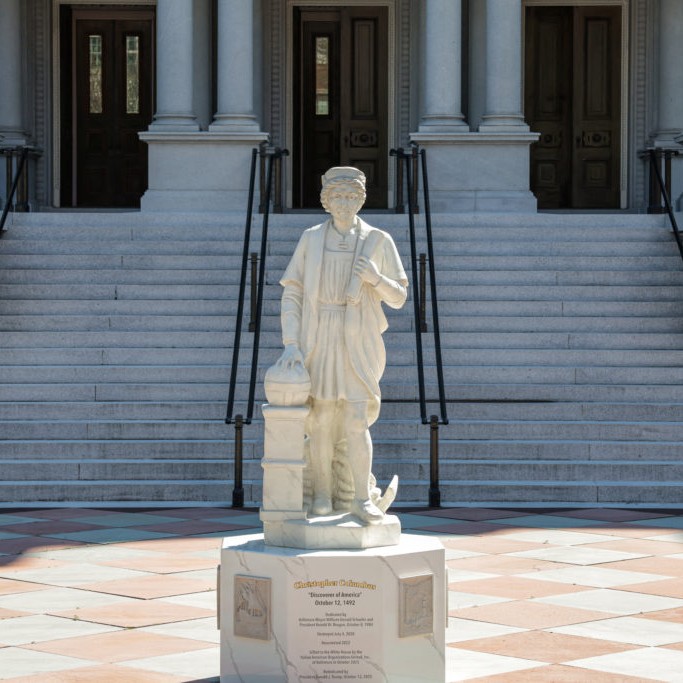
A marble Columbus is back in the capital’s spotlight, but the real action is not the statue. It is the message baked into where it was placed, who loaned it, and what the White House wants that placement to say about history.
What You Should Know
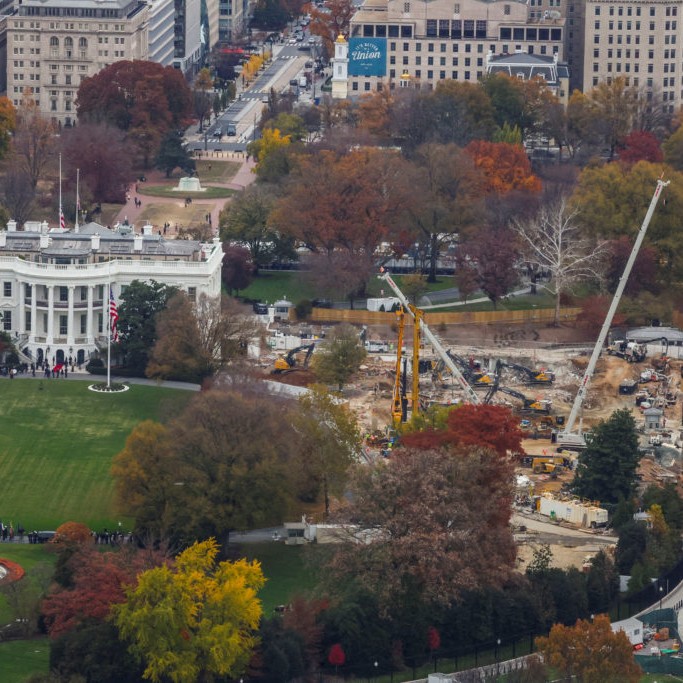
A replica Christopher Columbus statue was placed on the grounds of the Eisenhower Executive Office Building next to the White House. The statue replicates one toppled and thrown into Baltimore’s Inner Harbor on July 4th, 2020.
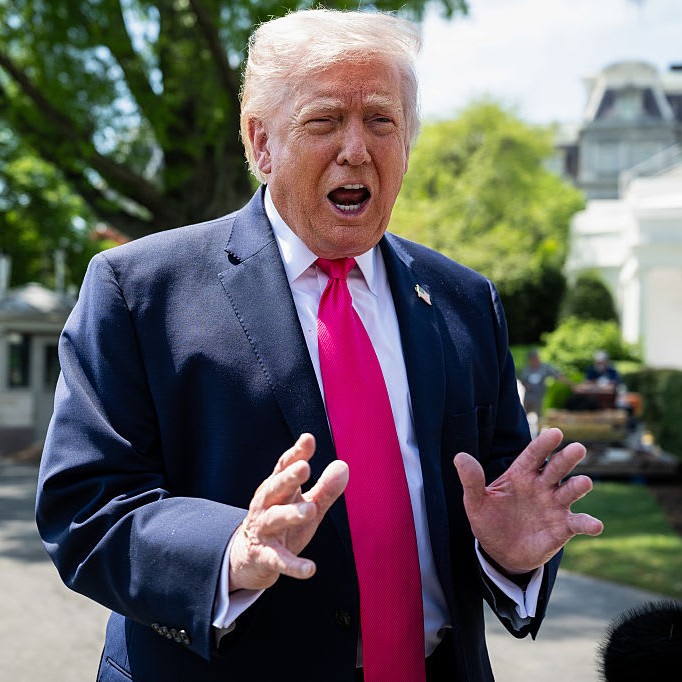
The placement is the latest cultural signal from President Donald Trump’s administration, which has treated Columbus as a political stand-in for bigger fights over race, protests, and the boundaries of public memory.
How the Replica Landed on Executive Grounds
According to PBS NewsHour, the statue was installed outside the Eisenhower Executive Office Building, adjacent to the White House. It is a replica of a Columbus statue that was pulled down in Baltimore during the 2020 protests.
The owner is not the federal government. PBS reported that Italian American Organizations United, led by Maryland lobbyist John Pica, agreed to loan the statue for placement at or near the White House, and framed it as a protective mission.
“We are delighted the statue has found a place where it can peacefully shine and be protected,” Pica said, according to PBS. The statue was created by Will Hemsley, a sculptor based in Centreville, Maryland, and is made mostly of marble, PBS reported.
The Holiday Battle Lines, Reset
That “protected” line lands differently when you remember the original’s path. PBS reported that protesters toppled the Baltimore statue after the death of George Floyd, then tossed it into the Inner Harbor, part of a broader wave of Columbus statues being vandalized or removed in 2020.
Meanwhile, the federal calendar has been shifting, too. On October 8th, 2021, President Joe Biden became the first U.S. president to formally mark Indigenous Peoples’ Day, a move that many states, cities, and institutions had already embraced.
Trump has argued the opposite, treating Columbus as a fixed point rather than a complicated figure. PBS reported that the White House posted on X, “In this White House, Christopher Columbus is a hero, and President Trump will ensure he’s honored as such for generations to come.”
What Happens Next, and Who Owns the Story
This is not just about a statue. It is about the White House using premium real estate to pick a side in a symbolic fight, while critics point to Columbus as a shorthand for conquest and harm, and supporters frame him as heritage under attack.
What to watch is whether the administration turns the placement into a recurring ritual, and whether opponents can move the argument off the lawn and into policy. Either way, the statue’s new address makes the point hard to miss.