

Donald Trump is not talking about a bigger base, or a longer lease, or a new Arctic deal. He is talking about owning Greenland. And he is framing it as a national security requirement, not a negotiation opener.
That single word has set off three alarms at once: in Nuuk, in Copenhagen, and across Nato capitals that suddenly have to answer a hard question. What happens to the alliance when the biggest member openly floats taking territory from another member?
The Line Trump Keeps Repeating, and Why It Lands Differently Now
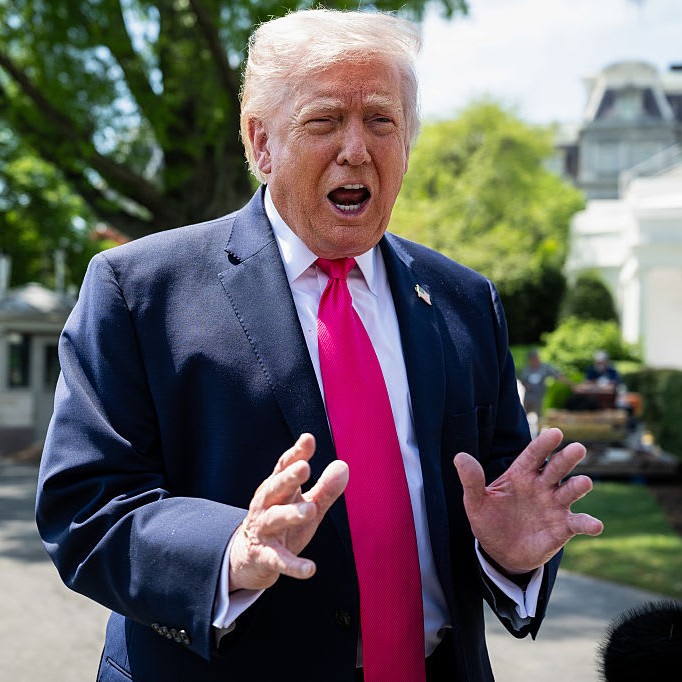
In comments to reporters in Washington, Trump said the US needs to “own” Greenland to keep Russia and China from taking it, according to BBC reporting. “Countries have to have ownership and you defend ownership, you don’t defend leases. And we’ll have to defend Greenland,” he said.
He also added a second line that did not sound like a real-estate pitch. It sounded like a warning. The US would do it “the easy way” or “the hard way,” he said, per the BBC.
The White House has recently said the administration is considering buying the semi-autonomous territory, which is part of the Kingdom of Denmark. It also would not rule out annexing it by force, the BBC reported.
That puts a decades-old Trump fascination, he floated buying Greenland during his first term in 2019, into a sharper context. This time, the message is tied explicitly to Russia, China, and defense posture in the Arctic.
Greenland’s Answer: Stop Treating Us Like Property
Greenland and Denmark say the territory is not for sale. But Greenland’s political leadership went further than a simple “no.” In a joint statement later that night, party leaders, including the opposition, called for “the US’s disregard for our country to end,” according to the BBC.
Then came the identity line that landed like a boundary marker for anyone trying to rebrand Greenland as a strategic asset first and a society second. “We do not want to be Americans, we do not want to be Danes, we want to be Greenlanders,” the leaders said. “The future of Greenland must be decided by the Greenlandic people.”
This is the quiet contradiction sitting under the noise. Trump frames the island as something that must be defended from outsiders. Greenland’s leaders frame the talk itself as the outsider behavior.
Denmark’s Blunt Warning About the Alliance
Copenhagen’s position is simple on paper, and explosive in practice. Denmark has said military action would spell the end of the trans-Atlantic defense alliance, the BBC reported.
That is not a small threat. Denmark is a founding Nato member, and Greenland is part of Denmark’s realm. If one member uses force against another, NATO’s core story, collective defense among sovereign states, turns inside out.
In recent days, Denmark’s allies, including major European countries and Canada, have publicly rallied behind Denmark. Their statements reaffirmed that “only Denmark and Greenland can decide on matters concerning their relations,” according to the BBC, and stressed that Arctic security should be achieved collectively by allies, including the US.
They also pointed to the basics of international law, calling for “upholding the principles of the UN Charter, including sovereignty, territorial integrity and the inviolability of borders,” the BBC reported. That language is diplomatic, but the implication is sharp: even discussing annexation is already a problem.
Here Is What the US Already Has in Greenland
Trump’s argument leans on defense, but it runs into an inconvenient fact pattern. The US is not locked out of Greenland. It is already there.
The US has more than 100 military personnel permanently stationed at Pituffik Space Base in Greenland’s northwest (a facility operated by the US since World War Two), according to the BBC. Under existing agreements with Denmark, the US also has the power to bring as many troops as it wants to Greenland.
That makes Trump’s ownership pitch feel less like a demand for access and more like a demand for control. He has explicitly dismissed the idea that a lease is enough. “Countries can’t make nine-year deals or even 100-year deals,” he said, according to the BBC.
It is a striking posture given the current arrangements already allow the US to operate, expand, and posture forces in the Arctic through an allied framework. Trump’s rebuttal is that frameworks can expire, and borders are, in his telling, a weak substitute for deeds.
Russia and China, Plus a Claim Offered ‘Without Evidence’
Trump has repeatedly described Greenland as vital to US national security. He also claimed, without evidence, that it was “covered with Russian and Chinese ships all over the place,” the BBC reported.
That line does two jobs at once. It links Greenland to the broader US competition with Beijing and Moscow, and it reframes a territorial dispute as preemption. If a threat is already “all over the place,” then extraordinary steps can be sold as defensive.
Trump also tried to separate governments from people, while still making clear he does not want those governments anywhere near Greenland. “I love the people of China. I love the people of Russia,” he said, adding: “But I don’t want them as a neighbour in Greenland, not going to happen.” He then added, “And by the way NATO’s got to understand that,” according to the BBC.
That last sentence is the pressure point. Trump is not just making a claim about Greenland. He is making a claim about how the alliance should interpret US security priorities, even when they collide with an ally’s sovereignty.
Why the Timing Has Allies on Edge
Concerns over Greenland’s future resurfaced after Trump’s use of military force against Venezuela to seize its president, Nicolas Maduro, the BBC reported. The Greenland debate, in other words, is not happening in a vacuum. It is happening in the shadow of a recent demonstration that Trump is willing to use force abroad.
That context helps explain why Denmark’s warning about the alliance is so direct, and why other Nato capitals are choosing public statements, not quiet diplomacy, to draw lines around sovereignty and borders.
There Is Also the Money, and the Melting Ice
Greenland is not only a missile-warning map pin. It is also a resource story, and a climate story, and those two now travel together.
In recent years, interest has grown in Greenland’s natural resources, including rare earth minerals, uranium, and iron, the BBC reported. As Arctic ice melts due to climate change, access becomes easier. Scientists also think Greenland could have significant oil and gas reserves, according to the BBC.
That mix, minerals for modern technology, potential hydrocarbons, and strategic geography, invites big-power competition. It also invites big-power language. Greenland’s leaders are trying to yank the conversation back to self-determination before it gets permanently stamped as a bidding war.
What To Watch Next: Rubio’s Meeting and the Next Trump Iteration
The next practical checkpoint is diplomacy. US Secretary of State Marco Rubio is expected to hold talks with Denmark next week, the BBC reported.
But the bigger question is whether Trump keeps escalating the definition of “security” from basing rights to ownership. The US already has a military foothold and wide latitude under agreements with Denmark. Trump is signaling he wants something different, a permanent stake that cannot be renegotiated by future governments in Copenhagen or Nuuk.
Greenland’s party leaders already offered the cleanest summary of what is at stake, and why this fight will not be solved by better talking points. “The future of Greenland must be decided by the Greenlandic people,” they said. The US president has said NATO has to “understand” his position. Those are two fixed points. The space between them is where the next confrontation will form.