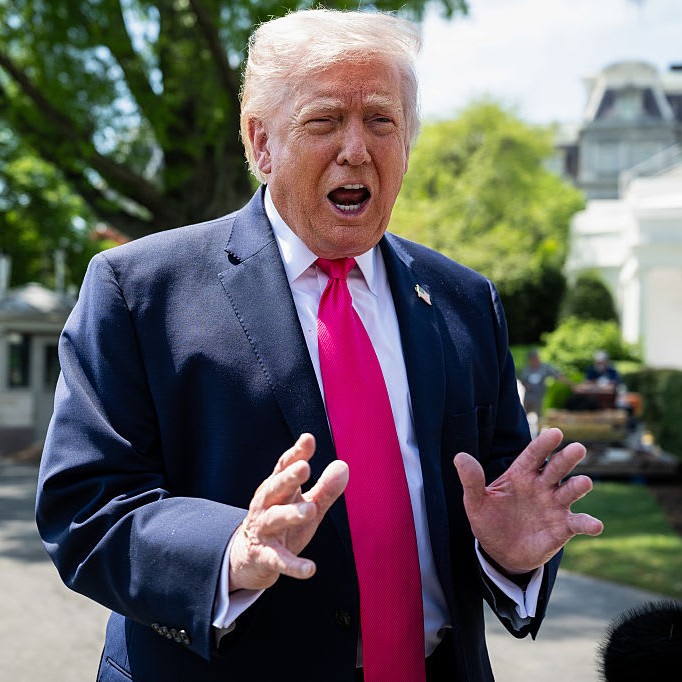
The word Trump chose was not “cooperation.” It was “access.” And in Arctic politics, that one word can turn a security chat into a sovereignty fight.
After U.S. President Donald Trump described a “framework of a future deal” that he said would give the United States “total access” to Greenland, leaders in Denmark and Greenland moved fast to slam the brakes. Their message was tidy and blunt: the island’s sovereignty is not on the table.
What exactly Trump thinks he has, what NATO says it did not offer, and what Copenhagen and Nuuk will actually agree to, is now the real drama.
The pitch: ‘Total access’ and a ‘framework’ with NATO in the room
According to an Associated Press report published by PBS NewsHour, Trump said he agreed with NATO Secretary General Mark Rutte on the framework of a future Arctic security deal that, in Trump’s telling, would grant the U.S. “total access” to Greenland. Trump also said the U.S. would get “all the military access we want,” in comments he made during a Fox Business interview, as reported by AP.
That is the kind of phrasing that sounds clean in a TV clip and messy in an allied capital. Greenland is a semiautonomous territory within the Kingdom of Denmark, and Denmark is a NATO ally. The island is also central to Arctic routes and strategic calculations that keep getting louder as Russia and China expand their ambitions in the region.
But “total access” is not a legal term. It is a political one. That difference is now the whole story.
Trump Claims ‘Total Access’ Greenland Deal as NATO Presses Allies on Arctic Security – https://t.co/87HrjYBVew. pic.twitter.com/dHUgbwm46d
— Modern Diplomacy (@MDiplomacyWORLD) January 23, 2026
Copenhagen’s line in the ice: sovereignty ‘not negotiable’
Danish Prime Minister Mette Frederiksen did not publicly fight the idea of Arctic security talks. She fought the idea that those talks could touch ownership or control.
Frederiksen said it is “good and natural” for Arctic security to be discussed among allies, but added, “we cannot negotiate on our sovereignty,” according to the AP report published by PBS NewsHour. She also said she had been told no sovereignty compromise was part of the discussions.
In other words, Denmark was offering cooperation, not concession. The offer comes with conditions: dialogue, NATO coordination, and respect for Denmark’s territorial integrity.
Nuuk’s ‘red line,’ and a leader who says he has not seen details
Greenlandic Prime Minister Jens-Frederik Nielsen signaled guarded relief about the temperature dropping, but he also said he did not know the concrete terms of what Trump was referencing.
“I don’t know what there is in the agreement, or the deal about my country,” Nielsen said, per the AP report carried by PBS NewsHour.
Nielsen’s position was clear even as the details were not. Asked whether U.S. sovereignty over pockets of Greenland might be possible, he said Greenland is ready to negotiate a better partnership, “but sovereignty is a red line,” according to AP.
That is the contradiction that matters. Trump is talking like a deal is coming. Greenland’s leader is saying he has not seen one, and that any deal has a hard boundary.
Greenland deal stirs tension:
Trump touts “total access” as NATO
urges allies to step up.Denmark insists its sovereignty isn’t up for discussion – but the ice is shifting.#Greenland #Trump #NATO#Geopolitics #Breaking pic.twitter.com/ZWDPPkeAAe
— MK🪨💧 (@MK_Block001) January 23, 2026
NATO’s role, and NATO’s limit
NATO can convene leaders and coordinate security priorities, but it cannot sign away a member’s territory. That point was emphasized in the AP report by a NATO spokesperson, Allison Hart, who said Rutte did not propose any “compromise to sovereignty” in discussions with Trump.
The same report also notes Danish officials pointing out that NATO does not have a mandate to negotiate a deal on behalf of Denmark and Greenland. That is more than a technicality. It is a reminder that Greenland’s status is not a bargaining chip NATO can pass across the table, even if the alliance is deeply invested in keeping Russia and China from gaining a foothold in the Arctic.
The receipts already on the books: the 1951 defense agreement
There is also a quieter reason Denmark and Greenland can reject the “total access” framing without rejecting U.S. military presence. The United States already has long-standing defense rights in Greenland through a Cold War-era agreement.
The AP report notes a 1951 treaty giving the U.S. broad rights to set up military bases in Greenland with the consent of Denmark and Greenland. One widely cited text of that agreement is the 1951 Agreement Between the United States and Denmark Relating to the Defense of Greenland, reproduced by the Avalon Project at Yale Law School.
That matters because it changes the argument. Denmark and Greenland can say, “We already cooperate militarily.” Trump appears to be describing something bigger, and far more politically radioactive, even if he insists he would not use force.
Tariff threats, then a reversal, and allies watching for the next turn
Trump’s Greenland push has not been confined to security rhetoric. According to the AP report published by PBS NewsHour, Trump had threatened tariffs on eight European nations as pressure connected to U.S. control over Greenland, then abruptly scrapped those tariff threats. The report described it as a dramatic reversal after Trump had earlier spoken of wanting the island “including right, title and ownership,” while also saying he would not use force.
For European leaders, the policy whiplash is not a side issue. It is part of the credibility test. If tariff threats can appear and vanish overnight, the question becomes whether “total access” is a bargaining position, a misunderstanding, or a preview of the next demand.
A geopolitical crisis over the future of Greenland appeared to shift toward a fragile de-escalation on Thursday (January 22).
President Donald Trump announced he has secured “total and permanent” US access to the strategic Arctic territory, while simultaneously backing away from… pic.twitter.com/JSPScUvZZd
— Thenationthailand (@Thenationth) January 23, 2026
How regular Danes heard it: disbelief and distrust
The AP report also recorded street-level skepticism in Copenhagen, where some residents said they did not trust Trump’s shift in tone or his framing of the situation. One 22-year-old startup worker, Louise Pedersen, told AP she had a hard time believing him, adding, “I think it’s terrifying that we stand here in 2026.” Another resident, Poul Bjoern Strand, told AP, “I don’t really trust anything Mr. Trump is saying.”
Those quotes do not make policy, but they shape the atmosphere leaders operate in. When Greenland becomes a headline in Denmark, it stops being a distant map question and turns into a domestic political pressure point.
Germany and the UK point to the same principle, and a practical next step
Europe’s larger players are trying to keep the conversation on allied terms: security cooperation in the Arctic without territorial drama.
The AP report says German Chancellor Friedrich Merz underlined the need for European NATO allies to do more to secure the Arctic, and emphasized “sovereignty and territorial integrity” as core principles, while supporting talks among Denmark, Greenland, and the United States on that basis.
The same report says Frederiksen traveled to the UK for talks with British Prime Minister Keir Starmer, who spoke about doing the “hard yards” of bolstering Arctic security and credited Trump’s “pragmatism” for withdrawing tariff threats.
That is the diplomatic squeeze in one snapshot: keep the U.S. engaged on Arctic defense, keep NATO aligned, and keep the word “sovereignty” out of any deal language.
What to watch next: ‘Golden Dome,’ working groups, and the fine print
Trump also linked the Greenland framework to installing an element of his “Golden Dome,” described in the AP report as part of a multibillion-dollar missile defense system. If talks move forward, the fight will likely shift from slogans to specifics: basing rights, radar and missile defense infrastructure, who pays, who commands, and what local Greenlandic consent looks like in practice.
Nielsen pointed to a working group that Danish and Greenlandic foreign ministers agreed with U.S. Vice President JD Vance and Secretary of State Marco Rubio to set up, according to AP via PBS NewsHour. That could become the channel where “total access” gets translated into paperwork, or quietly walked back.
Because for Denmark and Greenland, the headline is already written. Security cooperation, yes. Sovereignty talks, no. And for Trump, the question is whether he is willing to call that “total access,” or whether he wants something that allies have now publicly labeled off-limits.