

The next big immigration fight could start somewhere surprisingly ordinary, a school front office, a registration form, and a question that administrators are trained not to ask.
What You Should Know
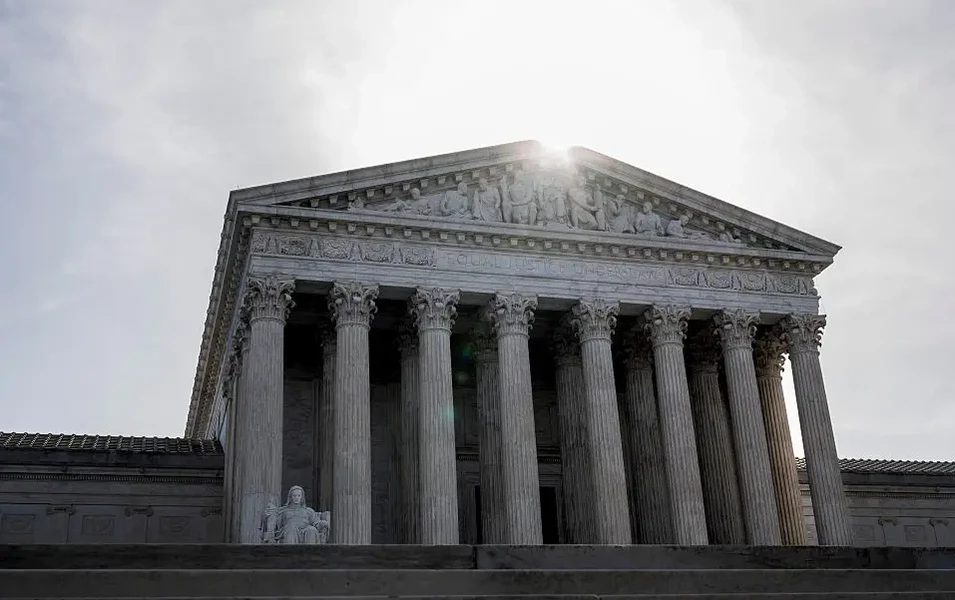
Plyler v. Doe is a 1982 Supreme Court ruling that prevents states from denying free K-12 public education to children based on immigration status. Overturning it would likely require a state to pass a new restriction, get sued, and push a test case back to the Court.
The case originated in Texas, where the state sought to allow districts to charge tuition to children who were not “legally admitted” to the United States. The Supreme Court said no, and the ruling has shaped public school enrollment rules for more than four decades.
Plyler Is a 1982 Roadblock With Real Teeth
According to Oyez, the Court ruled 5-4 that Texas could not deny undocumented children access to public education, framing the issue through the Equal Protection Clause rather than immigration enforcement. The decision did not create a broad new right for undocumented immigrants. It did lock down one specific arena, elementary and secondary schools.
In the majority opinion, Justice William J. Brennan Jr. described the stakes in blunt, almost clinical terms. He warned of a permanent underclass if children were cut off from school, calling it a “shadow population” in the Court’s own words, as published in the decision text on Cornell Law School’s Legal Information Institute.
The Real Power Play Is Who Pays, and Who Decides
Every few years, the same political temptation returns: If Washington controls the border, why should local schools carry the bill for students whose families entered unlawfully? That argument can sound budget-focused. In practice, it is also a direct challenge to a Supreme Court line that has been treated as settled by districts, state education agencies, and courts.
Supporters of Plyler point out that public schools are not optional civic add-ons. They are the pipeline into basic literacy, employment, and lawful participation, and denying access does not remove a child from a community. Critics counter that a 5-4 decision from the early 1980s should not dictate state spending choices indefinitely, especially when education costs, migration patterns, and politics have all shifted.
If the Court Revisits It, the Test Case Will Look Boring on Purpose
Encyclopaedia Britannica notes that Plyler turned on Texas’s attempt to exclude children by imposing tuition, which created an obvious barrier. That detail matters because any new challenge would likely copy the same template with updated language, a statute, a fee, or an administrative rule that dares opponents to sue.
The mechanics would be slow and procedural: pass a restriction, invite a lawsuit, lose or win in lower courts, then ask the Supreme Court to take the case. Until that happens, Plyler remains the controlling rule, and the day-to-day power stays with school officials who are expected to enroll kids first and leave immigration status to the federal government.