The Pentagon has plenty of firepower, but in Washington, message control is its own weapon. In the Iran war, Pete Hegseth is not just briefing the public. He is setting the tone, picking the targets, and daring critics to keep up.
What You Should Know
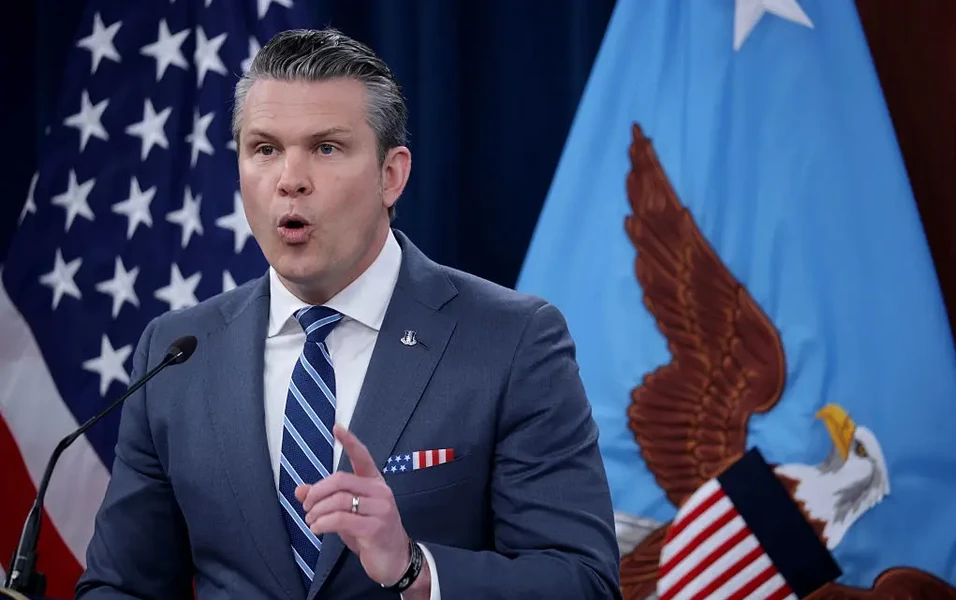
Defense Secretary Pete Hegseth has become the public face of President Donald Trump’s Iran campaign, Operation Epic Fury, using combative language and frequent briefings. His visibility comes as critics question the operation’s rationale and as old controversies follow him into wartime.
Hegseth, a 45-year-old military veteran and former Fox News host, has taken center stage as the US and Israel strike Iran, an effort the BBC reported killed several leaders of the Islamic Republic and pushed the Trump administration deeper into a high-stakes regional fight.
A War Briefing as a Brand
Hegseth’s pitch is simple and built for television: dominance, clarity, and an enemy framed in absolute terms. In one appearance, he promised, “We have only just begun to hunt,” language that reads less like a policy memo and more like a trailer.
That approach creates a sharp contrast inside Trump’s own team. The BBC reported that Trump and members of his administration have been accused of failing to articulate a cohesive rationale for military action, even as Hegseth repeats a defined set of objectives, including degrading Iran’s military capabilities and preventing a nuclear weapon.
When the Messenger Has His Own Baggage
The problem with making one official the face of a war is that the face comes with a file. Hegseth has already weathered controversies, including a report that he inadvertently shared details of planned Yemen strikes in a messaging app chat that mistakenly included a journalist, an episode that triggered calls from members of Congress for his firing.
He has also drawn scrutiny for culture-war crusades inside the military, moves that play well with some supporters but raise a different question in wartime: how much bandwidth does the Pentagon have for internal purges while running a shooting war? The BBC described a department reshaped by fights over diversity programs, base names, and severed ties with universities, including Harvard.
Then there is the press, another front on which Hegseth seems eager to engage as aggressively as any adversary. The BBC reported that the Pentagon has rewritten rules for media engagement, imposed new reporting restrictions, and even banned photojournalists over pictures deemed unflattering, a posture that turns routine accountability into a loyalty test.
The Stakes: Message Control, Not Just Missile Control
Hegseth’s supporters see certainty. His critics see a showman who treats scrutiny as sabotage, which matters because wars do not stay on script. Brett Bruen, a former Obama administration diplomat, told the BBC, “We’re at war, and we need a leader at the Pentagon who tells us what is happening and why it is happening and what we should be doing to prepare for what comes next.”
What to watch is whether the administration’s public case for Operation Epic Fury gets sharper, or whether Hegseth’s style becomes the story that consumes the substance. When the frontman is also the lightning rod, the next briefing can change the politics as fast as the battlefield changes the map.