

The Pentagon just put a new sentence between America and its friends: do more, because Washington plans to do less.
That is the practical takeaway from a newly released National Defense Strategy that, according to BBC News reporting, envisions “more limited” US support to allies and elevates homeland and Western Hemisphere security above every other concern.
On paper, it is a strategic reshuffle. In real life, it is a stress test for alliances that have leaned on US muscle for decades, and for leaders who campaigned on “burden-sharing” and now want receipts.
The new priority list, and the line that spooked allies
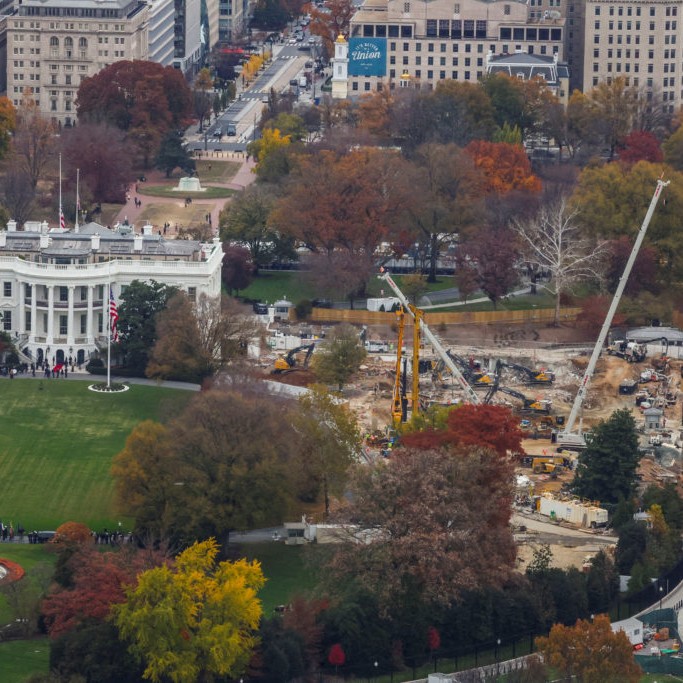
In the BBC’s account, the new strategy reorders America’s defense hierarchy. Rather than naming China as the top defense priority, the Pentagon now puts “security of the US homeland and Western Hemisphere” at the top.
The report also argues that allies have been “content” to let Washington subsidise their defence, while insisting the shift is not isolationism. It frames the pivot as focus, not retreat. One of the document’s clearest tells is its own self-justification: “To the contrary, it means a focused and genuinely strategic approach to the threats our nation faces,” the report says, per the BBC.
But the line that lands hardest in allied capitals is the one that changes the default assumption. The strategy says allies, “especially Europe,” “will take the lead against threats that are less severe for us but more so for them,” according to the BBC summary.
What changed from the last Pentagon playbook
This is not happening in a vacuum. Recent Pentagon strategies have explicitly elevated China as the pacing challenge. In the Biden-era 2022 National Defense Strategy, the Department of Defense described China as “the most comprehensive and serious challenge to U.S. national security.”
Go back further, and the 2018 strategy-era framing was similarly blunt about great-power competition. The Pentagon’s 2018 National Defense Strategy Summary described “revisionist powers” such as China and Russia as the “central challenge” to US security.
Against that backdrop, a strategy that de-centers China rhetorically and stresses the hemisphere first reads like more than a technical edit. It reads like a different political worldview, especially with the BBC reporting that relations with China will now be approached through “strength, not confrontation.”
Burden-sharing is back, and this time it comes with policy
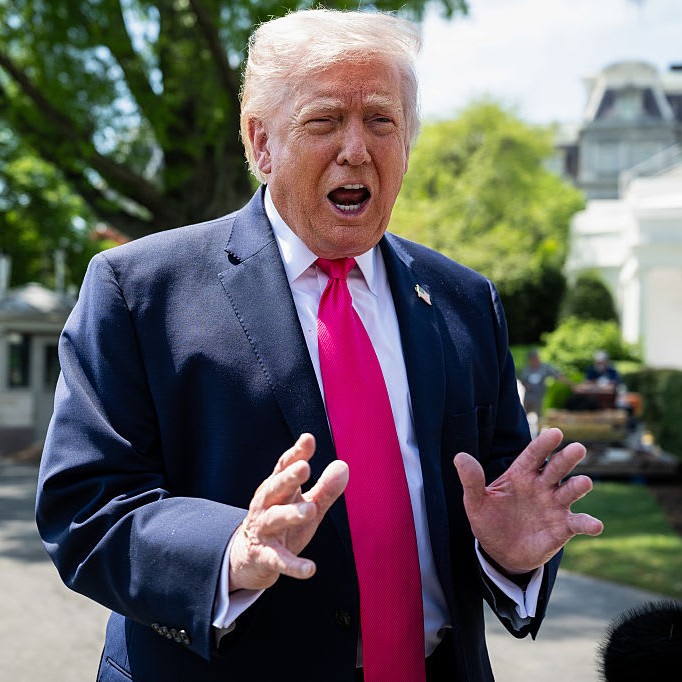
The BBC notes the new defense strategy “reinforces” President Donald Trump’s calls for greater “burden-sharing” from allies, including in countering threats posed by Russia and North Korea. Trump has been pressing this theme for years, frequently mixing legitimate arguments about allied spending with claims that critics say exaggerate the US share.
At the World Economic Forum in Davos, the BBC reports Trump claimed the US had “never gotten anything” from Nato and “we’ve never asked for anything,” then incorrectly claimed “the United States was paying for virtually 100% of Nato.”
There is a reason that claim is contested. NATO’s own explainer on how the alliance is funded distinguishes between national defense spending (what each country spends on its own military) and NATO’s common-funded budgets (shared alliance costs). Those are not the same pot of money, and member contributions are calculated by an agreed cost-share formula.
Still, the political signal matters as much as the accounting. A strategy that promises “more limited” support gives the burden-sharing argument teeth. It turns an old complaint into a planning assumption.
Europe’s problem, Europe’s lead, according to the new framing
The BBC writes that Russia is described in the strategy as a “persistent but manageable threat to NATO’s eastern members.” That phrasing is doing heavy work. For countries living next door to a war, “manageable” is not a comforting adjective, but it is a revealing Washington one.
It also sets up the new division of labor: Europe leads on the threats closest to Europe. Washington reserves bandwidth for the homeland and hemisphere.
The contradiction is that Europe’s security has been the core of US-led alliance architecture since the Cold War, and NATO’s credibility has rested on the idea that the US will show up when it counts. The Pentagon’s new posture, as described by the BBC, suggests the US wants more flexibility and fewer implied obligations, without calling it abandonment.
Asia got a second message: Taiwan omitted, North Korea downgraded
The BBC reports that, unlike previous versions of the strategy, Taiwan is not mentioned. That omission will not go unnoticed in a region obsessed with signals, footnotes, and what did not get said.
At the same time, the document reportedly states the US aims to “prevent anyone, including China, from being able to dominate us or our allies.” That sounds like reassurance, but it is broader and less specific than past language.
On North Korea, the strategy outlines “a more limited” US role in deterrence, with the BBC reporting that South Korea is described as “capable of taking primary responsibility.” That is a major rhetorical shift for a security relationship built on a prominent US military presence and extended deterrence commitments.
The Western Hemisphere clause that drags Greenland and Panama into the plan
What makes the strategy stand out is its blunt geography. The BBC reports the Pentagon “will guarantee US military and commercial access to key terrain, especially the Panama Canal, Gulf of America, and Greenland.”
It is an unusually explicit list for a defense strategy, and it fits the broader theme: hard borders, hard access points, and a preference for controllable terrain over faraway commitments.
The document even brands itself in culture-war terms. “Out with utopian idealism; in with hard-nosed realism,” it says, according to the BBC.
Middle powers hear a warning, and they are talking to each other
When big patrons redraw the map, middle powers start reading menus. The BBC reports Canadian Prime Minister Mark Carney urged like-minded countries to align, warning: “Middle powers must act together because if we’re not at the table, we’re on the menu.”
France’s Emmanuel Macron, the BBC adds, warned of a “shift towards a world without rules.”
Those quotes point to the same anxiety from two angles. If the US is narrowing its definition of vital interest, the countries that sit between giants must either pool leverage, buy more defense capacity, or accept that bargaining power shrinks when guarantees get more conditional.
What to watch next
First, watch budgets, not slogans. If “more limited” support is real, allies will be pushed to spend more and build faster, especially on air defense, ammunition stockpiles, and readiness.
Second, watch the alliance language. NATO communiques and bilateral security statements are often written to signal unity. If the US posture is changing, the wording will become a battleground.
Third, watch adversaries for opportunistic testing. Shifts in declaratory policy can invite probing actions, even if US capability remains formidable.
For now, the strategy’s core tension is baked in. It asks allies to carry more of the load, while promising the US is not walking away. The Pentagon calls it “focused.” Allies will judge it by the moment Washington says no.