

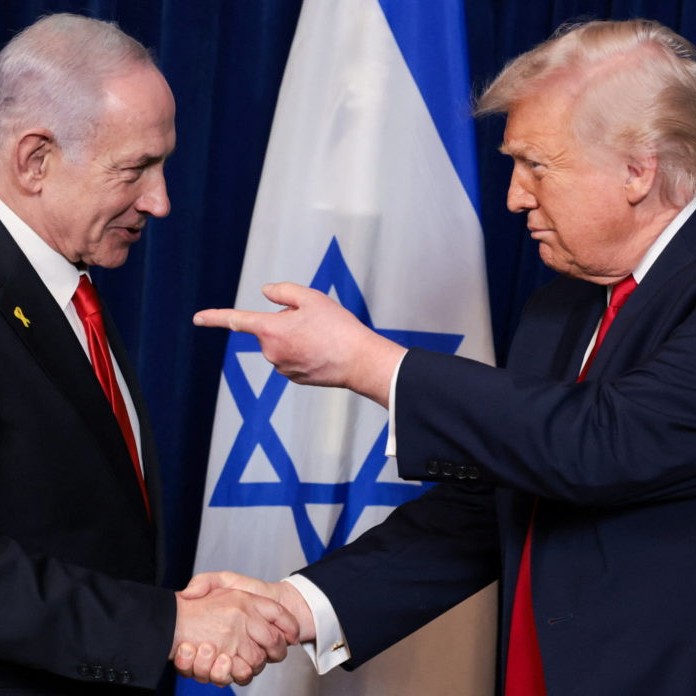
Benjamin Netanyahu is flying into Washington to talk Iran with Donald Trump, but the most revealing part is what each side wants added to the agenda, and what Tehran says it will never trade away.
What You Should Know
Israel said Prime Minister Benjamin Netanyahu will meet President Donald Trump in Washington on February 11th, 2026, as the US holds indirect talks with Iran in Oman. Iran’s foreign minister warned that US bases could be targeted if Iran is attacked.
The meeting lands in a familiar pressure cooker: Washington is testing whether nuclear diplomacy with Iran can be restarted, Israel is pushing to widen the deal to missiles and proxies, and Iran is signaling that any expanded wishlist is a nonstarter.
The Agenda Fight Is the Story
Netanyahu’s office said the prime minister is headed to Washington for talks with Trump focused on US-Iran negotiations. That is the public frame.
The private fight is over scope. Israel wants the discussions to cover Iran’s ballistic missile program and Tehran’s support for armed groups across the region. Iran says the talks are about its nuclear program only, and it is drawing a thick line around its military capabilities.
Netanyahu’s office put its position in writing, framing the desired add-ons as mandatory conditions rather than bargaining chips: “The prime minister believes that all negotiations must include limiting the ballistic missiles, and ending support for the Iranian axis.”
That one sentence hints at the leverage contest. Israel is not just lobbying for stricter terms. It is trying to lock the US into a broader confrontation map, one that treats missiles and proxy networks as inseparable from centrifuges and inspectors.
Trump Says Talks Are Good, Iran Says Stop the Threats
According to The Associated Press reporting published by PBS NewsHour, the US and Iran held indirect talks in Oman on February 6th, 2026, and the talks appeared to loop back to a basic dispute over how to structure any renewed nuclear track.
Trump, speaking about the Oman round, used the kind of upbeat shorthand that drives diplomats crazy because it is vague but consequential: he called the talks “very good” and said additional discussions were planned for early the following week.
Iran’s message was less cheerful and more conditional. Iranian Foreign Minister Abbas Araghchi told journalists that negotiations should happen without military pressure hanging over them. “Nuclear talks and the resolution of the main issues must take place in a calm atmosphere, without tension and without threats,” he said, according to AP.
So, you have a classic mismatch in presentation. Trump is selling momentum. Iran is demanding de-escalation language. Israel is insisting the real issues are bigger than nuclear enrichment.
When Generals Show Up, Everyone Notices
One detail from the Oman talks stands out because it changes the mood music. AP reported that, for the first time in these negotiations with Iran, the US brought in its top military commander in the Middle East.
That officer was US Navy Adm. Brad Cooper, the head of US Central Command. According to a statement cited by AP, Cooper then visited the USS Abraham Lincoln with Middle East special envoy Steve Witkoff and Jared Kushner, Trump’s son-in-law.
The presence of a combatant commander in the orbit of a diplomatic track is not, by itself, proof of looming conflict. However, it is a signal that the White House wants Iran, and the region, to picture both doors at once: the negotiating door and the aircraft carrier door.
That is the squeeze Netanyahu generally favors. The question is whether Trump wants the same squeeze, or wants the option to call the talks “very good” while keeping Israel from widening the list of demands into something Iran will reject on principle.
Iran Names the Target Set Out Loud
Araghchi’s sharpest warning was not about enrichment levels or inspector access. It was about geography and retaliation.
In an interview with Al Jazeera cited by AP, Araghchi said that if the US attacks Iran, Tehran cannot strike the US homeland in kind, so it would respond regionally. “And therefore has to attack or retaliate against U.S. bases in the region,” he said.
That is the kind of statement Gulf capitals read twice, because US bases are spread across a network of partnerships that can become hostages to a crisis. AP also reported that Gulf Arab nations fear an attack could trigger a regional war, and that memories remain fresh from a short, intense Israel-Iran conflict.
The threat also complicates Netanyahu’s Washington pitch. If Israel argues for expanding talks to missiles and proxy forces, Iran can point back to base vulnerability and say it is being asked to disarm while the other side openly discusses force.
Missiles: Israel and Rubio Say Yes, Iran Says Never
Israel’s position is straightforward: it believes Iran is seeking a nuclear weapon, and it wants the program dismantled. Iran has long insisted its nuclear program is for peaceful purposes. Those competing claims are the longstanding headline.
The newer pressure point is missiles. Araghchi said the “missile issue” and other defense matters are “in no way negotiable, neither now nor at any time in the future,” according to AP.
On the US side, Secretary of State Marco Rubio publicly backed a wider scope, saying the talks needed to include missiles and other issues, AP reported.
That sets up a three-way triangle of incentives:
- Israel wants a larger deal because a narrow nuclear deal could leave Iran’s missile program and regional partners intact.
- Iran wants a narrow deal because it views missiles as a core deterrent, not a bargaining chip.
- The Trump administration is signaling it wants a deal, but also wants the leverage of force and the credibility of regional defense commitments.
The Contradiction Everyone Is Dancing Around
Trump is trying to run two narratives at once: diplomacy is working, and the US is ready for “other options.” AP noted he has repeatedly threatened to use force to compel Iran to reach an agreement.
Iran, meanwhile, is arguing for calm negotiations while warning it could hit bases if attacked. That sounds like a contradiction until you translate it into strategy. Tehran is attempting to deter an attack and narrow the negotiating agenda simultaneously.
Netanyahu is pressing for maximal terms while heading into a White House that, at least publicly, is describing talks as productive. If Trump wants speed and optics, he may not want to adopt a shopping list that Iran has already labeled nonnegotiable.
And if Trump wants a legacy deal that looks tougher than earlier frameworks, Netanyahu’s demands become an asset, even if they also make a deal harder to reach.
Araghchi’s Israel Broadside Raises the Temperature
As Netanyahu prepares for Washington, Araghchi is also escalating rhetorically against Israel. Speaking at a forum in Qatar, he accused Israel of destabilizing the region and described a pattern of cross-border activity.
“It breaches sovereignties, it assassinates official dignitaries, it conducts terrorist operations, it expands its reach in multiple theaters.”
Araghchi also criticized Israel’s treatment of Palestinians and called for “comprehensive and targeted sanctions against Israel, including an immediate arms embargo,” AP reported.
Those are not small words. They are designed to shift international pressure away from Iran’s program and onto Israel’s regional conduct, right as Netanyahu goes to meet the US president.
That is another power move inside the same chessboard: Israel seeks tighter constraints on Iran, and Iran tries to make Israel the defendant in the court of regional legitimacy.
What to Watch After the Washington Meeting
Israel said the Netanyahu-Trump meeting is set for February 11th, 2026, and there was no immediate White House comment when the trip was announced, AP reported.
The next steps are less about a single photo-op and more about the negotiating architecture that follows:
- Whether Trump publicly echoes Netanyahu’s demand to add missiles and proxy groups to the talks, or keeps the scope focused on nuclear issues.
- Whether the planned follow-up round in Oman, or elsewhere, materializes quickly, and at what level.
- Whether Iran maintains its hard line on missiles while still offering nuclear concessions that can be sold as meaningful.
- Whether the US military signaling, including senior commanders’ presence, continues alongside the diplomatic track.
For now, the US is calling the talks good, Israel is calling the agenda incomplete, and Iran is calling missiles untouchable while naming the bases it can hit. That is not resolution. That is positioning.