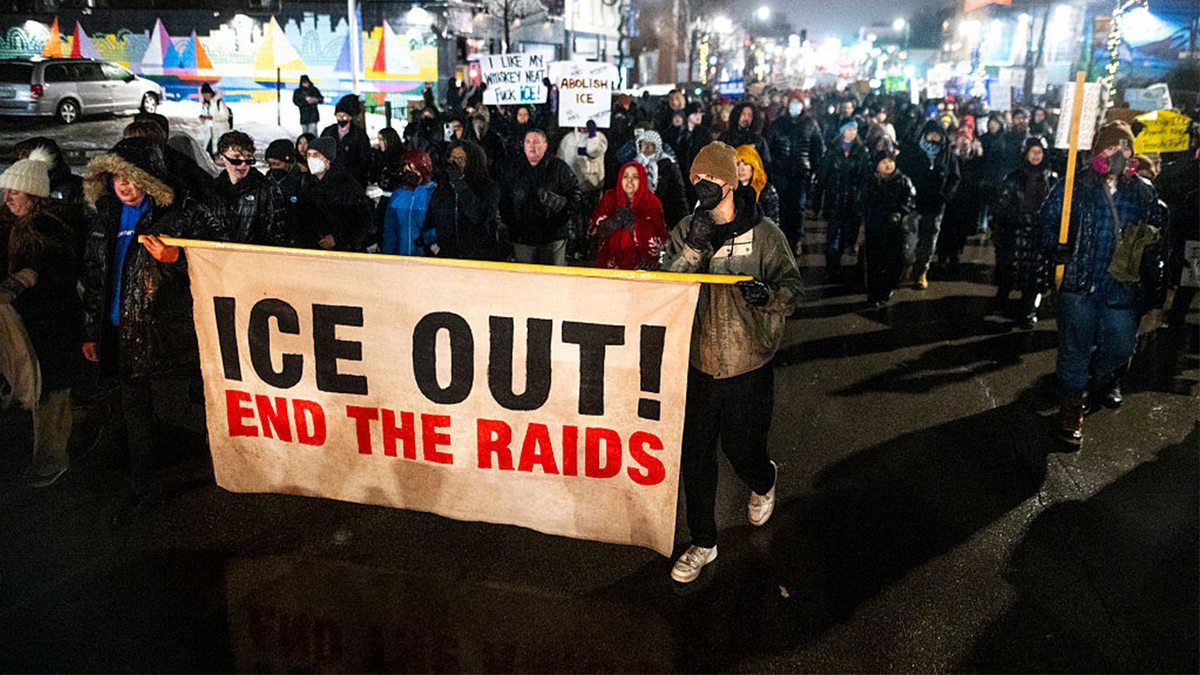
The Minnesota immigration dragnet was marketed as a hunt for dangerous people, but the most unsettling accounts are coming from refugees who say they did everything by the book and still ended up in handcuffs.
What You Should Know
PBS NewsHour reported that a federal immigration operation in Minnesota included a review of about 5,600 legally admitted refugees awaiting permanent residency. Refugees and advocates sued, and a federal judge temporarily stopped the arrests and detention of refugees in Minnesota.
The PBS NewsHour segment, reported by correspondent Fred de Sam Lazaro, centers on a contradiction with big stakes: an enforcement campaign framed around public safety that, refugees say, reached into the legal immigration pipeline and shook trust in the system.
The Pitch vs. the Paperwork
PBS described the earlier effort as Operation Metro Surge, billed as a push to remove the “worst of the worst” from Minnesota. Even after the number of agents in the state dwindled, immigrants told PBS the fear did not.
Then came a second track. The Trump administration, PBS reported, launched Operation PARRIS, a reexamination of roughly 5,600 refugees who arrived legally in Minnesota but had not yet received permanent residency, also known as a green card.
How the Minnesota Refugee Review Worked
Within days of the new review, PBS reported accounts of refugees being arrested at their homes or detained when they showed up at a local ICE office after receiving notices to appear. Refugees and advocates sued to block the enforcement, arguing the government was breaking faith with people who were already vetted and admitted.
One attorney involved in the lawsuit summed up the demand on PBS: “We are simply asking for promises to be kept.” In late January, PBS reported, a federal judge temporarily stopped agents from arresting and detaining refugees in Minnesota.
The most vivid details in PBS’s report come from a refugee the program calls Jay, whose name and face were withheld because he feared for his safety. PBS said Jay was admitted to the United States as a refugee in late 2024 and later received a letter ordering him to appear for an interview about his status.
Jay told PBS he took time off work and went to the Whipple Federal Building outside Minneapolis, expecting a standard check-in. Instead, he said, he was handcuffed, moved into a small room, and eventually flown to a detention facility in Texas with no clear explanation.
His description of the conditions was blunt: “We slept on the floor. We didn’t change clothes. We didn’t take showers. There wasn’t enough food. There wasn’t enough water.” Whatever the government’s intent, the consequence is easy to map: a legal immigration process that depends on compliance can buckle when showing up for an interview is treated by some people as a trap.
What Happens Next
The judge’s temporary order, as PBS reported it, did not end the political fight over immigration enforcement. It did, however, put a spotlight on how quickly a “public safety” message can collide with the reality of paperwork, and how quickly that collision can end up in federal court.