

At 1:30 a.m., the north gate opens for one car leaving, and another slips in. Minutes later, an alleged shotgun, a gas can, and three armed officers converge inside the most famous private security bubble in Florida. What, exactly, was supposed to happen next?
What You Should Know
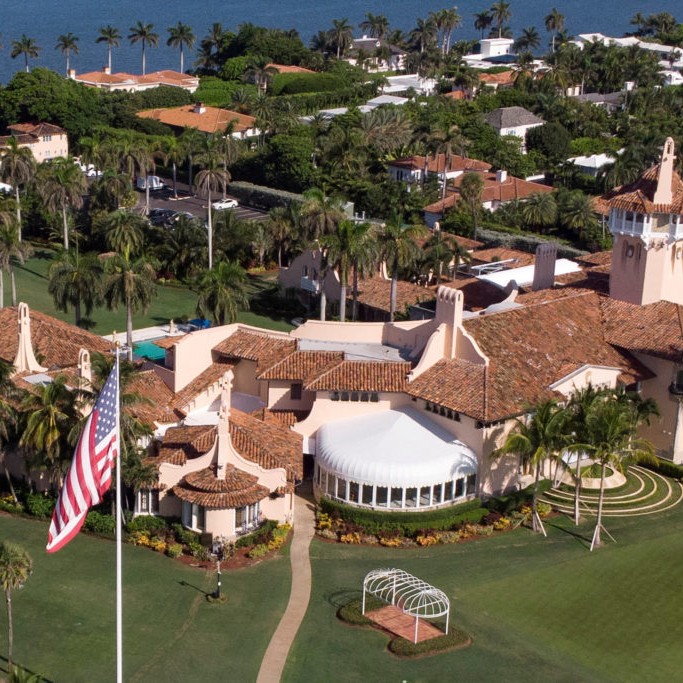
The U.S. Secret Service said a 21-year-old man entered Mar-a-Lago’s secure perimeter around 1:30 a.m. on February 22nd, 2026, and was shot and killed after allegedly raising a shotgun. President Donald Trump was at the White House.
According to accounts from the Secret Service and the Palm Beach County Sheriff’s Office, the intruder was confronted near the north gate of Mar-a-Lago, President Donald Trump’s resort and residence in Palm Beach, Florida. Investigators later identified him as Austin Tucker Martin, 21, of North Carolina, as officials worked to piece together why he went there in the first place.
Here is the tension that investigators now have to live with. The security response appears straightforward on paper. Officials say the man entered a secure perimeter, ignored commands, and pointed a gun. But the human profile being sketched by relatives and law enforcement is messier: a reportedly missing young man, a sudden gun purchase on the road, and a destination that guarantees national headlines.
The Gate Moment That Changed Everything
In the telling offered by Palm Beach County Sheriff Ric Bradshaw, the breach happened in a blink of bad timing. A vehicle was exiting the property, and the intruder entered through the north gate.
Bradshaw said the man was confronted by two Secret Service agents and a sheriff’s deputy. The key claim is what happened after commands were given.
Bradshaw’s description was blunt: “He was ordered to drop those two pieces of equipment that he had with him. At which time he put down the gas can, raised the shotgun to a shooting position,” Bradshaw said at a brief press conference. “The two agents and the deputy fired their weapons to neutralize the threat.”
The Secret Service’s public account, delivered through spokesman Anthony Guglielmi, aligned with that basic narrative: an armed man drove into the secure perimeter and was shot after a confrontation.
Trump, despite often spending weekends at Mar-a-Lago, was not there. Officials said he was at the White House when the breach occurred.
A Missing Person Report, a Road Trip, and a Weapon Box
Investigators have not publicly identified a motive. What they have offered instead is a set of clues that reads like a timeline built from receipts: a missing person report, travel south, a gun purchase, and physical evidence left behind.
Authorities said the man had a gas can and a shotgun. Guglielmi said the intruder was believed to have purchased the shotgun while driving south, and officials said a box for the weapon was later found in the vehicle.
Back in North Carolina, the Moore County Sheriff’s Department said a relative reported Martin missing early Sunday morning. That detail matters because it opens two competing frames at once, neither of them comfortable.
One frame is intentionality: a person drives to a high-profile site, armed, and forces a confrontation. The other is instability: a missing 21-year-old who may have been in crisis, traveling with a gun and fuel, arriving at a place that is synonymous with Trump, politics, and security.
Officials also said investigators were working to compile a psychological profile. Asked whether Martin was previously known to law enforcement, Bradshaw said not right now.
The FBI Wants Camera Footage, and Washington Wants a Narrative
The FBI moved quickly to widen the aperture beyond the gate. Officials encouraged residents near Mar-a-Lago to check security cameras for footage that could help investigators. That is a familiar move in public incidents, but it also signals a key point: the immediate shooting scene is only part of what the bureau wants to reconstruct.
FBI Director Kash Patel, in a post on X, said the bureau would dedicate necessary resources to the investigation, according to reporting by The Associated Press.
Meanwhile, the White House aimed the spotlight elsewhere. Press secretary Karoline Leavitt used the incident to attach a political argument about a partial government shutdown affecting the Department of Homeland Security, which includes the Secret Service.
In her post on X, Leavitt said: “Federal law enforcement are working 24/7 to keep our country safe and protect all Americans.” She added, “It’s shameful and reckless that Democrats have chosen to shut down their Department.”
The power dynamic here is obvious. When a security incident hits the president’s home base, the first question is operational: what happened and why did lethal force become necessary? The next question is bureaucratic: is the system stretched? Then comes the political question: who gets blamed before the facts are complete?
The White House referred questions to the Secret Service and the FBI. Both Trump and his wife posted statements on social media after the incident, but officials said they were unrelated to the shooting.
Relatives Describe a ‘Quiet’ Cousin Who Feared Guns
There is a second collision in this story, and it sits between the official threat narrative and the portrait offered by the family.
In Cameron, North Carolina, vehicles blocked the entrance to a property listed in public records as an address for Martin, according to The Associated Press. There, Martin’s cousin, Braeden Fields, told reporters he could not square the allegations with the person he thought he knew.
Fields described Martin as quiet, afraid of guns, and from a family of avid Trump supporters. “He’s a good kid,” Fields said, adding that they grew up together and that he could not believe Martin would do something like this.
Fields also said Martin worked at a local golf course and would send money from each paycheck to charity.
Those statements do not prove anything about what happened at the gate. They do, however, underscore what investigators are now stuck sorting out: a young man who, according to relatives, avoided guns, and an official scene in which he allegedly lifted one into firing position in front of federal agents.
Why Mar-a-Lago Turns Any Breach Into a National Event
Mar-a-Lago is not just a private club with a perimeter. It is a symbol, and symbols draw attention, threats, and opportunists.
Trump faced threats during the 2024 campaign, including two assassination attempts, according to The Associated Press. One involved a shooting at a campaign rally in Butler, Pennsylvania, where a gunman fired multiple shots before being killed by a Secret Service counter-sniper, and one attendee was killed. Another attempt occurred near Trump’s West Palm Beach club, where a Secret Service agent spotted a rifle aimed through shrubbery, officials said.
That recent history changes the stakes of any intrusion. It also changes the messaging. In an era when security events become instant political content, every actor has a reason to lock in a storyline early, even when the motive is unknown.
Law enforcement, for its part, has kept the public focus on concrete facts: the time, the gate, the equipment, the commands, and the alleged action that triggered gunfire.
What to Watch Next
Investigators have a checklist, and it is larger than the shooting itself. They will want to reconstruct Martin’s route into Florida, the weapon purchase, and whether anyone else had contact with him during the trip. They will also work to determine whether the intrusion was planned, impulsive, or tied to mental health crisis signs that friends or relatives noticed before the missing report was filed.
The FBI’s request for nearby security footage suggests they are looking for movement patterns and any earlier attempts to approach the property. That can help answer the question that lingers after every perimeter breach: was this the first try, or just the first one that worked?
Politically, the shutdown argument is likely to keep surfacing, because it gives Washington a hook that is easier to fight over than the harder questions about threat detection, staffing realities, and whether the current environment is producing more high-risk approaches to public figures’ homes.
For now, the public record is thin where people most want it thick. Officials have a name, an age, a time stamp, and an alleged sequence of actions. They do not have a motive, and in incidents like this, that missing piece is the one that tends to get filled by whoever talks the fastest.