

The government is advertising a cash-and-plane-ticket off-ramp out of the United States. Inside detention, migrants and lawyers describe a different reality: people signing paperwork to leave, then being told they still cannot go anywhere until a judge finally calls their case.
What You Should Know
Reporting from The Associated Press says prolonged immigration detention has expanded under President Donald Trump’s second term, as ICE detention topped 70,000 people, and thousands were held at least six months. Migrants and attorneys describe poor conditions, long waits for hearings, and blocked attempts to leave voluntarily.
The latest flashpoint is a contradiction with real consequences. The Trump administration is promoting voluntary departures with plane fare and $2,600, while detainees interviewed by The Associated Press, plus multiple legal aid groups, say they are stuck in custody for months even when they are ready to be deported.
The New Bottleneck Is the Judge
The story is not just about detention beds filling up. It is about who holds the lever that opens the door.
According to The Associated Press report published by PBS NewsHour on February 9th, 2026, prolonged detention has become more common in Trump’s second term, in part because of a policy shift that generally bars immigration judges from releasing detainees as their deportation cases crawl through overloaded courts.
For detainees, that can turn the immigration system into a waiting room with locks. For the administration, it concentrates control inside a process that is already backlogged.
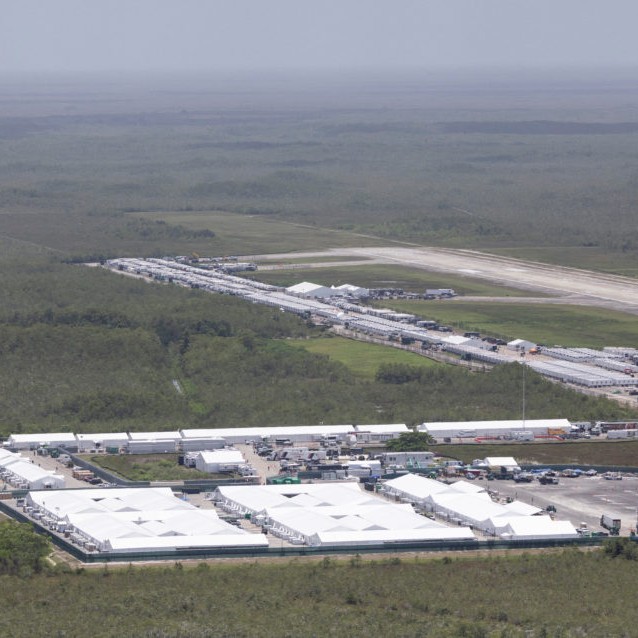
One man at the center of the report, Felipe Hernandez Espinosa, is a 34-year-old Nicaraguan asylum-seeker. He told The Associated Press he spent 45 days at a Florida holding center, detainees have dubbed Alligator Alcatraz, then months at the Fort Bliss Army base in El Paso, Texas. He said he asked to go back to Nicaragua and was told he had to see a judge first. After nearly seven months in detention, his hearing was scheduled for February 26th, 2026.
His account captures the power dynamic in a sentence. “I came to this country thinking they would help me, and I’ve been detained for six months without having committed a crime,” Hernandez said, according to The Associated Press. “It is been too long. I am desperate.”
When Voluntary Departure Is Not Voluntary
On paper, voluntary departure is supposed to be the quicker exit. If someone agrees to leave, the government avoids a full removal order, and the person avoids certain penalties that can attach to deportation.
In this reporting, the off-ramp looks more like a cul-de-sac.
The Associated Press says attorneys who provide free legal guidance are hearing a new kind of refrain: people who do not want to fight anymore, who are willing to go, and who cannot.
Ana Alicia Huerta, a senior attorney at the California Collaborative for Immigrant Justice, told The Associated Press that the first three detainees she met during a January 2026 visit to an ICE detention center in McFarland, California, said they had signed a form agreeing to leave the United States and were still waiting. “All are telling me: ‘I don’t understand why I’m here. I’m ready to be deported,'” Huerta said, according to The Associated Press. “That’s an experience that I’ve never had before.”
The Trump administration, according to the report, is offering plane fare and $2,600 for people who leave voluntarily. Yet detainees like Hernandez said they were told they cannot leave detention until they see a judge.
If that is the operational reality, the incentive is less an exit offer than a messaging strategy, because the gatekeeper is not the detainee’s signature. It is the hearing calendar.
The 6-Month Supreme Court Problem
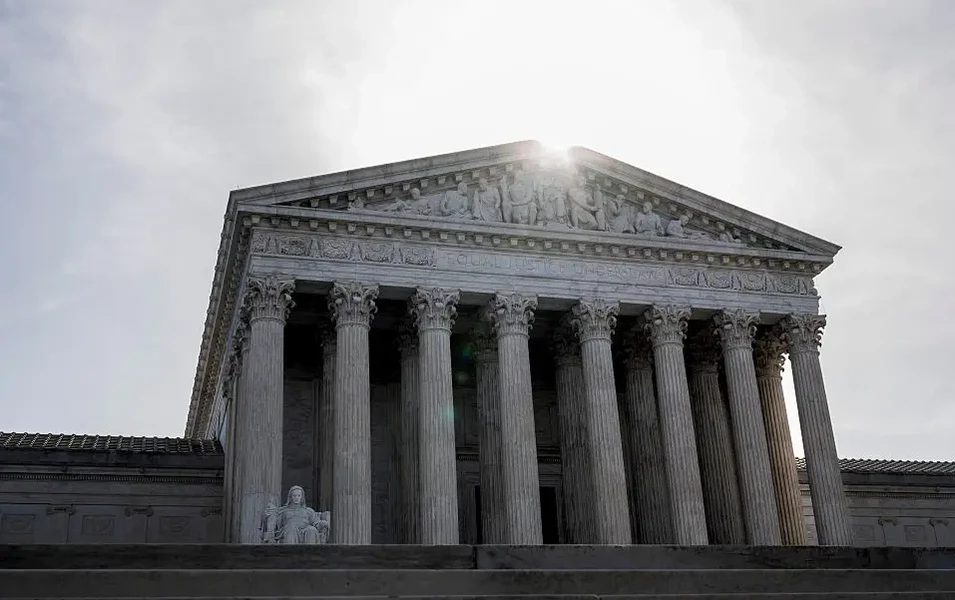
Long detention is not just a humanitarian concern. It is also a legal pressure point, because the Supreme Court has already warned that indefinite civil detention runs into constitutional limits.
In Zadvydas v. Davis, decided in 2001, the Supreme Court held that immigration authorities cannot detain someone indefinitely when deportation is not reasonably foreseeable. The Court treated six months as a presumptively reasonable period, after which continued detention requires additional justification.
The Associated Press report points out how quickly current numbers crash into that benchmark. With ICE detention surpassing 70,000 people for the first time, the agency’s data showed 7,252 people had been in custody at least six months in mid-January 2026. The same dataset showed 79 people held for more than two years. The Associated Press said that is more than double the 2,849 who had been in ICE custody at least six months in December 2024.
Meanwhile, the Department of Homeland Security told The Associated Press its policies follow the law, and it pointed to a court ruling allowing the administration to continue detaining immigrants without bond.
That is the tension. The detainees and their lawyers are invoking time and conditions. The government is invoking authority and process.
Inside the Facilities, the Complaints Are Concrete
The conditions described in the report are not vague. They are specific, physical, and hard to spin into abstraction.
Hernandez described Alligator Alcatraz in Florida as a place where detainees reported worms in their food, toilets that do not flush, and sewage that overflows. He described mosquitoes and insects everywhere. Human rights groups, the report said, raised similar alarms about the Fort Bliss detention camp, where two migrants died in January 2026.
Even when you set aside the politics, the operational stakes are obvious. The longer people are held, the higher the odds that basic facility failures turn into lawsuits, federal court petitions, medical emergencies, or death investigations.
Sui Chung, executive director of Americans for Immigrant Justice, put it bluntly in comments to The Associated Press: “The conditions are so poor and so bad that people say, ‘I’m going to give up’.”
The Cases That Break the Script
The most revealing part of the reporting is not the detainees who are fighting removal. It is the detainees who are not, and who are still stuck.
Hernandez said he signed documents requesting to be returned to his country or Mexico at least five times, and an October 9th, 2025, hearing was abruptly canceled without explanation. He said he waited months, then learned in early February 2026 that his new hearing date would be February 26th, 2026.
DHS told The Associated Press that Hernandez appealed a deportation order in January 2025, and it cannot remove him now because doing so could violate his due process rights. That response frames the delay as protection. Hernandez frames it as confinement.
Another detainee highlighted in the report, Yashael Almonte Mejia, is a 29-year-old Dominican man whose family says he has been detained for eight months after the government sought dismissal of his asylum case in May 2025. His aunt, Judith Mejia Lanfranco, told The Associated Press he was transferred across multiple states. She said he married his pregnant American girlfriend via video call and became a father to a daughter he has not seen in person. “He is desperate, and he doesn’t even know what’s going to happen,” she said, according to The Associated Press. The report said DHS did not comment on his case.
Then there is the category that usually ends the debate: people who cannot be deported to their home countries because they have won protection under the UN Convention Against Torture, often shortened to CAT.
Sarah Houston, managing attorney at Immigrant Defenders Law Center, told The Associated Press she has at least three clients with CAT protection who have been held more than six months. One, she said, is from El Salvador and has been detained for three years. Houston said that the client won his case in October 2025 and is still in custody in California. “They’re just holding these people indefinitely,” Houston said, according to The Associated Press. “We’re seeing people who actually win their immigration cases just languishing in jail.”
That flips the usual logic of detention. If even winning does not reliably produce release, detention stops functioning as a tool to secure removal and starts functioning as a holding pattern with no clear end date.
Why the Backlog Becomes a Policy Weapon
Immigration detention is often presented as a straightforward enforcement mechanism. In practice, it is a system where scarce court time becomes a form of power.
If people are generally barred from release while their cases are pending, and court calendars are backlogged, the backlog itself becomes an enforcement effect. It creates leverage over detainees’ choices, whether that is pushing them to abandon asylum claims, accept removal, or agree to voluntary departure.
But the reporting suggests a second-order consequence: the same pressure that is supposed to produce exits may instead produce a different kind of gridlock, where detainees signal they want out and still cannot move until a judge is available.
The Associated Press also noted that deportation timelines can depend on the destination country. Mexico removals are routine, while countries including Cuba, Nicaragua, Colombia, and Venezuela have at times resisted accepting deportees. That adds another layer. Even if a person is ready to go, geopolitics can slow the actual removal.
What Happens Next
Watch for two things.
First, watch the courts. The Associated Press reported that some detainees are finding relief in federal court, including a Mexican man who said he was held for a year despite winning CAT protection, and who was ultimately freed in October 2025, months after a judge ordered his release. Cases like that create paper trails, judicial scrutiny, and deadlines the executive branch cannot ignore.
Second, watch the numbers. When ICE detention climbs, the system’s weak points do not stay hidden. Medical care, sanitation, staffing, and court capacity all become measurable stress tests. If the administration is selling a $2,600 exit, critics will keep asking why the people most eager to take it describe a door that still will not open.