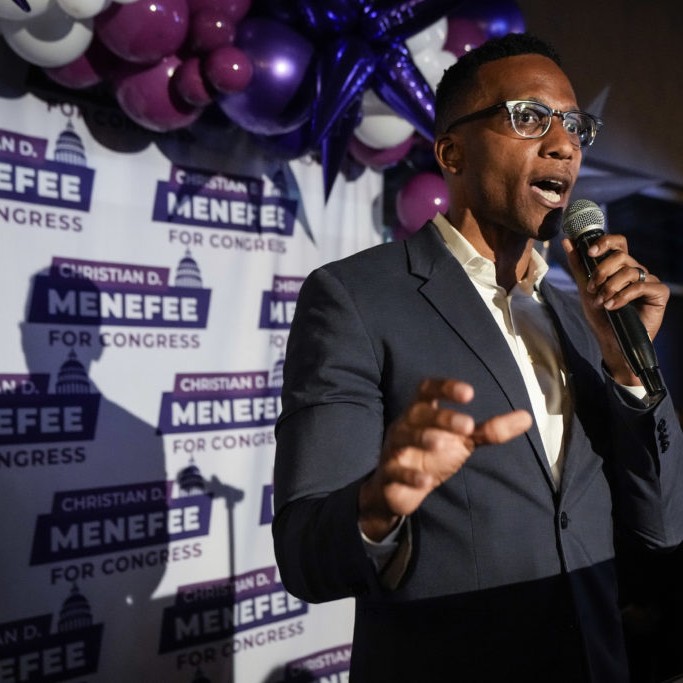
Houston is about to get its U.S. House seat back. The catch is that the night-of-election story may not match the final numbers, and everyone in politics knows what a counting delay does to a narrative.
Voters in Texas’ 18th Congressional District are headed into a special runoff election that will end a vacancy that has stretched for almost a year. At the same time, nearly 300 miles away, parts of the Fort Worth area are picking a new state senator in another runoff. Two elections, two separate power games, and one very Texas twist: not all early votes in Harris County are expected to show up on Election Night.
The runoff in the 18th District is a pure intra-party fight. Democrat Christian Menefee and Democrat Amanda Edwards advanced from a crowded special election field to face each other one-on-one. No Republican will appear on the runoff ballot, which means Democrats will win the seat. The remaining question is which faction of the local Democratic coalition gets to claim the prize, and how quickly the county can produce a final tally.
Why This Race Matters Beyond Houston: In Washington, even a temporary shift in a tight U.S. House can change the math on procedural votes, committee maneuvering, and leadership pressure. In Texas, election administration itself becomes part of the message when a meaningful slice of votes is scheduled to land days after the polls close.
A Vacant Seat, a Tight House, and a Runoff With a Built-In Twist
According to an Associated Press report published by PBS News, Houston-area voters have been without representation in the U.S. House for almost a year, and the runoff is designed to finally fill that gap.
The seat opened after Democratic Rep. Sylvester Turner died on March 5, 2025, two months into his term, the AP reported. The special election to replace him drew 16 candidates, and no one reached the majority threshold needed to avoid a runoff. Menefee and Edwards finished as the top two vote-getters in the November 4 special election and advanced to Saturday’s head-to-head.
On paper, the power impact in Washington looks straightforward. With two Democrats on the runoff ballot, Democrats are guaranteed to narrow Republicans’ slim U.S. House majority, at least temporarily, the AP reported. But the political reality on the ground is messier because the district is not just picking a party. It is picking a person who will sit in a seat with a long, personality-driven history.
The Endorsement That Signals Who Wants the Steering Wheel
One of the clearest signals of where local power brokers are leaning came through an endorsement, not a polling memo.
The AP reported that former U.S. Rep. Erica Lee Carter endorsed Menefee. That name carries weight in the district because she is the daughter of the late Rep. Sheila Jackson Lee, who represented the area for nearly 30 years before her death in July 2024, according to the AP. Erica Lee Carter briefly held the seat in 2024 before Turner took office, and she did not run in the special election to replace Turner, the AP reported.
Endorsements are rarely just about ideology in a safe seat. They can be about networks, donor lists, and who is trusted to represent the district’s interests inside the Democratic caucus. In a runoff where party control is not on the line, the coalition fight becomes the election.
Money, Burn Rate, and What It Suggests About the Closing Argument
Campaign finance is not destiny, but it is a clue about how each side believes it can win, and how hard it expects to have to work for it.
As of January 11, Menefee had spent about $1.8 million, compared with about $1.5 million for Edwards, the AP reported. Menefee had about $389,000 cash on hand, while Edwards had about $281,000, according to the same report.
In a runoff, the calendar compresses, and turnout tends to thin out. That makes targeted voter contact and turnout operations more valuable per dollar, not less. The financial gap here is not an ocean, but it is a signal that both campaigns have treated this as a real fight, not a ceremonial march to a foregone conclusion.
The Counting Problem: Harris County’s Late-Arriving Early Votes
Here is where the storyline gets combustible if the margin is close.
In Harris County and Tarrant County, the AP reported that the first vote update on election night typically includes all or nearly all early and absentee voting. But in Saturday’s special congressional runoff, a significant portion of early voting results in Harris County will not be available until a week after the election.
Why? The AP said early voting in Harris County was extended for two additional days after some early voting sites were shut down due to inclement weather. Votes cast on those additional days will be treated as provisional ballots and reviewed and tabulated for release on February 6, according to the AP.
That timeline matters because it creates a gap between what viewers see first and what gets counted last. In an era where campaigns try to define legitimacy at the speed of a livestream, delayed tranches of votes can become their own political character, especially if one candidate leads in the initial reporting and then the margin tightens.
The AP also laid out how the district’s vote split looked in the earlier contest: Menefee led Edwards among early voters, 33% to 25%, and Edwards narrowly edged Menefee among Election Day voters, 26% to 25%, according to the AP. The structure of that vote is exactly why the timing of early vote reporting can shape perceptions before it shapes totals.
Turnout Is the Silent Boss of a Runoff
Runoffs are often less about persuasion and more about who actually shows up, and the AP’s turnout numbers underline the stakes.
In the 2025 special election for the 18th District, there were about 381,000 registered voters and about 76,000 people voted, or roughly 20% of registered voters, the AP reported. Slightly more than half of voters, 51%, voted early or by absentee ballot, according to the AP.
As of Tuesday, ahead of the runoff, nearly 14,000 ballots had been cast in the 18th District, the AP reported. Whether that early pace signals a sleepy runoff or an engaged electorate is hard to read in isolation, but it does reinforce the central truth of this race: a small slice of the district will decide who carries the title of congressmember.
Fort Worth’s Senate Runoff: A Seat With a Future Date Attached
Texas has another runoff on the same day, and it carries a different kind of irony: the winner is stepping into a job that is not scheduled to do much legislating for a while.
In Tarrant County, voters in state Senate District 9 will elect a replacement for Republican Kelly Hancock, who left office in 2025 to become acting state comptroller, the AP reported. Democrat Taylor Rehmet led the November 4 special election with about 48% but fell short of a majority, while Republican Leigh Wambsganss placed second with about 36%, followed by Republican John Huffman at about 16%, according to the AP.
The AP also reported that Donald Trump carried the district in 2024 with about 58% of the vote, a number that gives Republicans a structural advantage in a lower-turnout runoff environment. The winner will complete the remainder of Hancock’s term, although the Texas Senate is not scheduled to meet again until 2027, the AP reported.
Republicans hold an 18-11 majority in the Texas Senate, with two previously Republican-held seats vacant, the AP said. In other words, this is a partisan battleground on paper, but the legislative stakes are delayed. The immediate prize is power positioning, visibility, and the ability to claim momentum well before the next session gavels in.
What to Watch on Election Night, and the Week After
Polls close at 7 p.m. CST, which is 8 p.m. EST, the AP reported. But the more revealing clock is the one that runs past Saturday night in Harris County.
First, watch the initial Harris County release, which typically contains most early and absentee results, then watch how much of the extended early voting is missing from that first wave.
Second, watch how campaigns talk about margins when they know ballots are scheduled to drop later. Some will frame it as patience and process. Others may frame it as uncertainty and advantage. The facts will be the same, but the incentives will not.
Third, watch how quickly a race can be called. As the AP put it, “The Associated Press does not make projections and will declare a winner only when it’s determined there is no scenario that would allow the trailing candidates to close the gap.” In a contest with delayed provisional ballot reporting, that standard can mean a longer wait for a definitive answer, even if the trend feels obvious.
Finally, keep an eye on any recount chatter, especially if the margin lands inside a range where the losing candidate can request one under Texas law. Close elections can turn procedural rules into political weapons, even when the rules are clear on paper.