

The House just handed President Trump’s tariff agenda a public slap, but the more interesting story is what happened in the minutes before the vote, when Republicans were told, in two different voices, that everything was fine and that consequences were coming.
What You Should Know
The House voted 219 to 211 to pass a Democratic resolution aimed at overturning President Trump’s tariffs on Canada, with six Republicans joining Democrats. CBS News reported the measure is largely symbolic because it could be vetoed if it reaches Trump.
The vote landed at an awkward moment for House Speaker Mike Johnson, who is trying to run a tight chamber with little room for freelancing, and for Trump, who has been treating tariffs as both policy and political weapon.
A Symbolic Vote With a Real Head Count
According to CBS News, the House passed a Democratic measure to roll back tariffs on Canada by an eight-vote margin, 219 to 211. Six Republicans crossed over: Reps. Dan Newhouse, Brian Fitzpatrick, Jeff Hurd, Kevin Kiley, Thomas Massie, and Don Bacon.
That list matters because it reads like a map of the GOP’s internal stress points. There are members who brand themselves as institutionalists, members who pitch independence as a feature, and members who have to sell economic calm back home even while their national party is chasing confrontation.
It also matters because Johnson’s majority is thin enough that even a small group can turn a leadership promise into a public problem. CBS News reported Johnson told reporters, “This is life with a small majority.”
The resolution’s practical impact is limited. As CBS News noted, it could be vetoed if it clears the Senate, and it did not pass with a veto-proof majority. But symbolic votes are rarely just symbolic inside a party built on discipline.
Trump’s Warning vs. Johnson’s Reassurance
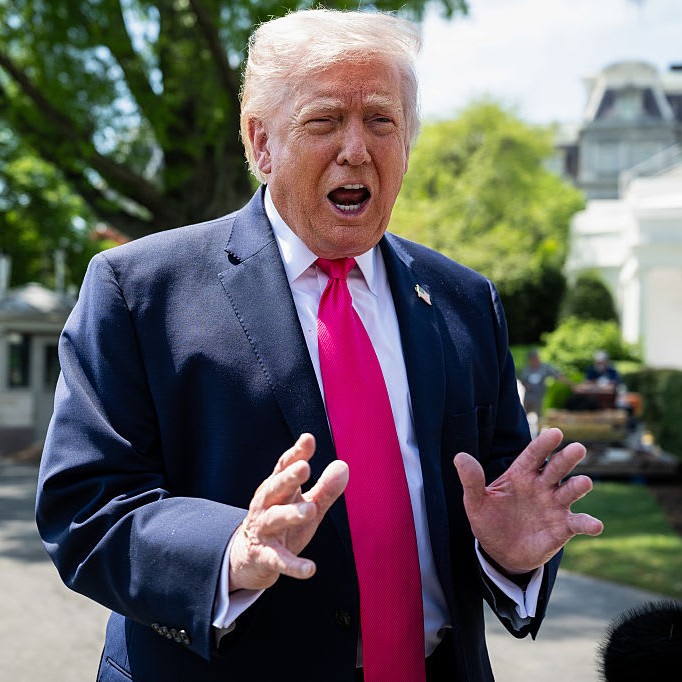
Right before the vote wrapped up, CBS News reported Trump pushed Republicans not to break with him on tariffs, saying lawmakers who vote against his tariff policies will “seriously suffer the consequences come Election time, and that includes Primaries!”
In the same burst, Trump framed the policy as a kind of protective shield, writing, “TARIFFS have given us Economic and National Security, and no Republican should be responsible for destroying this privilege.”
That posture was not subtle. It was a message to every Republican watching the tally board: crossing him is not a policy disagreement. It is a career choice.
Minutes earlier, CBS News reported Johnson struck a completely different note, telling reporters he had just come from an event at the White House and Trump was not upset. Johnson also emphasized the built-in escape hatch, saying, “He understands what’s going on. It’s not going to affect or change his policy. He can veto these things if they come to him.”
So, which is it? A harmless show vote that changes nothing, or a loyalty test with primary penalties? The contradiction is the point. Johnson needed calm. Trump wanted fear.
Why Democrats Targeted the Emergency Hook
CBS News reported the measure was introduced by Rep. Gregory Meeks, a Democrat from New York, and would terminate the national emergency Trump declared to justify tariffs on Canada. In the reported rationale, Trump accused Canada of failing to address illegal migration and drug trafficking.
Democrats framed the fight as a cost-of-living issue and as a constitutional one, arguing Congress has been letting the White House claim too much authority over trade. During the debate, CBS News reported Meeks challenged Republicans with a direct choice: “Will you vote to lower the cost of living for the American families, or will you keep prices high out of loyalty to one person, Donald J. Trump?”
That line does two jobs at once. It links tariffs to prices, and it links the GOP to Trump personally, not just to a trade posture. In a midterm year, Democrats will take any clear “prices vs. loyalty” contrast they can get.
Republicans hit back by treating tariffs as leverage, not a tax, and by keeping the debate centered on fentanyl and border pressure. CBS News reported Rep. Brian Mast, a Republican from Florida, said, “This is Democrats trying to ignore that there is a fentanyl crisis. Tariffs get more attention than strongly worded letters, and millions of Americans’ lives are being saved because President Trump has declared this national emergency and is actively forcing our neighbors, like Canada, to act.”
It is a classic Washington tradeoff: immediate consumer pain versus claimed security gains. The hard part is that voters can experience price changes directly, while the effectiveness of diplomatic pressure campaigns is harder to measure and easier to argue about.
The GOP Defectors and the Midterm Math
CBS News described the political implications plainly, noting that the six Republicans who broke with Trump did so on an issue that could have ramifications in the November midterm elections, and that “poll after poll” has shown Americans largely disapprove of sweeping tariffs.
Even without a veto-proof majority, the vote forces Republicans into three uncomfortable positions:
- Defend tariffs as necessary and absorb complaints about costs.
- Oppose tariffs and absorb Trump’s threats of a primary challenge.
- Try to dodge the question, even while roll calls and screenshots make dodging harder.
One detail from CBS News underlines how messy this gets: Rep. Jared Golden of Maine was the lone Democrat to oppose the measure. That kind of cross-current gives both parties talking points. Democrats can claim a broad front against tariffs while acknowledging a dissenting voice. Republicans can argue the vote was political theater if a Democrat also balked.
But the core pressure remains internal. Trump is not asking for agreement. He is asking for obedience, and he is using primaries as the enforcement mechanism.
The Bigger Play: More Tariff Votes Could Be Coming
CBS News reported that Trump has threatened or imposed higher tariffs on dozens of other countries as part of a wider push to address what he views as unfair trade practices. Democrats, CBS News said, could soon force votes challenging tariffs on other countries, now that procedural barriers have shifted.

That is the runway for a longer confrontation. If Democrats can keep teeing up votes, they can keep forcing Republicans to choose between two messages that do not sit neatly together: pro-business stability and pro-Trump combat.
Johnson’s public argument, as reported by CBS News, is that Congress should not intervene, especially with court action pending. In a Fox Business interview cited by CBS News, Johnson said tariffs have been used “very effectively” and added, “I just think we need to pause Congress’s consideration of this and not get in the way of the president and what he’s trying to achieve.”
That defense sounds like process, but it is also politics. A “pause” protects members from hard votes, and it protects leadership from internal rebellions. The problem is that the House just proved a pause is not guaranteed anymore.
The Supreme Court Shadow, and Why Everyone Is Posturing
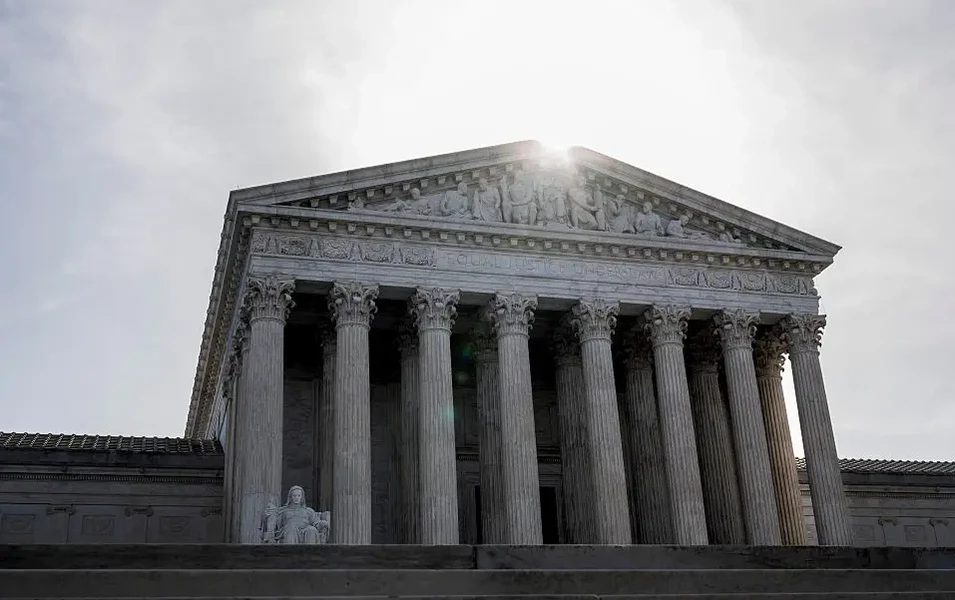
CBS News reported that in November, the Supreme Court appeared skeptical of Trump’s authority to unilaterally impose tariffs, and that a decision could come at any time. That looming decision changes the incentives on both sides.
Trump, facing a possible legal constraint, has every reason to portray tariffs as essential to “Economic and National Security,” not just a negotiating tool. Johnson, trying to keep the House from detonating itself, has every reason to treat the vote as harmless and to remind members that the president can veto the resolution anyway.
Democrats, meanwhile, get to stage repeated roll calls on an issue that can be translated into pocketbook language. Even if the resolution goes nowhere, the votes go everywhere: into ads, mailers, fundraising emails, and primary attacks.
The bottom line from this House vote is not that Trump’s tariff policy is suddenly in danger. It is that Trump’s control over his party now has a visible price tag, and a visible list of members willing to risk it.
What to watch next is whether the Senate moves the resolution forward, whether Democrats press for more tariff challenges, and whether Trump’s promised “consequences” turn into actual recruitment and spending against the Republicans who broke ranks.