

The Library of Congress just handed out one of culture’s quietest flexes. Not an Oscar. Not a box office crown. A federal seal that says a movie is no longer just entertainment. It is part of the country’s permanent record.
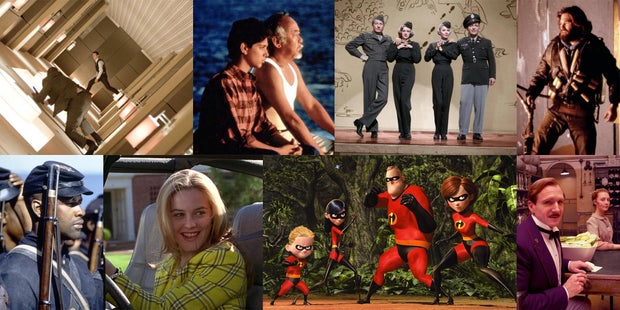
This year, that seal landed on Christopher Nolan’s brain-bending ‘Inception,’ the mentor-and-miyagi myth of ‘The Karate Kid,’ Pixar’s superhero family saga ‘The Incredibles,’ and John Carpenter’s paranoia machine ‘The Thing,’ among other titles newly added to the National Film Registry.
It is an honor with real gravity, and a little irony. The announcement was delayed after last fall’s government shutdown, meaning the machinery that preserves American memory got slowed by the same politics that routinely fight over what America even is.
A Government List That Turns Taste Into Legacy
Every year, the Library selects 25 films for the National Film Registry, citing cultural, historic, or aesthetic significance. The program started in 1989, and with this class, the Registry grew to 925 titles, according to CBS News.
The Registry is often described as preservation, but it is also canon-making. The government is not just storing film prints. It is telling studios, streamers, and film schools what counts as American heritage, and it is doing it with a short list and a long memory.
The Library of Congress frames the mission in plain terms. In a statement carried by CBS News, Acting Librarian of Congress Robert R. Newlen said, “When we preserve films, we preserve American culture for generations to come. These selections for the National Film Registry show us that films are instrumental in capturing important parts of our nation’s story.”
That is the public-facing message. Behind it is a power dynamic that never goes away: who gets to decide what the nation’s story looks like, and which stories get the best protection.
The New Additions: Prestige Meets Pop, With One Fan Favorite
The headline-grabbers are easy. ‘Inception’ arrives as the modern blockbuster that still gets treated like a puzzle box. ‘The Karate Kid’ remains a factory for nostalgia, life lessons, and reboot economies. ‘The Incredibles’ is a family film that also doubles as a sleek argument for craft, design, and storytelling discipline.
Then there is ‘The Thing,’ a 1982 film that has lived two lives: dismissed in its era, then resurrected as a masterpiece of dread and mistrust. This year, it also arrived with a metric that politicians and executives both understand. Attention.
According to CBS News, there were 7,559 film titles submitted for consideration, and ‘The Thing’ received the most requests from the public. That detail matters because it exposes the Registry’s balancing act. The Registry is not strictly a fan vote, but the Library is not ignoring the crowd, either.
Other additions named by CBS News include ‘The Big Chill,’ ‘Glory,’ ‘Philadelphia,’ ‘The Grand Budapest Hotel,’ ‘Clueless,’ ‘Before Sunrise,’ ‘The Truman Show,’ ‘Frida,’ ‘The Hours,’ ‘White Christmas,’ and ‘High Society.’ Nonfiction selections cited include ‘Brooklyn Bridge,’ ‘Say Amen, Somebody,’ ‘The Loving Story,’ and ‘The Wrecking Crew.’
On paper, it is a buffet. In practice, it is a message: the Registry wants to be broad enough to feel democratic, but curated enough to keep its authority.
The Real Stakes: Money, Control, and a Second Life for Old Titles
The National Film Registry does not hand filmmakers a check, and it does not automatically force a studio to do a new restoration. But the designation has consequences that ripple through the business.
Studios and rights holders love a new reason to reissue a title, remaster it, or place it in a premium collection. Festivals and museums love a reason to program it. Streaming services love a reason to pitch it as essential viewing. In other words, preservation is the noble mission, but prestige is the accelerant.
It also becomes a form of leverage in the never-ending fight over attention. The internet can make anything trend for a day. The Registry tries to make the attention stick for decades.
The Contradiction at the Center: Public Nominations, Private Gatekeeping
The Registry is open to nominations by filmmakers, academics, and film fans, and the Library of Congress encourages public participation. That is the populist hook, and it is real. The volume this year, 7,559 titles submitted, is not a small signal.
But the process also keeps its distance from pure popularity. Only 25 titles make it each year. That scarcity is the point. Scarcity creates value, and value creates arguments. It is how a list stays powerful.
‘The Thing’ getting the most public requests is a perfect snapshot of the tension. Fans can shout loudly enough to be counted, but the Registry is still a curated institution with its own priorities. Sometimes those align. Sometimes they do not. Either way, the Library is the one signing the paperwork.
For Hollywood, it is a reminder that even in a market obsessed with opening weekend numbers, there is still another scoreboard: the one run by archivists and historians.
The Shutdown Detail That Nobody Can Ignore
The Library’s announcement was delayed because of last fall’s government shutdown, CBS News reported. That is not just a scheduling footnote. It is a neat little illustration of what happens when culture depends on government systems.
The Registry is framed as above politics, and in its mission, it mostly is. But the delay shows the dependency. When the federal government stops operating normally, the nation’s cultural machinery does not float above the mess. It gets stuck in it.
That reality also feeds a more modern anxiety: if the preservation pipeline depends on stable institutions, what happens in unstable times?
Where People Can Watch, and What To Watch For Next
The Library of Congress has been trying to make the Registry feel less like a dusty list and more like a living collection. CBS News noted that select Registry titles are freely available online through the Library’s National Screening Room.
Meanwhile, Turner Classic Movies is set to screen a selection of this year’s additions on Thursday, March 19, beginning at 8 p.m. ET, according to CBS News. That is not just fan service. It is how a preservation program becomes a cultural event, and how a designation turns into a new audience.
What to watch next is not just which titles get added. It is how the Registry continues to balance three forces that rarely agree: mass popularity, elite taste, and the institutional impulse to define history. When those forces collide, the list gets interesting, and the arguments get louder.