In the span of a single day, Washington delivered two messages to Tehran that do not naturally sit together. One arrived at Mach speed from an F-35C over the Arabian Sea. The other came from a White House podium, with a promise that talks are still on.
The connective tissue is a word that governments love when they need room to maneuver: intent. U.S. Central Command says it was “unclear” when an Iranian drone closed in on the aircraft carrier USS Abraham Lincoln. The U.S. response, however, was crystal clear.
Now the question hanging over the region is not just what happened in the sky. It is what happens next when diplomacy is advertised as the priority, but the hardware is already in motion.
What the US Says Happened
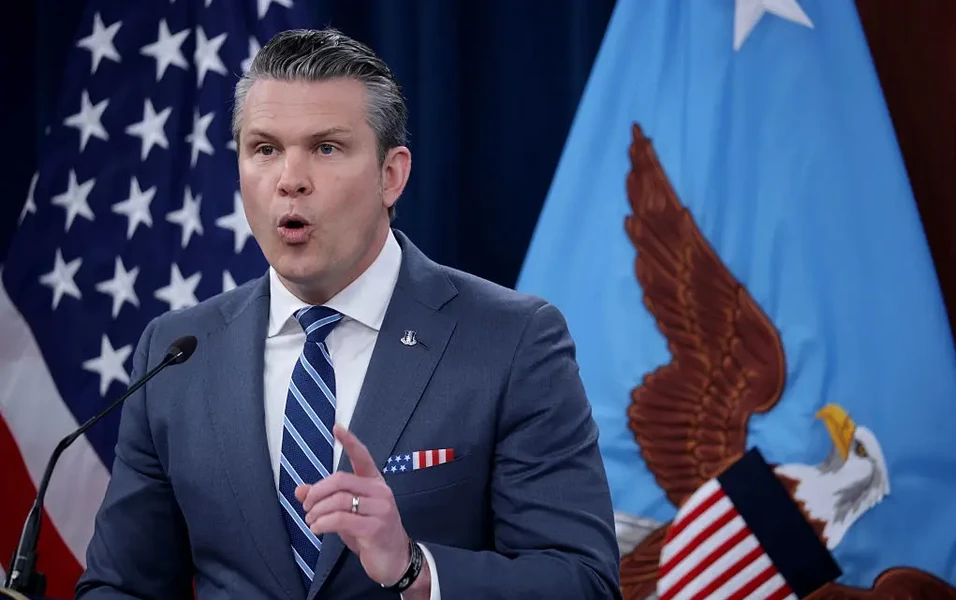
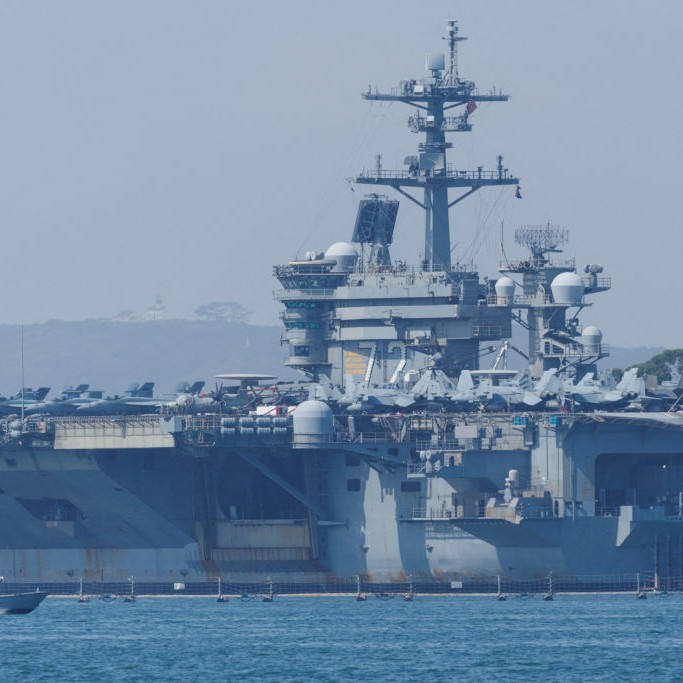
According to U.S. Central Command, a U.S. Navy fighter jet shot down an Iranian drone that approached the USS Abraham Lincoln while the carrier was operating in the Arabian Sea. Central Command spokesman Capt. Tim Hawkins said the drone “aggressively approached” the carrier with “unclear intent” and continued inbound “despite de-escalatory measures taken by U.S. forces operating in international waters.”
The U.S. military identified the aircraft as a Shahed-139 and said it was downed by an F-35C launched from the Lincoln. Central Command said the carrier was operating about 500 miles, or 800 kilometers, from Iran’s southern coast. The military said no American personnel were hurt, and no U.S. equipment was damaged.
Those details matter because they establish the script Washington wants the world to read: international waters, warnings first, then a kinetic answer.
Tehran, at least in the U.S. telling, did not just test a carrier. It also tested a commercial ship.
The Other Flashpoint: A Merchant Ship in the Strait
U.S. Central Command said the shootdown came within hours of Iranian forces harassing a U.S.-flagged and U.S.-crewed merchant vessel transiting the Strait of Hormuz. After the drone incident, the U.S. military said Iran’s paramilitary Revolutionary Guard forces harassed the merchant vessel Stena Imperative.
Central Command said two boats and an Iranian Mohajer drone approached the ship at high speeds and threatened to board and seize the tanker. The U.S. Navy destroyer USS McFaul responded, and Central Command said the merchant vessel was escorted with defensive air support from the U.S. Air Force until it was sailing safely.
The Strait of Hormuz is not just a narrow stretch of water. It is leverage. Encyclopaedia Britannica describes it as the channel connecting the Persian Gulf with the Gulf of Oman and the Arabian Sea. The U.S. Energy Information Administration has called the strait the world’s most important oil transit chokepoint, a phrase that explains why naval incidents there tend to travel quickly from “tactical” to “global”.
In that environment, even small encounters can become signals. And signals can become misread.
Diplomacy Is the Slogan, Force Is the Backdrop
The Trump administration’s public line is that it still wants a deal, and it still wants talks. White House press secretary Karoline Leavitt told reporters that talks between special envoy Steve Witkoff and Iranian officials were still planned.
“President Trump is always wanting to pursue diplomacy first, but obviously it takes two to tango,” Leavitt said. She added, “As always, though, of course, the president has a range of options on the table with respect to Iran.”
It is a tidy phrase, “diplomacy first,” that becomes harder to sell when the region is watching a carrier strike group expand and a drone fall from the sky.
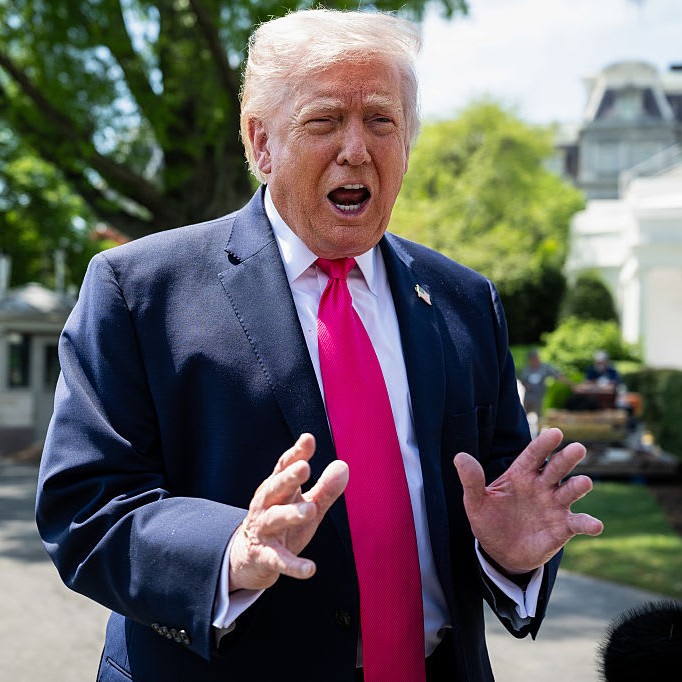
President Donald Trump, speaking to reporters a day earlier, framed the stakes in a way that is familiar to anyone tracking his negotiating style: a deal or consequences.
“I’d like to see a deal negotiated,” Trump said. “Right now, we’re talking to them, we’re talking to Iran, and if we could work something out, that’d be great. And if we can’t, probably bad things would happen.”
The administration has also tied Iran-related pressure to events inside Iran, as protests and crackdowns have fueled a separate line of confrontation. That is a lot of friction to manage while planning diplomatic meetings.
Iran, for its part, signaled an interest in regional coordination. Iranian Foreign Minister Abbas Araghchi said on Telegram that he had spoken with counterparts in Kuwait, Qatar, Turkey, and Oman about regional developments and the importance of stability and security. Iran’s president also said he instructed the foreign minister to “pursue fair and equitable negotiations” with the U.S., a notable message after prior talks broke down.
Turkey has been mentioned as a potential facilitator. A Turkish official later said the location of talks was uncertain, but that Turkey was ready to support the process.
The point is not that diplomacy is fake. It is that diplomacy is happening in the shadow of an expanding U.S. military posture, and that shadow shapes what each side thinks it can demand.
Why the Carrier Matters More Than the Drone
A drone shootdown, by itself, can be framed as a defensive action and then filed away. A carrier, by contrast, is a moving political statement. Central Command and the White House are talking about negotiations, but U.S. military movements suggest a parallel strategy: build enough credible force that Iran shows up to talks feeling outgunned, not equal.
According to the U.S. military, the Lincoln and several destroyers arrived in the region last week. The carrier strike group brought roughly 5,700 additional service members and joined three destroyers and three littoral combat ships already in the region.
Analysts of flight-tracking data have also noticed dozens of U.S. military cargo planes heading to the region, a detail that reads like logistics on the surface and like preparation underneath.
Central Command’s own language about “de-escalatory measures” is designed to show restraint. Yet the outcome, a shootdown by a carrier-based stealth fighter, is still escalation in the way adversaries count it.
This is the core contradiction powering the moment: the administration’s pitch is that it wants Tehran at the table, but it is also moving pieces that make the table feel like a deadline.
What to Watch Next
First, watch whether Iran acknowledges the drone incident publicly, and how it describes the drone’s mission. Washington says the intent was unclear. Tehran may argue the opposite, or argue the U.S. had no right to fire.
Second, watch the shipping lanes. When the Strait of Hormuz heats up, commercial vessels become unwilling characters in a story about state power. Any incident involving boarding threats, drones, or warning shots is a ready-made multiplier.
Third, watch the sequencing of talks versus deployments. If meetings are confirmed while additional U.S. assets continue arriving, Tehran will likely claim it is negotiating under threat. If talks slip while the military posture grows, Washington’s “range of options” line will start sounding less like leverage and more like an ultimatum.
For now, the receipts are simple and stark: Central Command says an Iranian drone came in, warnings did not work, and an F-35C ended it. The White House says diplomacy is still on. The region, sitting between those two statements, gets to guess which one is the real headline.