The Epstein story has always had two competing products: the documented crimes and the implied roster of untouchable men. A new batch of Justice Department records adds weight to the first, and friction to the second.
What You Should Know
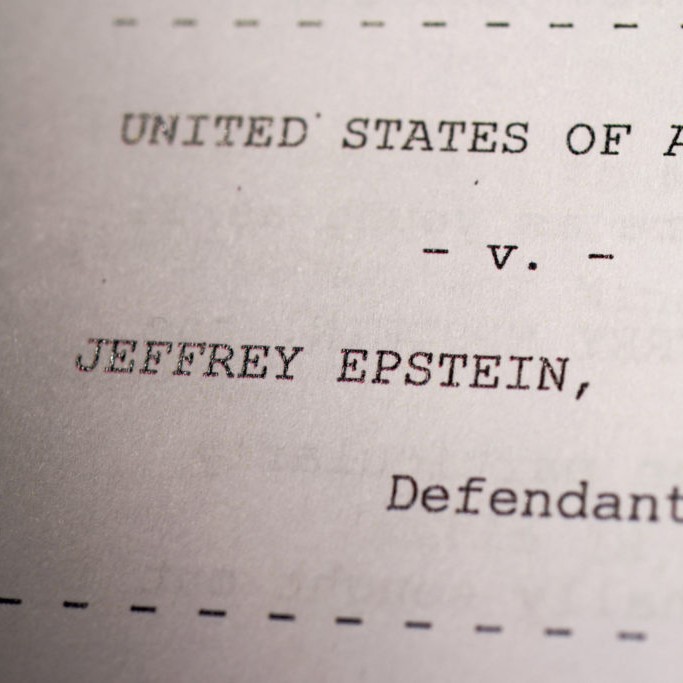
An Associated Press review of internal Justice Department records, published February 8th, 2026, says the FBI collected substantial evidence that Jeffrey Epstein abused underage girls but found limited evidence of a wider trafficking ring or any “client list” investigators could charge.
The material, released under the Epstein Files Transparency Act, sketches an investigation that kept looking for co-conspirators, kept getting allegations, and kept running into the same obstacle: claims that did not turn into prosecutable proof.
The Files Describe a Case With Receipts and a Ceiling
According to the AP review published by PBS NewsHour, the FBI collected “ample proof” that Epstein sexually abused underage girls. That part is not subtle, and it is not new to anyone who has followed the arc from Palm Beach to Manhattan to a federal jail cell.
The ceiling is what the files are really about. In memo after memo, the records described by the AP point to the same conclusion: investigators did not find enough evidence to charge a broader set of people that the public has long assumed must exist.
One memo described in the report says videos and photos seized from Epstein’s homes in New York, Florida, and the U.S. Virgin Islands did not depict victims being abused or implicate anyone else. Another internal memo from 2019, as summarized by the AP, says a review of Epstein’s financial records found no connection to criminal activity, even as the money flowed to entities linked to influential figures in academia, finance, and global diplomacy.
It is a familiar pattern in high-profile investigations. The public sees access, wealth, and secrecy, then assumes there must be a clean list of villains. Prosecutors see rules of evidence, the risk of losing at trial, and the political fallout of charging the wrong person on the wrong paper trail.
Maurene Comey’s Line in the Sand: No Tape, No Bonus Villains
The AP report cites an email written by then-Assistant U.S. Attorney Maurene Comey that reads like a direct response to the most persistent claim in Epstein lore, namely, that somewhere there is a recording or photo set that names names.
Her summary, as quoted by the AP, is blunt: “We did not, however, locate any such videos.”
Comey also wrote, according to the report, that if incriminating videos had existed, the government “would have pursued any leads they generated.” The implication is not just evidentiary. It is reputational. The Justice Department is effectively saying, in writing, that the mythical blackmail trove is not sitting in an evidence locker waiting for the right administration.
That does not mean Epstein did not record people, or that no one else did. It means the materials seized and reviewed by investigators, as reflected in these internal documents, did not deliver what the public expects a case like this to deliver.
Accusers, Interviews, and the Parts of the Story That Would Not Hold Still
The files, as presented by the AP, also show investigators took allegations seriously enough to test them, even the ones that sounded impossible. Tip lines were reviewed, leads were chased, and potential co-conspirators were examined.
But the documents highlight a problem that becomes decisive in court. Some claims could not be verified. Some accounts shifted. Some potential witnesses undermined their own narratives.
The AP report says investigators interviewed Virginia Roberts Giuffre in 2011 and again in 2019. In public, Giuffre has accused Epstein of arranging sexual encounters with numerous men, including Britain’s former Prince Andrew. In the files cited by the AP, investigators wrote that Giuffre acknowledged writing a partly fictionalized memoir that included descriptions of things that did not happen, and that she offered shifting accounts in interviews with investigators.
The AP also reports that two other Epstein victims, whom Giuffre had claimed were also “lent out” to powerful men, told investigators they had no such experience. That contradiction is not a gossip detail. It goes directly to whether prosecutors can prove a trafficking enterprise that serviced a stable of clients, rather than a predator with an accomplice.
None of this erases Epstein’s abuse. It underlines how a case can be morally clear and legally limited at the same time.
The Money Trail Was There, the Crime Link Was Not
People tend to think money is the universal truth serum, especially in a scandal built around luxury, private travel, and elite introductions. The files, as described by the AP, suggest the bank records were voluminous but not decisive.
Investigators found payments to more than 25 women who appeared to be models, prosecutors wrote, but the records did not establish that Epstein was prostituting women to other men. Prosecutors also weighed possible charges against certain close associates, including an assistant and business clients, and decided against it for lack of evidence.
This is where power dynamics get messy. In the public imagination, proximity to Epstein reads like complicity. In a federal courtroom, proximity can be innocent, and prosecutors have to prove it is not.
The Client List Claim Collides With an FBI Email
Every scandal has its totem. In Epstein world, it is the phrase “client list.” It is simple enough to chant, and it carries a promise: a sheet of paper that explains why the powerful never seem to get handcuffs.
The AP report says Attorney General Pam Bondi told Fox News in February 2025 that Epstein’s never-before-seen “client list” was “sitting on my desk right now.” That is a huge claim, and it is the kind of line that reshapes public expectations instantly.
Then the paperwork speaks.
According to an internal email chain summarized in the documents, then-FBI Deputy Director Paul Abbate asked through subordinates on December 30th, 2024, whether the investigation indicated the client list “does or does not exist.” A day later, an FBI official replied that the case agent confirmed no client list existed.
And two days before Bondi’s Fox News appearance, according to the AP, an FBI supervisory special agent put it in writing again: “While media coverage of the Jeffrey Epstein case references a ‘client list,’ investigators did not locate such a list during the course of the investigation.”
That is not a partisan talking point. It is an institutional contradiction, with names, dates, and a bureaucratic trail. Someone in power said the list was real and near. Agents and supervisors, in internal communication, said it was not.
The obvious question is not just who is right. It is why the claim was made so definitively in the first place, and what “client list” meant in that context. A literal roster? A set of contacts? A media shorthand for thousands of pages of raw material that does not neatly map onto indictments?
The Long Shadow of the 2005 Deal
The AP report revisits the origin story that still shapes public trust in the case. The investigation began in 2005, when parents of a 14-year-old girl reported she had been molested at Epstein’s home in Palm Beach, Florida. Then-Miami U.S. Attorney Alexander Acosta reached a deal that allowed Epstein to plead guilty to state charges. Epstein served 18 months and was free by mid-2009, the report says.
In 2018, the AP notes, a series of Miami Herald stories about that plea deal helped prompt federal prosecutors to take a fresh look at the accusations. Epstein was arrested in July 2019, and he died by suicide one month later, according to the report.
That timeline matters because it explains the pressure to find additional defendants after Epstein was gone. It also explains why the absence of new charges and the absence of the mythical list continue to feel like an incomplete ending.
Maxwell Is the Exception That Proves the Rule
The one major prosecution beyond Epstein himself has been Ghislaine Maxwell, his longtime associate, who was convicted in 2021 and sentenced to 20 years in prison. That is the case the Justice Department could prove, and did.
Maxwell’s conviction also sets a benchmark. If prosecutors had evidence strong enough to put other high-profile people in the dock, they had a model for how to do it. The AP-reviewed memos suggest that the model did not translate beyond Maxwell, not because investigators did not look, but because the record did not meet the threshold.
What Happens When Transparency Meets Expectation
The AP and other organizations are reviewing millions of pages released under the Epstein Files Transparency Act, and the AP notes the possibility that additional evidence could exist in the newly public material, or that investigators overlooked something earlier.
But the early shape of what the AP is describing is not a smoking gun story. It is a limits story. It is a story about what the government says it can prove, what it cannot, and how that gap gets filled by public certainty, political rhetoric, and internet lore.
In that sense, the files do not just reopen old arguments about Epstein. They reopen an older, sharper argument about who gets to define reality in a scandal. The public wants names. The Justice Department wants charges it can win. Politicians want a headline that lands.
The next question is whether future releases produce a document that changes the charging calculus, or whether the main revelation is simply how hard the system looked, and where it stopped.
References