

The Clintons say they’re coming. The committee chair says he’s still not buying it. And a contempt of Congress vote is rolling forward anyway.
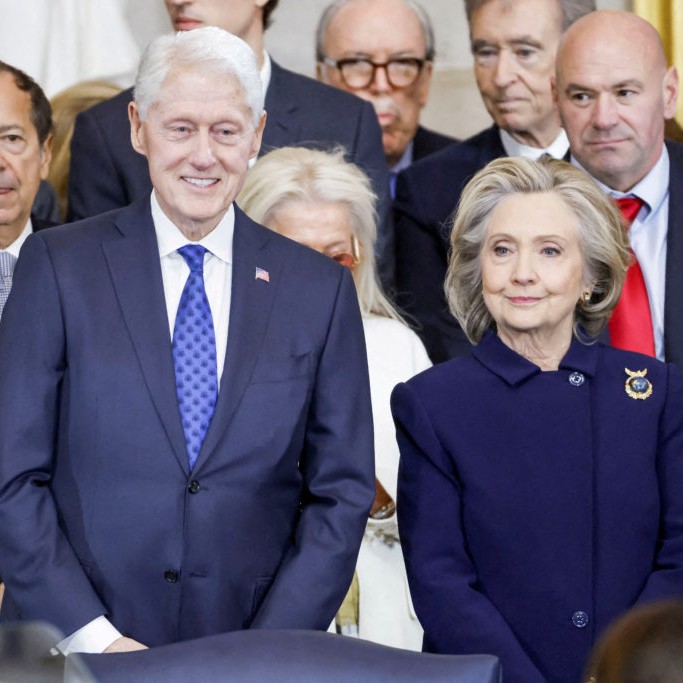
On February 2, 2026, former President Bill Clinton and former Secretary of State Hillary Clinton moved to cut a deal to comply with subpoenas in a House Oversight investigation tied to Jeffrey Epstein. Rep. James Comer, the Kentucky Republican running the probe, told reporters an agreement still was not in place.
That gap matters because Comer is not just threatening to escalate. He is actively pushing criminal contempt of Congress resolutions that, if approved by the full House and prosecuted by the Department of Justice, can carry fines and the possibility of jail time.
A Subpoena, a Deadline, and a Committee Chair Who Wants It on Paper
The immediate standoff is about format and control. According to reporting from The Associated Press carried by PBS NewsHour, Comer rejected an offer from the Clintons’ attorneys that would have had Bill Clinton sit for a transcribed interview, and Hillary Clinton submit a sworn declaration.
Comer is insisting on sworn depositions for both. He framed it as a basic question of whether witnesses get to negotiate their way out of a subpoena.
At the same time, a spokesman for the Clintons, Angel Urena, signaled movement on social media, saying the pair “will be there.” The message was designed to sound like compliance. Comer responded like a prosecutor staring at a handshake deal.
“We don’t have anything in writing,” Comer told reporters, adding that he was open to accepting their offer but “it depends on what they say.”
That is the leverage play in one sentence. Comer is keeping the contempt machinery moving while leaving the door cracked for a deal. The Clintons are signaling cooperation without conceding on terms. Both sides get to claim they are acting reasonably, right up until someone blinks.
Why the Contempt Threat Is Not Just Posturing
Congress does not throw criminal contempt around lightly, especially not at a former president. The reporting notes that no former president has ever been forced to testify before lawmakers, even though some have voluntarily cooperated with investigations. That history is part etiquette, part fear of precedent.
Comer is trying to turn that tradition into a test of power. If a committee can drag a former president and a former secretary of state into sworn depositions, it changes the political cost of subpoenas for the next administration, and the one after that.
The other reason the threat is real is that this is already beyond committee-level drama. Republican leaders advanced the contempt resolution through the House Rules Committee, positioning it for a floor vote. That is not a quiet warning. It is a visible countdown.
The Democrats’ Problem: Some of Their Own Voted to Advance It
Democrats are calling the push a partisan stunt. But the voting record inside Oversight complicates that storyline.
The AP report says the Republican-controlled committee advanced criminal contempt charges last month, and nine of the committee’s 21 Democrats joined Republicans to support the charges against Bill Clinton. Three Democrats supported advancing charges against Hillary Clinton.
That split is fuel for Comer. It lets him argue this is not just a Republican show, or at least not one that Democrats uniformly opposed when the question was put to a vote.
Still, House Democratic leader Hakeem Jeffries is drawing a bright line now that the vote is nearing the floor. He said he was a “hard no” on contempt and accused Comer of prioritizing political retribution over the unresolved question of what Epstein-related material the Justice Department has not released.
“They don’t want a serious interview, they want a charade,” Jeffries said.
Jeffries’ argument is tactical as much as rhetorical. If the fight becomes about whether the committee is chasing headlines instead of documents, Democrats can try to redirect attention to the government agencies that control the files, and to the White House that oversees them.
Where the Clintons Are Aiming Their Counterpunch
The Clintons, according to the AP report, have been sharply critical of Comer’s handling of the investigation. Their basic claim is that Comer is importing politics into the process while failing to put heat on the Trump administration over delays in producing Justice Department case files tied to Epstein.
That is a familiar Washington maneuver. When the subpoena target cannot easily argue, “We have nothing to add,” the next move is to challenge the investigator’s motives and priorities. The Clintons are effectively saying: If this is about transparency, why is the committee not more focused on the government’s own pace and paperwork?
Comer, meanwhile, is making the inverse argument: if you want to clear the air, show up under oath, on the committee’s terms, and answer questions.
The Epstein Shadow and the Stakes for Everyone in the Frame
Epstein’s name keeps pulling in the famous and the powerful, even years after his 2019 death in a New York jail cell while facing federal sex trafficking charges. That gravitational force is part of the story’s durability. It is also why each side is fighting so hard over the optics of cooperation.
Bill Clinton’s relationship with Epstein has reemerged as a Republican focal point, according to the AP report. The relationship was well documented in the late 1990s and early 2000s, and Clinton has not been accused of wrongdoing in his interactions with Epstein.
That last clause is critical. The political risk here is not a new criminal allegation. It is the open-ended nature of sworn testimony in a case that has become a public clearinghouse for insinuations, name-checks, and competing demands for disclosure.
For Comer, the upside is simple: a high-profile confrontation that reinforces his committee’s subpoena power and keeps the investigation in the news. The downside is also simple: overreach, especially if the public reads the push as punitive rather than fact-finding.
For the Clintons, the upside is avoiding a precedent-setting spectacle under oath. The downside is being branded as defiant in a politically toxic investigation, with a contempt vote attached to their names.
What to Watch Next
Three things will determine whether this becomes a historic showdown or a negotiated off-ramp.
- Whether Comer gets “something in writing”: his public stance suggests that a firm, documentable commitment could be enough to pause the contempt push, but he is not promising that.
- What format the committee will accept, if any: depositions versus interviews and declarations is not a technicality. It is about who controls the questions, the record, and the legal exposure.
- How Democrats whip the floor vote: Jeffries signaled internal discussions later in the week. After committee-level Democratic support for advancing charges, leadership will need to decide whether to unify against contempt or let it fracture again.
The Clintons have signaled they plan to appear. Comer has signaled he plans to keep the hammer raised until the terms are locked. In Washington, that is what a deal looks like right before someone has to sign their name.