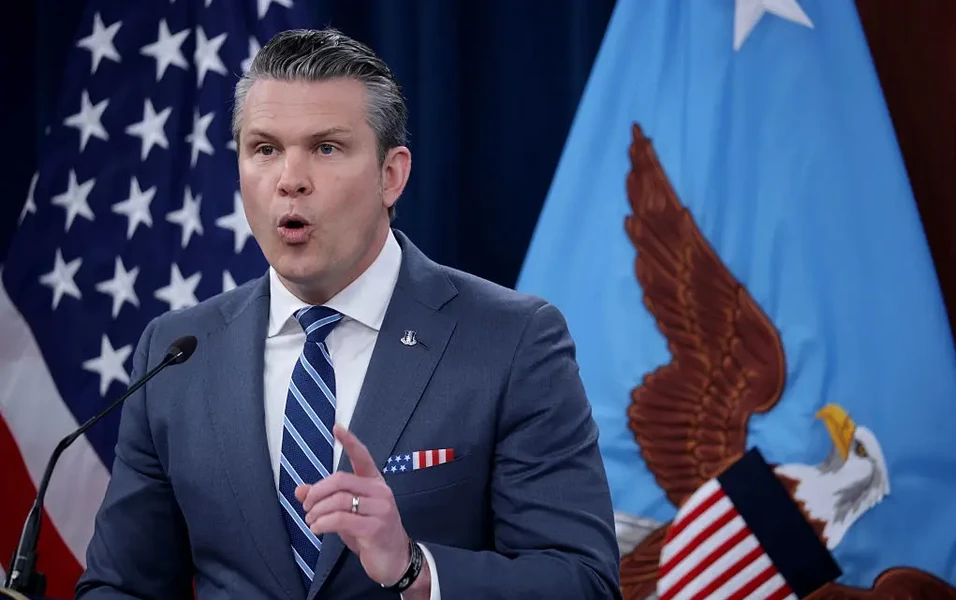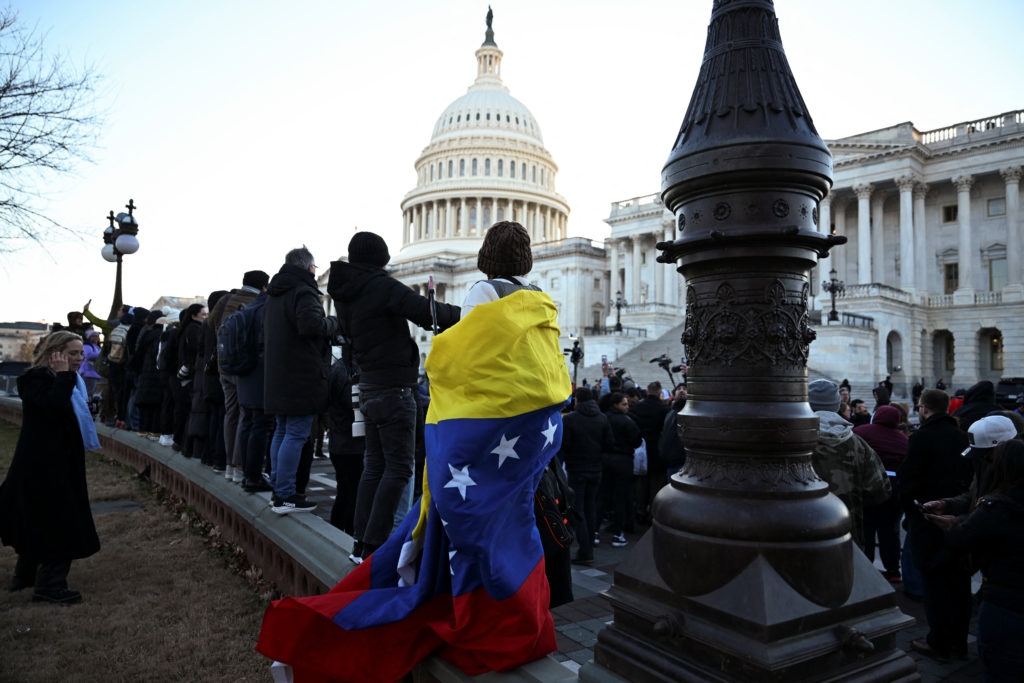
For one long stretch on the House floor, the question was not just Venezuela. It was whether a tied vote could turn into a quiet show of force for Donald Trump, and a public stress test for Speaker Mike Johnson’s shaky grip on the gavel.
It did, barely. And the way it happened is what has Washington replaying the tape.
The tie that told on the majority
The House rejected a Democratic-backed war powers resolution that aimed to stop Trump from sending U.S. military forces to Venezuela after the vote ended in a tie, which is not enough to pass. The episode, first reported by PBS NewsHour’s report carrying the Associated Press story, immediately became a two-part headline: Trump keeps room to maneuver, and Johnson’s majority looks like it is being held together with procedural duct tape.
According to the AP account, GOP leaders held the vote open for more than 20 minutes while Rep. Wesley Hunt, who had been away campaigning for a Senate run in Texas, rushed back to cast the decisive vote. Democrats protested on the floor, arguing the delay violated House procedure, as described in the same PBS NewsHour report.
A resolution to limit President Trump’s war powers regarding Venezuela was narrowly defeated in the House. Republican leadership secured the win by bringing a lawmaker back from Texas for the tie-breaking vote. pic.twitter.com/Aii6YYthlH
— Jacob Miller (@withJacobMiller) January 23, 2026
What the resolution was trying to do, and what Trump says is happening
The war powers measure would have directed Trump to remove U.S. forces from hostilities involving Venezuela. The administration told senators there are no U.S. troops on the ground in Venezuela and said it would seek congressional approval before launching major military operations there, per PBS NewsHour’s AP write-up.
Democrats, however, argued they needed the guardrails now. They pointed to a U.S. raid to capture Venezuelan leader Nicolas Maduro and cited Trump’s stated intent to control Venezuela’s oil industry for years, again as reported by PBS NewsHour.
This is the core contradiction that is driving the fight. The administration’s line is that there is no ground deployment. The resolution’s backers are effectively saying the escalation ladder already exists, and Congress should not wait until the next rung is reached.
Two Republicans broke ranks, and their names matter
Two Republicans voted with Democrats: Reps. Don Bacon of Nebraska and Thomas Massie of Kentucky, according to PBS NewsHour’s AP report. In today’s House, that is not a symbolic footnote. It is the whole story. A handful of defections can change outcomes, force leadership into procedural gymnastics, or both.
Bacon framed it as fatigue with constant brinkmanship. “I’m tired of all the threats,” he said, per PBS NewsHour.
Massie’s vote fit his long-running posture as a constitutional and war powers skeptic across administrations, even when it puts him at odds with his party’s leadership.
House narrowly rejects war powers resolution to block more Trump action in Venezuela
https://t.co/rH9fA84sX3 pic.twitter.com/PzO2DWCA1v
— The Washington Times (@WashTimes) January 23, 2026
Inside the floor argument: spite, bullying, and who decides
Republicans defending Trump tried to recast the war powers vote as a political stunt. Rep. Brian Mast, the chair of the House Armed Services Committee, said Democrats brought the resolution out of “spite” for Trump, according to PBS NewsHour.
Mast went further, saying, “It’s about the fact that you don’t want President Trump to arrest Maduro, and you will condemn him no matter what he does, even though he brought Maduro to justice with possibly the most successful law enforcement operation in history,” as quoted by PBS NewsHour.
Democrats argued the larger issue is Congress’s constitutional role in war and peace. Rep. Gregory Meeks, the top Democrat on the House Foreign Affairs Committee, warned that “Donald Trump is reducing the United States to a regional bully with fewer allies and more enemies,” per PBS NewsHour.
The clash is less about one resolution than about who gets to say “go” and who gets stuck trying to say “stop” later, when momentum, headlines, and sunk costs have already changed the politics.
Why war powers votes keep coming back, and why they keep failing
The War Powers Resolution, the Vietnam-era law Congress passed to claw back authority over military action, is built around the idea that the president should consult with Congress and that Congress should have tools to force debate and votes. The statute’s text is laid out in Public Law 93-148 on GovInfo.
But the modern pattern is familiar: lawmakers complain they were cut out of the loop, then try to use war powers mechanisms to reassert control, then run into the reality that party loyalty, leadership pressure, and split institutions can make it hard to sustain majorities.
The details have been litigated for decades, including how presidents interpret key triggers and deadlines. The Congressional Research Service summarizes the recurring disputes and practical limits in its report ‘The War Powers Resolution: Concepts and Practice’.
Layered underneath is the Constitution itself. Congress holds the power to declare war under Article I, while the president is commander in chief under Article II. The text of those authorities, and the tension between them, is available via the National Archives Constitution transcript.
Oil, contracts, and the questions Democrats are teeing up next
Even if there are no U.S. troops on the ground, Venezuela is not just a military storyline. It is also a money storyline, and Democrats are already pushing on that pressure point.
The AP report carried by PBS NewsHour says Senate Democrats are questioning who benefits as the Trump administration oversees the sale of Venezuela’s petroleum, and that a group of senators wrote to White House Chief of Staff Susie Wiles seeking transparency around any financial commitments tied to Venezuela.
The White House position, according to the same PBS NewsHour report, is that the administration is safeguarding Venezuela’s oil for the benefit of both Venezuelans and the United States.
That split screen is likely to define the next phase: Republicans arguing Trump is acting decisively and lawfully, Democrats arguing the process is opaque and the incentives are not fully disclosed.
What to watch next
Johnson’s immediate problem is math. A tied vote that required holding the board open to win is not a one-off quirk. It is a preview of how any internal GOP disagreement on foreign policy, procedure, or Trump’s next move can become a floor spectacle.
The US House of Representatives failed on Thursday to pass a Democratic-sponsored war powers resolution aimed at blocking President Donald Trump from using the military in Venezuela without congressional approval. Republicans blocked the measure in a 215-215 tie. pic.twitter.com/7h1FyRXeNa
— Cassian (@onthvision) January 23, 2026
Trump’s immediate benefit is bandwidth. The House did not put a binding check on Venezuela this time. Yet the close call, plus GOP defections, telegraphs that war powers fights can still produce awkward coalitions in a party that is usually disciplined when the stakes are framed as loyalty.
And the final twist is that the whole fight turned on timing, not persuasion. In a chamber where minutes can decide policy, that detail is the one both sides will remember.
References
- PBS NewsHour (Associated Press): ‘House Republicans barely defeat war powers resolution to check Trump’s military actions in Venezuela’
- Congressional Research Service: ‘The War Powers Resolution: Concepts and Practice’ (R42699)
- GovInfo: Public Law 93-148 (War Powers Resolution), Statutes at Large PDF
- National Archives: Constitution of the United States, transcript