The ballots are being printed. The polling sites are being announced. The generals are calling it a “road map” back to normal.
But in Myanmar, the simplest question about the first elections since the 2021 military coup is also the hardest: who, exactly, gets to participate when large parts of the country are fighting, displaced, or ruled by someone else?
An election after a coup, with the opposition locked out
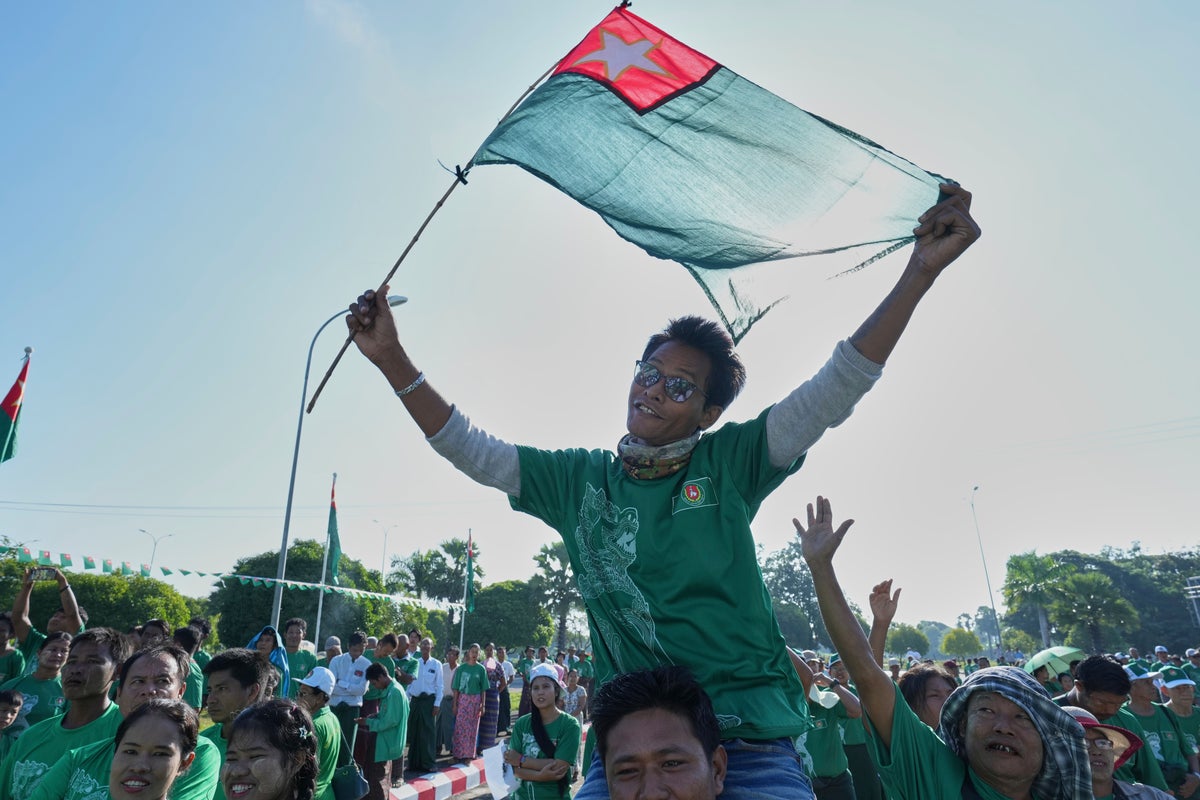
PBS NewsHour reported that a second phase of voting is underway, marking Myanmar’s first election since the military seized power five years ago. The report notes that major opposition parties have been barred from participating, prominent leaders remain jailed, and the civil war has made voting impossible in many areas, driving widespread criticism that the exercise is a sham.
The military, formally operating through the State Administration Council, took power on Feb. 1, 2021, after detaining elected leaders from the National League for Democracy (NLD) and declaring a state of emergency. The coup halted Myanmar’s democratic experiment and triggered mass protests that evolved into armed resistance in many regions, alongside long-running conflicts with ethnic armed organizations.
The junta has repeatedly presented an election as an off-ramp from emergency rule. Critics respond that the election rules, arrests, and battlefield map turn the vote into a controlled ritual, not a competitive contest.
The key contradiction: “national vote” vs. fragmented territory
Myanmar’s military leadership says elections can restore stability and create a lawful government. The problem is that Myanmar does not currently operate like one unified, accessible state.
Large swaths of the country have become a patchwork of control among the military, ethnic armed groups, and resistance forces. Where the military cannot secure towns and transport routes, election officials may not be able to register voters, distribute ballots, or operate polling stations. Even where polls open, residents may face pressure from armed actors, or simply decide that traveling to vote is too dangerous.
That is why “civil war” is not a background detail to this election. It is the mechanism that decides turnout, and the military’s ability to claim national legitimacy.
Receipts that matter: party bans, registration rules, and political prisoners
The junta’s election framework has been shaped by post-coup restrictions that, taken together, narrow who can run and how parties can function.
One pivotal milestone came when Myanmar’s election authorities under military rule moved to eliminate major opposition participation. In 2023, Myanmar’s Union Election Commission announced that the NLD, the party that won the 2020 election in a landslide, was dissolved after it failed to re-register under new political party registration rules. That decision removed the most recognizable electoral rival to the military’s aligned forces and tightened the legal landscape around opposition organizing.
Then there is the imprisonment of prominent leaders. Aung San Suu Kyi, the NLD leader and former state counsellor, has been detained since the coup and convicted in multiple cases brought by the junta, which she and her supporters deny. Independent rights groups and many foreign governments have described the prosecutions as politically motivated. The military says the cases are about enforcing the law.
With political leadership behind bars and party structures dissolved or weakened, an election can proceed on paper while meaningful competition is structurally constrained.
The “sham” label, and why it keeps sticking
The word “sham” shows up again and again in international reactions because critics see the election as occurring under coercive conditions, not because elections are inherently illegitimate.
Human Rights Watch has been blunt about the requirements for credibility. In past statements responding to the junta’s election plans, the group has warned that an election conducted under military repression “will not be free and fair.” That framing captures the core critique: if parties are barred, journalists are constrained, and candidates or voters fear arrest, the process may produce results, but not consent.
The United Nations has also repeatedly focused on the reality that Myanmar’s crisis is not simply political, it is humanitarian. UN agencies have documented large-scale displacement driven by fighting, including civilians forced from their homes by clashes and military operations. In an environment where millions have been uprooted or are living in areas with limited services, basic election administration becomes not just difficult, but selective by default.
The military, for its part, argues that security operations are necessary to restore order, and that voting can proceed in areas where stability can be maintained. That argument sounds procedural. In practice, it means the state decides which areas are “secure enough” to count, and which communities are effectively removed from the electorate.
WHY THE WORLD SHOULD IGNORE MYANMAR’S SHAM ELECTIONS 🗳️🇲🇲
According to Cecile Medail, #Myanmar’s junta is staging elections amid an ongoing civil war not to restore democracy, but to manufacture legitimacy and entrench military rule.
Read more: https://t.co/uFHQtdCCDs pic.twitter.com/iH5fD5lNag
— CEIAS: Central European Institute of Asian Studies (@CEIAS_eu) January 6, 2026
Why the world cares, even if the ballots change little
Myanmar’s election matters for reasons that go far beyond the act of voting.
First, recognition. An elected-looking government can be used to lobby neighbors, business partners, and international forums for legitimacy, sanctions relief, and normal diplomatic engagement. Even limited acceptance can unlock money, weapons flows, and political cover.
Second, the war. If the junta claims a mandate, it can rebrand military operations as a fight against “insurgents” defying a constitutional order, rather than an army suppressing a population after a coup. That framing matters in foreign capitals deciding whether to engage or isolate.
Third, money and control. Elections can reshape which ministries, budgets, and local authorities run transport, trade checkpoints, land records, and licensing. In conflict states, governance is not just ideology. It is access to revenue and the right to decide who gets paperwork, permits, and protection.
The junta’s pitch: order first, politics later
The military’s stated case is that Myanmar needs stability before full political competition can return. Junta officials have said elections are part of a step-by-step plan, and that legal requirements apply to all parties equally under revised rules.
Supporters and aligned voices often point to the chaos after the coup, armed attacks on security forces, and the reality that civil war makes national administration difficult. The implied message is that any election held during a conflict will look messy, so critics are using war conditions as a pretext to reject any outcome.
That argument would be stronger if the playing field were merely uneven due to violence. The counterpoint from critics is that the playing field was redesigned first, through arrests and party eliminations, then the war became the justification for limiting participation further.
What to watch next: geography, turnout, and claims of mandate
The most revealing details will not be campaign slogans. They will be maps and numbers.
Watch where voting is actually conducted, where it is postponed, and how officials explain exclusions. Watch turnout claims, and whether independent monitors, journalists, or local civil society groups can verify them. Watch how quickly authorities point to the election as proof of legitimacy, especially in foreign-facing diplomacy.
Also watch what resistance groups do. Some may dismiss the election and seek to disrupt it. Others may use it as propaganda proof that the junta cannot govern normally. Either way, the election becomes another front in a conflict over who gets to call themselves the state.
The closing problem for Myanmar’s generals
Even if the junta can stage a vote, it still has to answer the quiet question behind every polling station photo: how do you claim a national mandate when millions cannot safely show up, and your strongest political rival has been legally erased?
PBS NewsHour’s report captured the collision at the center of this moment: an election being run in phases, under a military regime, with war conditions that decide access. That is why the label “sham” is not just an insult. It is a description of a vote whose boundaries are set as much by prisons and battle lines as by ballots.