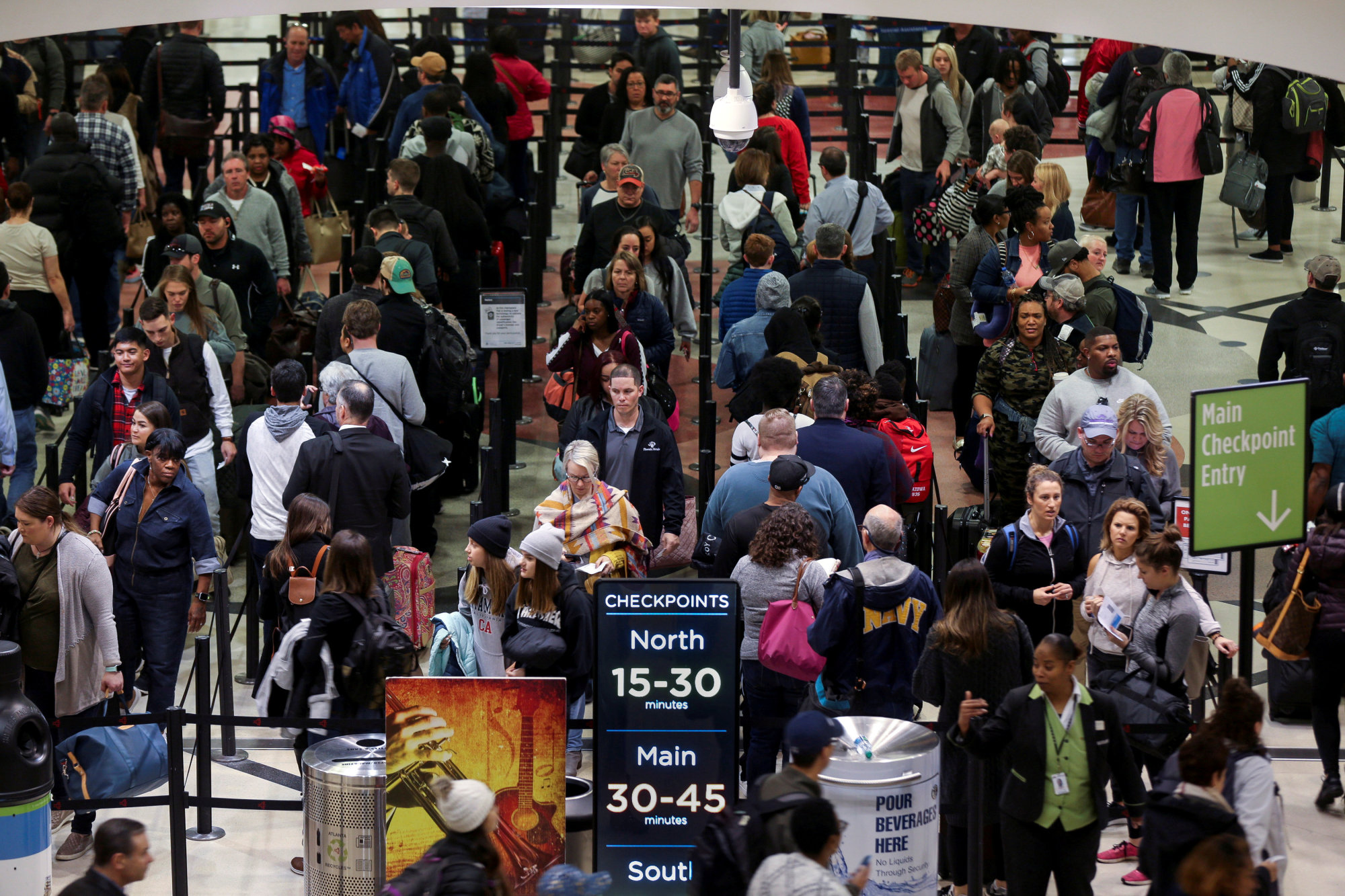
The fastest way to measure a Washington shutdown is not a spreadsheet. It is the line at the airport, where staffing stress turns into a very public countdown clock.
What You Should Know
CBS News reported that TSA lines were growing as workers began missing paychecks during a shutdown tied to Department of Homeland Security funding. TSA screeners are typically classified as essential for operations, even when regular pay is delayed.
CBS’s report framed the basic squeeze in plain terms: “Airport TSA lines are growing as workers begin to miss paychecks due to the government shutdown surrounding funding for the Department of Homeland Security.” That is the operational problem, and it is also the political problem.
The Leverage Point Is the Paycheck
During a shutdown, DHS remains responsible for airport security. However, the cash-flow reality for many federal workers changes immediately, because appropriations lapse even while certain functions continue.
Guidance from the U.S. Office of Personnel Management spells out the key dynamic: some employees are furloughed, and others are “excepted” and still required to work. That split matters at TSA because the public feels even small staffing gaps in the form of longer waits, missed flights, and rerouted travelers.
Security Is ‘Essential,’ Pay Is a Policy Choice
Shutdown fights are usually sold as abstract leverage plays. Airports make it concrete. When screeners face delayed pay, the institution still expects performance, while elected officials argue about who blinks first.
That contradiction has a paper trail from prior shutdown eras. Congress moved after the 2018-2019 shutdown to guarantee back pay for federal workers affected by future funding lapses, a recognition that the government can halt paychecks without fully halting work.
What Breaks Next
The stakes are asymmetric. Travelers lose time and certainty. Workers lose liquidity. Lawmakers lose the ability to keep the disruption contained to Washington.
Watch the next signals at the choke points: staffing levels, reported wait times, and whether shutdown negotiators treat airport pain as a bargaining chip or a warning label.