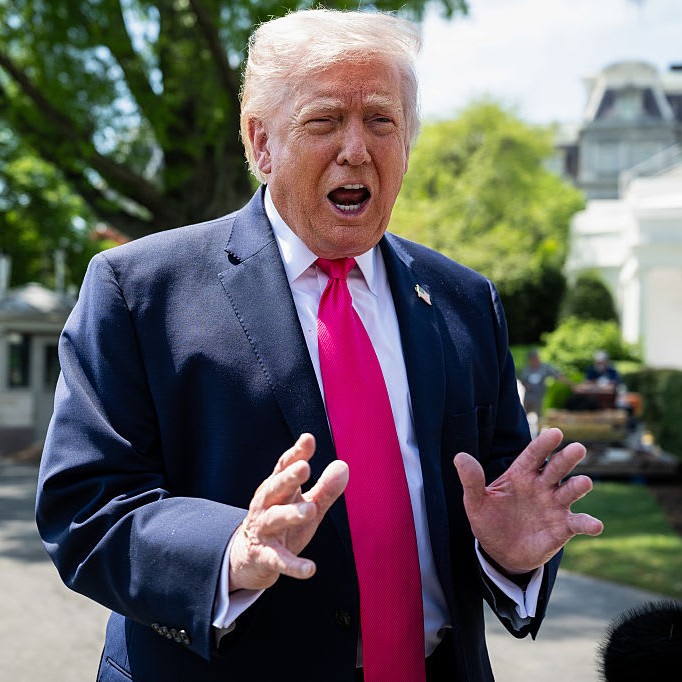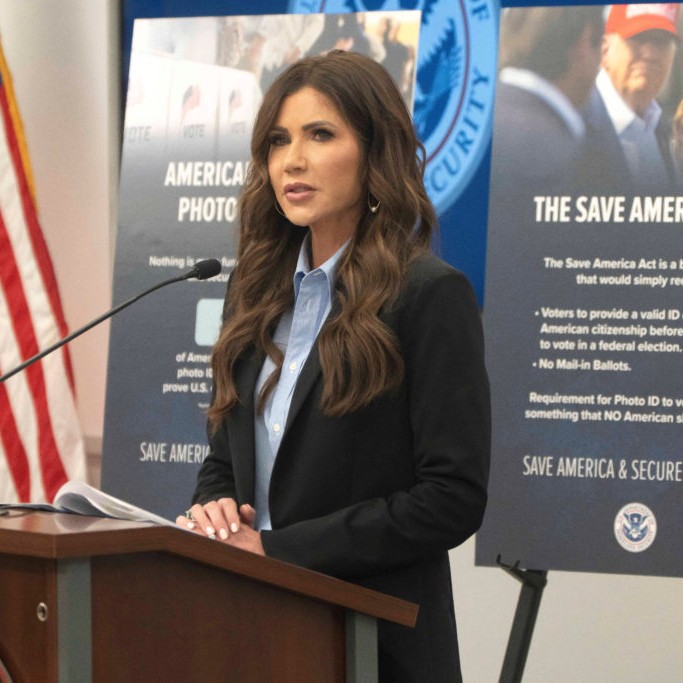
Kristi Noem walked up to the mic to sell Congress on tougher voting rules, then slipped in a bigger claim: that election responsibility now sits with her at the Department of Homeland Security. The fine print of federal law tells a more limited story, and the gap is where the politics lives.
What You Should Know
DHS Secretary Kristi Noem said on February 13th, 2026, that election-related authorities and responsibility lie with her department. Voting is run by states and localities, while DHS, through CISA, provides voluntary security support, not oversight or tabulation.
Noem, a former South Dakota governor turned Cabinet official in President Donald Trump’s administration, made the remarks while lobbying for the SAVE America Act, a Republican-backed bill aimed at requiring documentary proof of citizenship for voter registration and tightening voter ID rules. It is a policy pitch with a second storyline running underneath: who gets to claim the badge of election legitimacy, and who gets to play referee.
The Line Noem Drew, and Why Democrats Heard a Warning
At a February 13th, 2026, press conference, Noem acknowledged the basic constitutional setup, then expanded her own role in a way that raised eyebrows across the aisle.
According to a PolitiFact fact check published by PBS NewsHour, Noem said: “Although the Constitution gives states the primary responsibility for running their elections, Congress also gives authorities and duties to the federal government.” She continued: “Now, as the Secretary of the Department of Homeland Security, those authorities lie within my department. And the responsibility lies with me.”
Noem went further, describing a DHS role that sounded less like advice and more like accountability for outcomes. She said: “I have the responsibility of not just pointing out different vulnerabilities that we may see in our election systems, but also with making sure that we’re putting forward mitigation measures that can be enacted at the state and local level to make sure that our elections are run correctly, that the votes are counted and tabulated and that the people that were elected were put into those positions.”
That is the kind of language that lands differently depending on what a listener already suspects. For supporters, it reads like a security chief promising guardrails. For critics, it can sound like a federal official implying custody over local vote counting, which is the political third rail in modern election fights.
PolitiFact reported that a separate phrase Noem used about ensuring “we have the right people voting, electing the right leaders” drew alarm from Democrats. Noem later argued her point was about eligibility, not about which candidates voters choose.
What DHS Actually Does in Elections, on Paper
Start with the one part of Noem’s pitch that is undeniably real: DHS is in the election space. It just is not the boss of it.
The Cybersecurity and Infrastructure Security Agency, known as CISA, sits inside DHS. According to CISA, elections are treated as critical infrastructure, which puts them in the category of systems the federal government wants protected from cyberattacks, disinformation-fueled disruptions, and physical threats to facilities.
In plain terms, DHS can help states defend the building. It does not get handed the keys to the ballot box.
PolitiFact’s reporting laid out the core distinction. CISA works with state and local partners, along with federal agencies and private-sector entities, to manage risks to voting sites, voter registration databases, and election equipment. The assistance can include security alerts, training, and assessments. It is support that is typically provided upon request.
That last point matters because Noem’s phrasing implied a top-down chain of responsibility. The statutory language that created CISA describes technical assistance and analysis for critical infrastructure owners and operators. That framing fits a help-desk model, not a command-and-control model.
The Pushback, With Receipts, Came Fast
The sharpest rebuttal in the PBS NewsHour and PolitiFact reporting came from Wendy Weiser, a lawyer at the Brennan Center for Justice at New York University School of Law, who argued that Noem’s claim of delegated election power does not match the legal landscape.
Weiser wrote: “There is no law that ‘delegates’ power over elections to DHS. None.” She added: “There are laws that give DHS duties with respect to America’s ‘critical infrastructure,’ but they do not put DHS in charge of that infrastructure, and especially not elections.”
Weiser’s argument points to the central contradiction voters are being asked to live with: politicians use the language of control, while the law is built around state administration and voluntary federal support.
Another expert, Rebecca Green, a professor at the William and Mary Law School, told PolitiFact that none of the federal statutes governing election administration confer oversight authority over state election administration to DHS. Green said CISA “has no independent authority or oversight role in how states run their elections.”
So Who Counts the Votes, Certifies Results, and Takes the Heat?
This is where the politics turns into stakes.
Elections are administered by states, and the mechanics are intensely local. Counties and municipalities run polling places, manage ballots, and perform tabulation under state law. When something goes wrong, it is local officials who face the cameras, the lawsuits, and the public suspicion.
The federal government does have election-related roles, but they are carved into separate lanes. The DOJ can bring enforcement actions under federal voting rights laws. The Election Assistance Commission has a role in testing and certifying certain voting systems. Congress can pass laws that affect election administration, such as voter registration requirements, and it can attach strings through funding and mandates in limited ways.
Noem’s comments landed in the middle of that messy division of labor, right when Washington is debating the SAVE America Act and when election legitimacy is still a live-wire topic for both parties. When a DHS secretary says the responsibility lies with her, it can be read as a power claim even if it is intended as a security promise.
The Real Fight Is Over Narrative Control
Noem did not pick a neutral venue for this argument. She made her case while lobbying for legislation that would change access to the ballot by requiring documentary proof of citizenship for voter registration, and by leaning into the idea of stricter controls.
That is not a procedural debate in 2026. It is a legitimacy debate.
Republicans backing the SAVE America Act argue that tighter verification protects elections from illegal voting and boosts public confidence. Voting rights groups, as PBS NewsHour has reported in related coverage, warn that the policy could make registration harder for some eligible voters, including people whose legal names have changed and people who do not have easy access to required documents.
Noem’s language about DHS responsibility adds another layer: it places a federal security agency closer to the center of the election story at the exact moment Congress is deciding how many new locks to put on the door.
Even if DHS never touches tabulation, the rhetorical move matters because it tells voters who to credit for a smooth election and who to blame for a disputed one. In a polarized environment, that kind of framing is not a footnote. It is the battlefield.
What To Watch Next
Two practical questions follow Noem’s comments.
First, what does DHS say, in formal guidance and testimony, about the limits of its election role? CISA has long described its mission as providing services to election officials, not supervising them. Any shift in tone could become its own story, especially if Congress moves on the SAVE America Act.
Second, will lawmakers try to turn Noem’s broad language into actual statutory authority? If Congress seriously attempted to expand DHS oversight of election administration, it would trigger federalism fights, court challenges, and a new round of suspicion from whichever party is out of power.
For now, the law draws a clear line: states run elections. DHS helps protect the infrastructure. Noem’s comments tested how blurry that line can sound when national politics wants it blurred.