

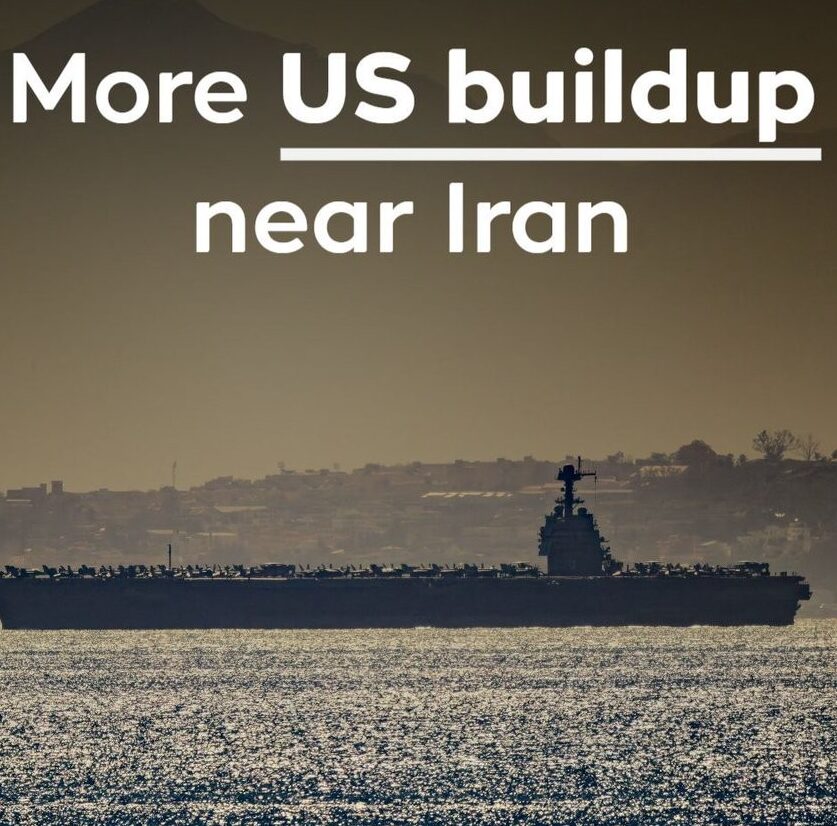
Washington is talking like it wants a deal, and moving like it is getting ready for a fight. The tell is the timing: a warning about “limited strikes” on Iran, paired with a very visible shift of U.S. warships into the Mediterranean.
What You Should Know
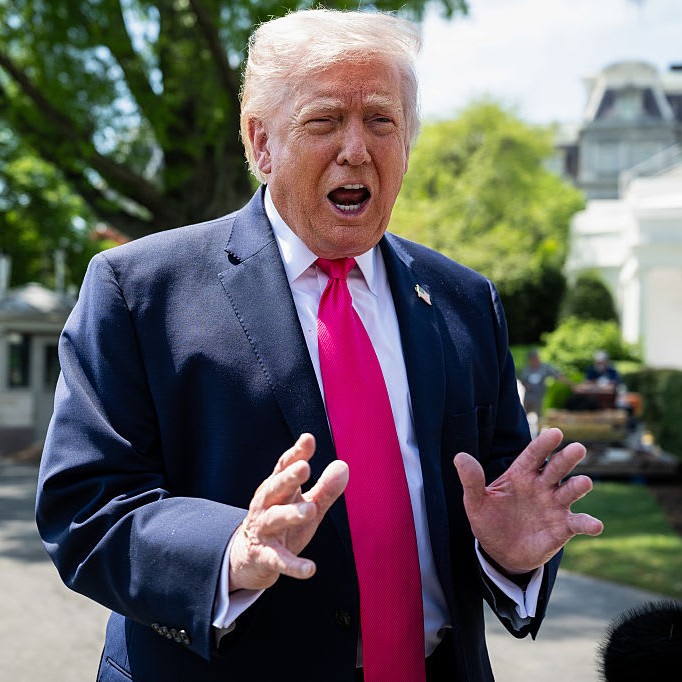
CBS News reported that President Trump said limited strikes on Iran are possible as he pressures Tehran over its nuclear program. CBS also reported that the aircraft carrier USS Gerald Ford and three other warships entered the Mediterranean Sea.
The USS Gerald R. Ford entered the Mediterranean as Donald Trump said he is “considering” limited strikes on Iran, raising the number of US warships in the region to 17 amid mounting tensions
🔗https://t.co/ITTurMWt2j pic.twitter.com/G3nZ73GU3g— TRT World (@trtworld) February 20, 2026
On paper, this is classic coercive diplomacy: apply pressure, signal capability, and dare the other side to blink. In practice, it is a high-speed power play with a short margin for error, because ships at sea are not a metaphor, and threats have a way of becoming calendars.
A Threat With Hardware Behind It
The two facts that matter are simple, and they compound each other. First, Trump publicly raised the possibility of military action, described as limited. Second, CBS reported a U.S. naval move that makes the threat look less like cable-news rhetoric and more like an option set.
CBS summarized the warning this way: “limited strikes on Iran are possible.” It is not a declaration of war, and it is not a signed order. Still, as messaging, it does something important. It puts Tehran on notice that Washington wants its leverage felt, not just heard.
The Pentagon does not send an aircraft carrier into the Mediterranean to be subtle. The USS Gerald Ford is the Navy’s newest carrier class, and it represents a floating air base with reach, flexibility, and the kind of symbolism that allies notice and adversaries measure.
That symbolism is a double-edged blade. It strengthens deterrence if the other side believes the U.S. is serious. It raises the risk of miscalculation if the other side believes the U.S. has backed itself into acting.
The Pressure Campaign’s Public Logic
The administration’s stated goal, as described in the CBS report, is to pressure Iran to dismantle its nuclear program. That phrasing is doing a lot of work because “dismantle” is a maximalist verb. It implies more than a pause, more than an inspection regime, and more than a freeze that can be reversed when politics change.
Iran, for its part, has long insisted its nuclear program is for peaceful purposes, while the U.S. and other governments have repeatedly raised concerns about enrichment levels and breakout timelines. The history here is full of technical details and political betrayals, which is why even the word choice becomes a strategy.
When U.S. leaders use broad, absolute demands in public, it can box diplomacy into a corner. Tehran can treat it as an ultimatum designed for domestic consumption. Washington can treat any Iranian counteroffer as proof that pressure must intensify. That is how negotiations become a staircase where every step up makes it harder to step down.
Why the Mediterranean Matters
Geography is never neutral in the Middle East, and the Mediterranean is not a side stage. A carrier there can support a range of missions and reassure partners across multiple flashpoints. It also places U.S. forces close enough to matter while still operating in a crowded arena of state actors, proxies, and overlapping red lines.
Iran has tools that do not require meeting the U.S. Navy head-on. It has regional relationships, asymmetric tactics, and the ability to create friction through partners and aligned groups. That is why a U.S. show of force can deter, but it can also provoke creative responses that widen a conflict without formally starting one.
Meanwhile, the White House can argue that a forward posture reduces risk by making Iran think twice. Critics can argue the opposite, that extra metal in the water creates more opportunities for accidents, misidentification, or a spiraling response cycle.
Limited Strikes, Unlimited Consequences
“Limited strikes” is a phrase that sounds controlled. It also has a habit of aging badly once the first missile flies.
What makes a strike “limited” is not the size of the explosion. It is the response. If Iran absorbs the hit and stands down, the strike can be sold as decisive and contained. If Iran responds through regional attacks, cyber operations, or pressure on shipping lanes, the definition of “limited” becomes a political argument, not a military fact.
This is where power dynamics show up in public, even when they are negotiated in private. A U.S. president can talk about restraint, but also faces pressures to look strong. Iranian leaders can talk about patience, but they also face pressures not to look weak. Each side’s domestic politics can turn a tactical decision into a national pride referendum.
Congress, Command Authority, and the Quiet Fight at Home
Any serious military action against Iran immediately raises the same Washington question that never dies: who authorizes what, and on what legal basis?
Presidents of both parties have argued for broad commander-in-chief authority to act quickly, especially when U.S. forces or interests are threatened. Members of Congress, even when they agree on the threat, often argue that the legislature is being cut out of decisions that can reshape the region for years.
This matters because the legal debate is not just constitutional trivia. It is a signal to allies and adversaries about how sustainable U.S. policy is. If Iran believes the U.S. position will whipsaw with elections, it has an incentive to wait out pressure. If U.S. allies believe Washington is improvising, they may hedge, publicly support the U.S., privately distance themselves, or push for de-escalation that undercuts the threat.
The Nuclear Endgame and the Credibility Trap
The core contradiction is baked into the concept of coercion: to make diplomacy work, you threaten a penalty. But if the other side does not comply, you have to decide whether you were bluffing.
Trump’s warning, as relayed by CBS, tries to keep multiple doors open. It suggests action is possible, while leaving room for bargaining. The naval movement, also reported by CBS, makes the threat look credible. But credibility creates its own trap. If the demand is “dismantle,” and Iran does not, what is the next move that preserves U.S. credibility without escalating into a larger conflict?
That question becomes sharper when ships and aircraft are already positioned. Military posture shortens timelines. It also narrows political options, because backing down after a show of force can look like a retreat, even if it is a deliberate strategic decision.
What to Watch Next
There are a few signals that will reveal whether this is posture, preparation, or pressure sliding into momentum.
First, watch for clarification on what “dismantle” means in practice. Is the demand about enrichment levels, centrifuge capacity, inspection access, or the broader architecture of Iran’s program? A public line that stays vague can be useful politically, but it can also be a sign that the administration is keeping flexibility because it does not yet have an endgame everyone agrees on.
Second, watch regional diplomacy. When carriers move, allies start calling. Public statements can look united while private messages diverge. If partners push for a defined pathway to de-escalation, that is a hint they think the risk is rising.
Third, watch for any incidents at sea or through proxies. The fastest way for a controlled threat to become an uncontrolled crisis is a confrontation that neither side planned, but both sides feel forced to answer.
For now, the public posture is a blend of warning and leverage. The hard part is that leverage is only leverage if it can be used, and the world is littered with threats that turned into obligations.
References