

California wrote a law meant to force masked federal immigration agents into the daylight. A federal judge just blocked the centerpiece. The twist is that the state still got a different kind of accountability tool through the door, and it may matter more than the mask fight.
What You Should Know
A federal judge blocked California’s new ban on federal immigration agents wearing face coverings, citing discrimination because state law enforcement was exempted. The judge upheld a separate state law requiring clear agency identification and badge numbers for law enforcement.
The clash pits a Democratic-led state pushing visibility and accountability against a Trump administration arguing officer safety and federal supremacy. It also spotlights a political contradiction: California said it wanted rules for masked policing, but initially wrote those rules to spare its own.
The Lawsuit Was Not Just About Masks, It Was About Control
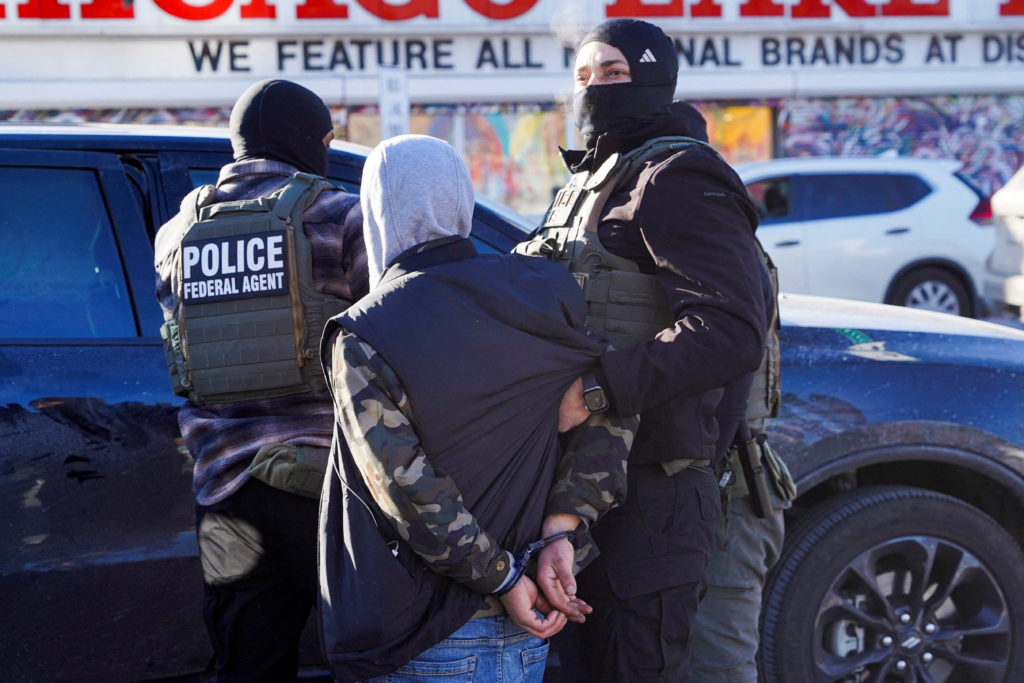
According to CBS News, California became the first state to pass a broad restriction on many law enforcement face coverings after a summer of high-profile Immigration and Customs Enforcement operations in Los Angeles. The law, signed by Gov. Gavin Newsom in September, targeted masks, neck gaiters, and similar coverings, while carving out exceptions for undercover work and protective gear.
The Trump administration sued in November, arguing the state was directly regulating federal officers and putting them at greater risk. The government said federal agents had faced harassment, doxing, and violence, and it framed facial coverings as a safety measure in a politically heated environment.
On Monday, U.S. District Judge Christina Snyder blocked the mask-ban portion from taking effect, but she kept intact a separate requirement that law enforcement display clear identification, including the agency and badge number. The ruling was set to go into effect February 19th, per CBS News.
That split decision is the story. California did not get the clean, symbolic win of forcing federal agents to show their faces. However, it did keep a rule that can make it easier to identify who is doing what, and for which agency, when things get messy.
Why the Judge Blocked the Mask Ban
Snyder’s reasoning, as described by CBS News, centered on unequal treatment. The mask ban, as enacted, did not apply to state law enforcement. In other words, California tried to impose a visibility rule on federal officers that it did not impose on its own.
That asymmetry mattered because the lawsuit is not being litigated on vibes. It is being litigated on whether a state can single out the federal government with special restrictions. Snyder concluded the carveout created discrimination against the federal government, and she sided with the administration on that point.
At the same time, the judge signaled that California could potentially write a broader law that applies to everyone, including state agencies, and have a different fight on its hands. In the ruling described by CBS News, Snyder wrote:
“The Court finds that federal officers can perform their federal functions without wearing masks.”
That line lands like a quiet rebuttal to the government’s practical argument. It also hands California a roadmap: if you want this, write it clean, and apply it evenly.
Safety vs Accountability, and the Receipts Each Side Brought
The Trump administration’s position, per CBS News, was that masks help protect officers from identification, harassment, and retaliation, including doxing. At a January 14th hearing, the government’s lawyer, Tiberius Davis, leaned into that safety narrative and referenced Department of Homeland Security claims of a sharp increase in assaults and threats.
Davis also raised a specific Los Angeles episode in which three women were accused of livestreaming as they followed an ICE agent home, then posting the address on Instagram, according to CBS News.
His bottom line was blunt. As CBS News quoted him:
“There is real deterrence on the officer’s safety and ability to perform their duties.”
California’s counterargument was less about sympathy and more about proof. The state’s lawyer, Cameron Bell, argued there was no concrete evidence that federal agents cannot do their jobs without facial coverings, CBS News reported. Bell also pointed to declarations from U.S. citizens who said they were detained by federal agents and believed they were being kidnapped, a claim aimed at the public-interest side of the scale.
Bell’s quote, via CBS News, underscored the state’s intent:
“It’s obvious why these laws are in the public interest.”
So the courtroom turned into a tug-of-war over which risk is more legitimate. The administration emphasized the risk to agents. California emphasized the risk to civilians and the public’s ability to verify who is exercising coercive power in the moment.
The Political Contradiction California Cannot Dodge
California Democrats sold the law as a response to fear and confusion during immigration enforcement. But the initial draft structure, exempting state law enforcement, set up the very weakness the federal government used to win an injunction.
CBS News reported that Snyder pressed the government’s lawyer at the January 14th hearing about why masks were suddenly essential if officers rarely wore them prior to 2025. That question goes straight to credibility, and it cuts both ways. If masks were not typical before, critics ask why they are necessary now. If a state wants to ban them now, critics ask why the state did not include its own agencies from the start.
There is also an on-the-record quote hanging over the case. CBS News cited a July 2025 interview clip in which Newsom discussed the bill and said:
“It appears that we don’t have the legal authority for federal agents but we do for other law enforcement authorities.”
That statement can be read as political realism, a governor acknowledging limits. It can also be read as a preview of the problem, that the state was going to try to regulate federally backed conduct while keeping its own house comfortable.
Scott Weiner Wants a Do-Over, and Fast
State Sen. Scott Weiner, the bill’s sponsor, responded by promising immediate new legislation to include state police, CBS News reported. That is not a small adjustment. It is an admission that the law’s structure gave the judge a clean off-ramp.
Weiner also made clear he is not backing off the core argument that masks reduce accountability. In a statement carried by CBS News, Weiner said:
“ICE and Border Patrol are covering their faces to maximize their terror campaign and to insulate themselves from accountability. We will ensure our mask ban can be enforced.”
That rhetoric escalates the stakes, and it also raises the legal risk. The more a law looks like it is designed to punish or obstruct federal operations, rather than regulate conduct neutrally, the more aggressively the federal government will argue it is unconstitutional.
The Quiet Winner: Clear ID Requirements
The part of California’s agenda that survived is not about faces. It is about names and numbers.
CBS News reported that Newsom also signed a measure requiring law enforcement to wear clear identification showing their agency and badge number while on the job. The federal government challenged that, too, but the judge upheld it.
This is where the real leverage can sit. If a person is detained or searched, and the officer’s face is covered, a clear agency identifier and badge number can still create a paper trail. It is not the same as facial recognition, and it does not erase the fear problem California cited, but it can narrow the space for anonymity.
It also forces a clearer separation between two questions that are often mashed together in political arguments: whether an officer can cover their face, and whether the public can identify the officer’s agency and authority.
Local Governments Are Testing Their Own Limits
Los Angeles County supervisors voted in December to enact a local ordinance banning law enforcement from wearing masks, CBS News reported, and it took effect January 8th. However, the county sheriff’s department said it would not enforce that ordinance until after the court ruled on the statewide law. The Los Angeles Police Department also said it would not enforce the mask ban, according to CBS News.
That is a glimpse of how this fight can spread. Even if a statewide law gets tied up, cities and counties can try their own rules, and federal agencies can treat them as the same basic problem.
The judge’s order, as described by CBS News, also flagged the possibility of national implications as states attempt to respond to stepped-up federal immigration enforcement. That is legal-speak for a warning: if one state finds a workable model, others will copy it, and the federal government will not let the precedent set itself.
What Happens Next
Watch two tracks.
First, Weiner’s promised rewrite. If California passes a new mask restriction that applies to all law enforcement, including state agencies, it may blunt the discrimination argument that drove Snyder’s injunction.
Second, watch how aggressively the federal government keeps pushing against identification requirements. The ID rule survived this round. If it becomes the more meaningful accountability measure in practice, it may become the next front line for litigation and political messaging.
California tried to force visibility through faces and got blocked. It forced visibility through identification and, for now, the judge let it stand. In a power fight, the small print can be the whole war.