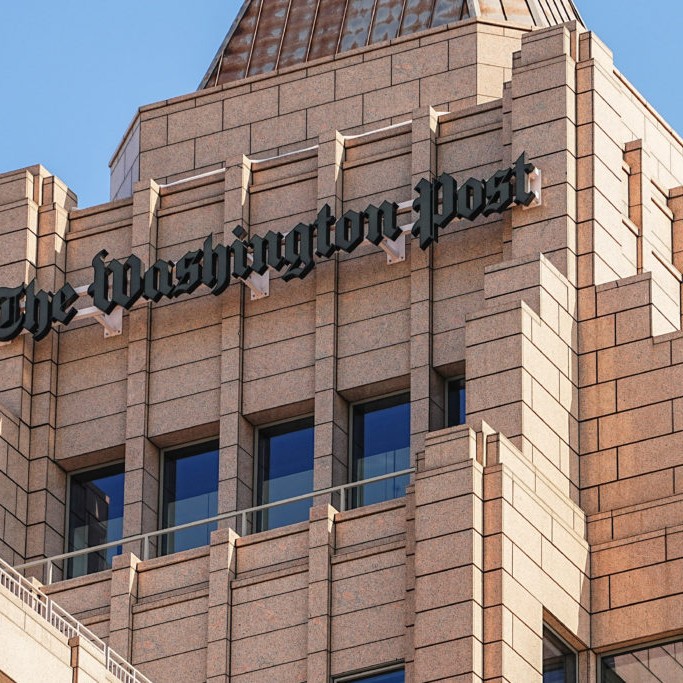
The Washington Post just made a brutal cut, then lost the executive expected to explain it. The timing invites a blunt question inside the building and outside it: Who is actually steering this newsroom now?
What You Should Know
Washington Post publisher Will Lewis said February 8th, 2026, that he is stepping down, days after the paper announced layoffs affecting roughly one-third of staff. CFO Jeff D’Onofrio was named temporary publisher, according to an email to employees.
Lewis’s exit lands after a week of layoffs, morale damage, and leadership questions at a paper owned by Jeff Bezos, a billionaire who did not appear at the staff meeting where the cuts were delivered. The cuts included the shutdown of the sports section and the elimination of the photography staff, according to reporting published by PBS NewsHour.
A Layoff Meeting Without the 2 Most Powerful People
The detail that keeps reappearing in staff chatter is not just the scale of the cuts. It is the empty seats at the top.
According to PBS NewsHour’s report, neither Lewis nor Bezos participated in the meeting with staff members announcing layoffs on February 4th, 2026. That absence matters because it turns a painful business decision into something sharper: a vacuum. When the people with the power to make the call are not in the room to own it, everyone else has to guess at the plan.
Then, three days later, the publisher is gone.
Lewis told employees in a brief email that “after two years of transformation, now is the right time for me to step aside.” He also cast his tenure as a tough-love campaign to protect the institution, saying, “difficult decisions have been taken in order to ensure the sustainable future of The Post so it can for many years ahead publish high-quality nonpartisan news to millions of customers each day.”
That is one version of events. The union’s version is a direct collision.
The Union Calls It a Long Time Coming
The Washington Post Guild, the union representing staff members, did not treat the resignation as a tidy transition. It treated it as a verdict.
The Guild called Lewis’ exit “long overdue.” In a statement quoted by PBS NewsHour, it went further: “His legacy will be the attempted destruction of a great American journalism institution. But it’s not too late to save The Post. Jeff Bezos must immediately rescind these layoffs or sell the paper to someone willing to invest in its future.”
That is not just outrage. It is a power play aimed at the owner, not the departing publisher. The Guild is arguing that the real decision-maker is Bezos, and that the only fix is either more money from him or a different owner altogether.
Lewis, meanwhile, praised Bezos in his goodbye note, saying “The institution could not have had a better owner,” according to the PBS NewsHour report.
The contradiction is almost too clean: the publisher blesses the owner, the union accuses the owner, and the owner responds without mentioning the publisher at all.
Bezos Skips the Name, Talks About the Data
Bezos did issue a statement, but it was notable for what it did not include. PBS NewsHour reported that he did not mention Lewis.
Instead, Bezos praised the interim leadership, saying D’Onofrio and his team are positioned to lead the paper into an “exciting and thriving next chapter.” He also framed the future as a reader analytics exercise, saying, “The Post has an essential journalistic mission and an extraordinary opportunity. Each and every day, our readers give us a roadmap to success. The data tells us what is valuable and where to focus.”
That language lands differently depending on which side of the newsroom you sit on. In an era when publishers demand growth and reporters demand resources, “the data” can sound like discipline. It can also sound like a justification for thinning out the very reporting that built the brand.
Bezos is not new to the tension between mission talk and business reality. He bought The Washington Post in 2013, a deal The New York Times characterized at the time as a major tech billionaire stepping into the heart of Washington journalism.
In 2026, the argument is not about whether he owns it. It is about whether he will underwrite it, restructure it, or let it shrink into something more predictable and less expensive.
The Cuts Hit Signature Coverage, Not Just Head Count
The layoffs described by PBS NewsHour were not subtle trims. The paper said it was laying off about one-third of its staff, and the reductions hit entire functions. The sports section, long one of the paper’s proud franchises, was shut down. The photography staff was eliminated. Coverage teams responsible for metropolitan Washington and overseas reporting were cut sharply, according to the report.
That mix matters. A sports desk is readership and identity. Photographers are proof. Foreign bureaus are status and influence. When those go, the product changes, even if the paper insists it will keep publishing “high-quality nonpartisan news.”
Lewis, according to PBS NewsHour, also had a reputation inside the building for blunt messages about readership and performance. In one staff meeting, he said the organization needed changes because not enough people were reading the work.
That kind of talk can be accurate and still combustible. It is one thing to say the business model is breaking. It is another to say it to the people being asked to do more with less, especially as ownership choices become part of the story.
Lewis’ Tenure Was Rocky Before the Layoffs
Lewis, British-born, arrived from a senior executive role at The Wall Street Journal and took over at The Post in January 2024, according to PBS NewsHour. His tenure was marked by layoffs, a reorganization plan that did not hold, and leadership churn that reached the top editor’s office.
Former executive editor Sally Buzbee departed after a failed reorganization plan, PBS NewsHour reported. Then Lewis’ initial pick to succeed her, Robert Winnett, withdrew from the job after ethical questions emerged about both men related to work in England. The questions included paying for information, a practice generally viewed as unethical in American journalism.
That episode matters because it put a credibility problem on top of a business problem. When leadership asks journalists to protect standards and defend the brand, any whiff of ethical shortcuts becomes a live wire.
Eventually, Matt Murray became executive editor, PBS NewsHour reported. The paper kept moving, but the sense of instability lingered.
Subscribers, Politics, and the Owner’s Shadow
The newsroom bloodletting is happening against a backdrop of reader distrust and subscriber churn. PBS NewsHour reported that the paper lost tens of thousands of subscribers after Bezos ordered the paper to pull back from a planned endorsement of Kamala Harris late in the 2024 presidential campaign, followed by a reorientation of the opinion section in a more conservative direction.
That detail sits at the center of the power dynamic. Endorsements are not just editorial rituals. They are signals about independence, courage, and who gets the final word. When the owner is perceived to be steering those signals, everything else is reinterpreted through that lens, including layoffs and leadership exits.
Former executive editor Martin Baron, who led the newsroom early in Bezos’ ownership, publicly criticized Bezos in remarks cited by PBS NewsHour, accusing him of trying to curry favor with President Donald Trump and describing the newspaper’s trajectory as a rapid, self-inflicted hit to the brand.
In other words, the internal argument about money has collided with an external argument about influence.
Enter the Interim Publisher, and Another Message About Change
Into that mess steps Jeff D’Onofrio, the chief financial officer now serving as temporary publisher.
D’Onofrio joined the paper in 2025 after jobs spanning Google, Zagat, Major League Baseball, and the digital ad company Raptive, according to PBS NewsHour. His note to staff did not promise calm. It promised more movement.
“We are ending a hard week of change with more change,” D’Onofrio wrote, according to PBS NewsHour. He added, “This is a challenging time across all media organizations, and The Post is unfortunately no exception.”
That is a familiar media-industry argument. Advertising has been gutted by tech platforms. Subscriptions are harder to grow. Costs are rising. But The Post is not just any media company. It is a political institution with a billionaire owner and a brand that sells itself as indispensable. When it cuts this deep, it becomes a story about priorities, not just economics.
What to Watch Next
The immediate question is structural: Does Bezos stick with an interim publisher from the finance side, or does he appoint a new publisher with a public mandate to restore stability? If the answer is “wait and see,” the waiting will not be quiet.
The second question is editorial identity. If the sports section and photography staff are gone, and overseas coverage is reduced, what fills the space? More opinion? More aggregation? More local? More national? Bezos’ statement suggests a product shaped by audience metrics, but The Post’s historic value proposition has been agenda-setting reporting that sometimes looks expensive on a spreadsheet.
The third question is labor. The Guild has framed the moment as a referendum on Bezos himself. If layoffs proceed and the newsroom shrinks further, the union will likely treat each leadership move as evidence in a larger case about whether the owner is investing, managing decline, or preparing an exit.
Lewis is leaving, but the fight he leaves behind is bigger than a publisher’s chair. It is about who gets to define what The Washington Post is for, and who pays the bill when that definition gets contested.
References