Luigi Mangione says the math is simple. The courts, so far, are not buying it.
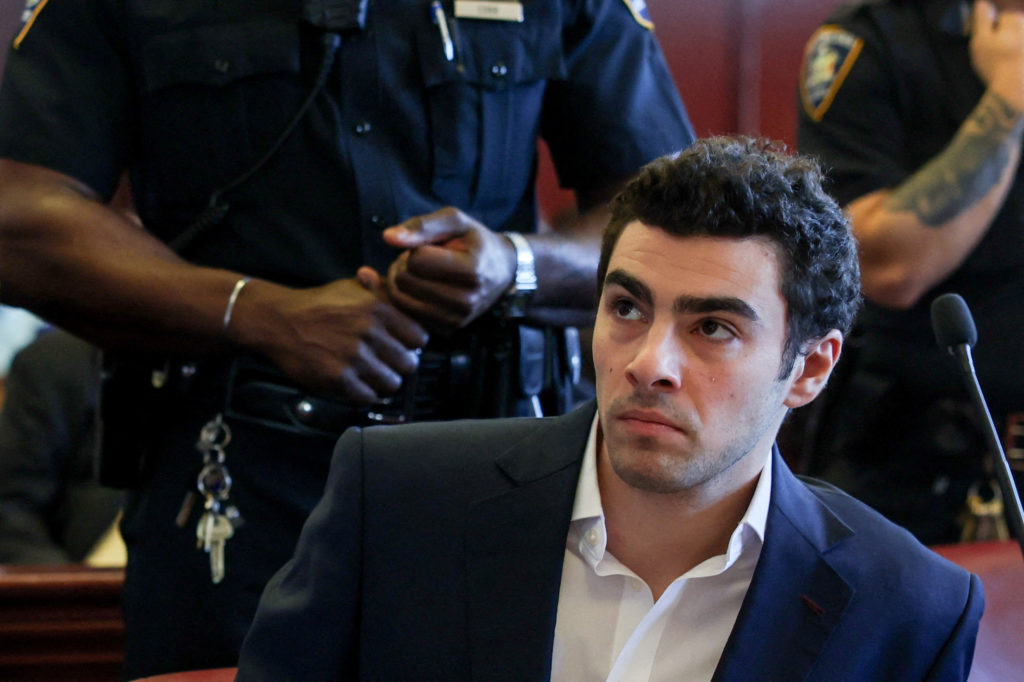
In a New York courtroom on February 6th, 2026, the 27-year-old defendant, accused of killing UnitedHealthcare CEO Brian Thompson, sounded off as court officers escorted him out. “It’s the same trial twice. One plus one is two. Double jeopardy by any commonsense definition,” Mangione told the judge, according to The Associated Press.
That outburst landed at the end of a hearing with real stakes, not just theatrics. Judge Gregory Carro set Mangione’s state murder trial for June 8th, 2026, putting New York first, and putting Mangione’s defense team on a sprint schedule as the federal case looms right behind it.
Two Prosecutors, One Defendant, and a Calendar That Cuts
The fight in court was not only about dates. It was about leverage.
Manhattan prosecutors want to go first, and they have a reason that sounds dry until it becomes decisive. Under New York law, the DA’s office could be barred from trying Mangione if the federal case gets to a sworn jury first, or ends in a guilty plea, because of the state’s double jeopardy protections, even when the charges are not identical.
Carro was matter-of-fact, after a long bench discussion with prosecutors and defense attorneys, and he also left himself an escape hatch. He said the state trial could slide to September 8th, 2026, if an appeal delays the federal trial.
But the headline move remains the same. New York is attempting to lock in its trial before the federal government gets a jury in a box.
In open court, Carro also voiced a complaint that hints at bureaucratic turf. “It appears the federal government has reneged on its agreement to let the state, which has done most of the work in this case, go first,” he said, according to The Associated Press.
The Defense Says It Is a Tug-of-War
Mangione’s lawyers argued they are being forced to prep two life-on-the-line cases back-to-back, with one team, one client, and one set of hours in a day.
Defense lawyer Karen Friedman Agnifilo put it in blunt, structural terms. “Mr. Mangione is being put in an untenable situation,” she said. “This is a tug-of-war between two different prosecution offices.”
She added, “The defense will not be ready on June 8,” and Carro’s answer, as reported by The Associated Press, was just as blunt: “Be ready.”
That exchange tells you almost everything about the power dynamic. Prosecutors control charging decisions and timetables. Judges control calendars. Defense teams, especially in a high-profile homicide, live inside both systems and still have to build a case with the clock running.
Mangione has pleaded not guilty to both state and federal charges. Both cases carry the possibility of life in prison, according to The Associated Press.
Why New York Wants the First Bite
From the state’s perspective, the June 8th, 2026, trial date is not just an urgency. It is protection.
The AP report describes a key legal concern: if the federal case proceeds first, New York could be blocked from bringing its own prosecution under the state’s double jeopardy rules. That is a rare moment when state law can act like a trap door, and it helps explain why the DA’s office pushed to set a firm date.
Assistant District Attorney Joel Seidemann asked Carro by letter to start the trial on July 1st, 2026, and argued the state’s interests “would be unfairly prejudiced by an unnecessary delay” until after the federal trial, according to The Associated Press.
Seidemann also told the judge that Thompson’s family has expressed a desire to see the state trial happen first.
There is also a quieter incentive. If New York goes first, it owns the first narrative that jurors, voters, and the wider public will absorb, even if the federal case later adds additional allegations and evidence.
What the Federal Case Adds, and What It Does Not
The federal timetable is already set on paper. Jury selection in the federal case is scheduled for September 8th, 2026, with opening statements and testimony slated for October 13th, 2026, according to The Associated Press.
The federal case includes allegations that Mangione stalked Thompson before killing him, The Associated Press reported. That matters because stalking can be used by prosecutors as a bridge from planning to intent, which are themes jurors tend to understand intuitively, even when they do not know the fine print of criminal statutes.
But the federal case just lost one of its biggest possible leverage points. A federal judge ruled prosecutors cannot seek the death penalty, The Associated Press reported.
That ruling shifts the negotiation landscape. Without capital punishment on the table, prosecutors still have massive exposure to threaten, including life imprisonment, but one of the system’s most extreme pressure tools is off the board.
The Evidence Fight Is Already Underway
Even before a jury is seated in either courtroom, the evidence war is moving.
The next major state-court date is in May 2026, when Carro is expected to rule on a defense request to exclude certain evidence that prosecutors say links Mangione to the killing, The Associated Press reported.
Those items include a 9 mm handgun that prosecutors say matches the one used to kill Thompson, and a notebook that prosecutors say described an intent to “wack” a health insurance executive, according to The Associated Press.
In the federal case, Judge Katherine Polk Failla Garnett ruled prosecutors can use those items at that trial, The Associated Press reported.
If the same key items are admissible in both cases, the defense’s concern about fighting a two-front battle is not abstract. It is logistical and strategic. Cross-examination themes, expert challenges, and pretrial motions can start to look like copy-and-paste, but the consequences of getting it wrong in either court do not copy-and-paste back.
The Killing That Put Two Systems on the Same Track
Thompson, 50, was killed on December 4th, 2024, as he walked to a midtown Manhattan hotel for UnitedHealth Group’s annual investor conference, The Associated Press reported.
Authorities have said surveillance video showed a masked gunman shooting him from behind. Police have also said the words “delay,” “deny,” and “depose” were written on the ammunition, mimicking a phrase used to describe how insurers avoid paying claims, according to The Associated Press.
Mangione, a University of Pennsylvania graduate from a wealthy Maryland family, was arrested five days later at a McDonald’s in Altoona, Pennsylvania, The Associated Press reported.
In a September ruling, Carro threw out state terrorism charges but kept the rest of the case, including an intentional murder charge, according to The Associated Press.
What to Watch Next
The next question is not whether the public will hear about the case again. It is which courtroom gets to speak first, and whether either side can slow the other down.
If the defense loses key evidence fights, June 8th, 2026, becomes not just a date, but a launch. If delays hit the federal side, Carro has signaled he might move the state date to September 8th, 2026, which is also the day federal jury selection is scheduled to begin.
And if Mangione keeps arguing “double jeopardy” in the commonsense meaning, prosecutors will keep pointing to the law’s far less intuitive reality: separate sovereigns, separate charges, and a procedural race where timing can decide whether New York even gets its day in court.